Start harvesting your Click & Grow lettuce around 25 days after planting by snipping the largest outer leaves first, always leaving the small central growing point (the crown) completely intact. This cut-and-come-again method keeps the plant alive and producing for up to 5–7 weeks total. Once the whole pod reaches full maturity, usually by week 5–6, you can harvest everything in one go by cutting just above the soil line. Those are your two options, and knowing which to use, and exactly how to do it without killing the plant, is what this guide is all about. Follow these lettuce grow instructions to time your harvest, protect the crown, and keep regrowth going through multiple pickings.
How to Harvest Click and Grow Lettuce for Ongoing Production
Marcus Holloway
29 Jun 2026
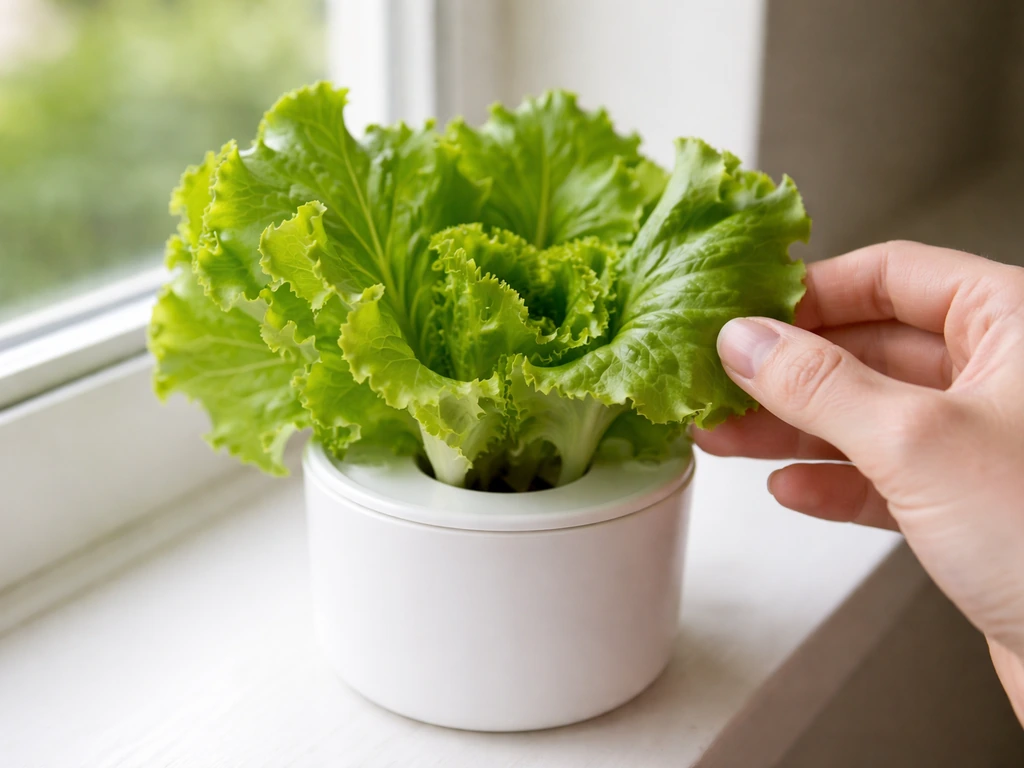
When your Click & Grow lettuce is actually ready to harvest
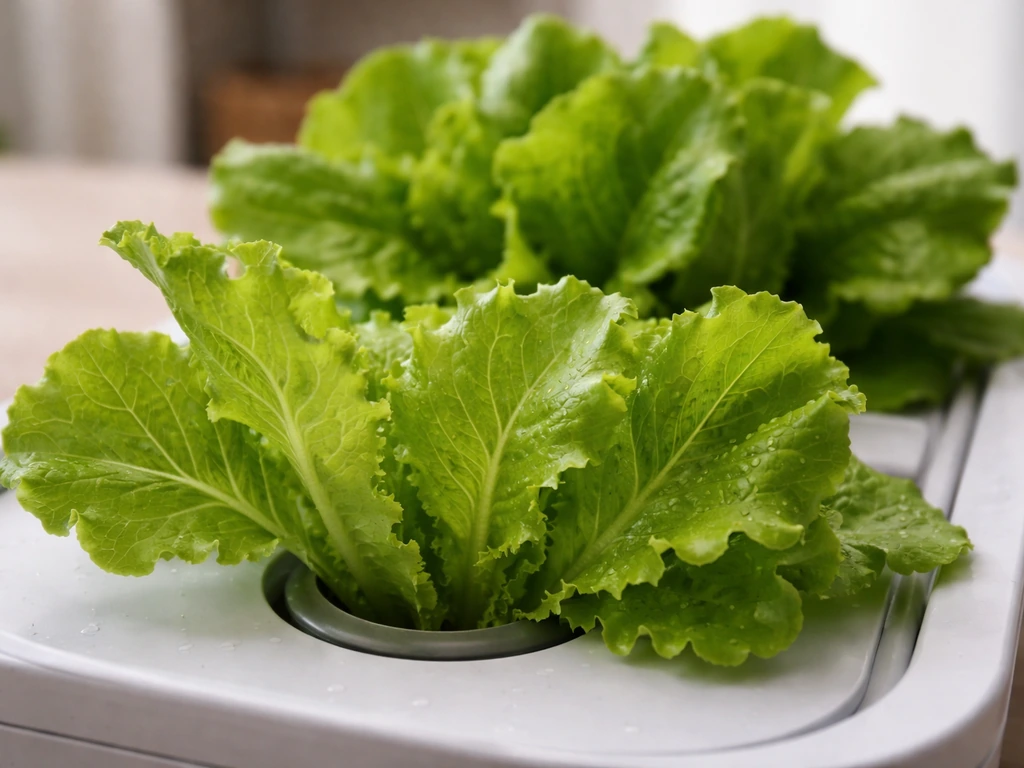
Click & Grow lettuce moves through two harvesting windows. The first is the outer-leaf stage, which begins around day 25 after planting. If you are still setting things up, follow a clear how-to guide for getting lettuce growing in the first place, including light, water, and timing day 25 after planting. At this point the plant has pushed out several mature leaves while the center is still actively producing new ones. The leaves are somewhere between baby-leaf and full size, and that sweet spot is exactly when flavor and nutrition are at their best according to Click & Grow's own guidance.
The second window is whole-plant maturity. Green lettuce pods typically hit full size in 5–6 weeks. Romaine pods can be ready for a complete harvest in as little as 30–35 days. If you miss both windows and leave the plant sitting, it will start forming a seed stalk, a process called bolting, and the flavor turns noticeably bitter fast.
Here are the visual and physical signs that tell you it is time to harvest:
- Outer leaves are large enough to snap or cut cleanly, roughly 3–4 inches or longer depending on variety
- The center of the plant still has tight, pale green growth pointing upward
- Leaf color is deep, even green with no yellowing
- No sign of a tall central stalk stretching upward (that signals bolting is starting)
- The plant has been growing for at least 3 weeks since sprouting, which itself takes 7–14 days after planting
If you are using the Click & Grow app, it will send you a reminder when harvest time approaches. That is a useful nudge, but the visual cues above are your real green light.
Cut-and-come-again vs whole-plant harvest: which one to use
Cut-and-come-again means you harvest individual outer leaves repeatedly over several weeks, letting the center keep growing and sending out fresh leaves. Whole-plant harvest means you wait until the lettuce is fully mature, then cut the entire thing off just above the soil. Both are valid, and the right choice depends on what you want.
| Method | When to use it | How long it lasts | Best for |
|---|---|---|---|
| Cut-and-come-again | Starting around day 25, before full maturity | Up to 5–7 weeks from planting | Steady daily salads, maximizing yield per pod |
| Whole-plant harvest | At full maturity, roughly 5–6 weeks (or 30–35 days for romaine) | One-time harvest, done after cutting | A big salad all at once, or when bolting is starting |
My honest recommendation: start with cut-and-come-again from day 25 onward, then do a final whole-plant harvest around week 5–6 before any bolting can happen. You get the best of both approaches, more total leaves and better flavor throughout.
How to harvest without damaging the crown (step-by-step)
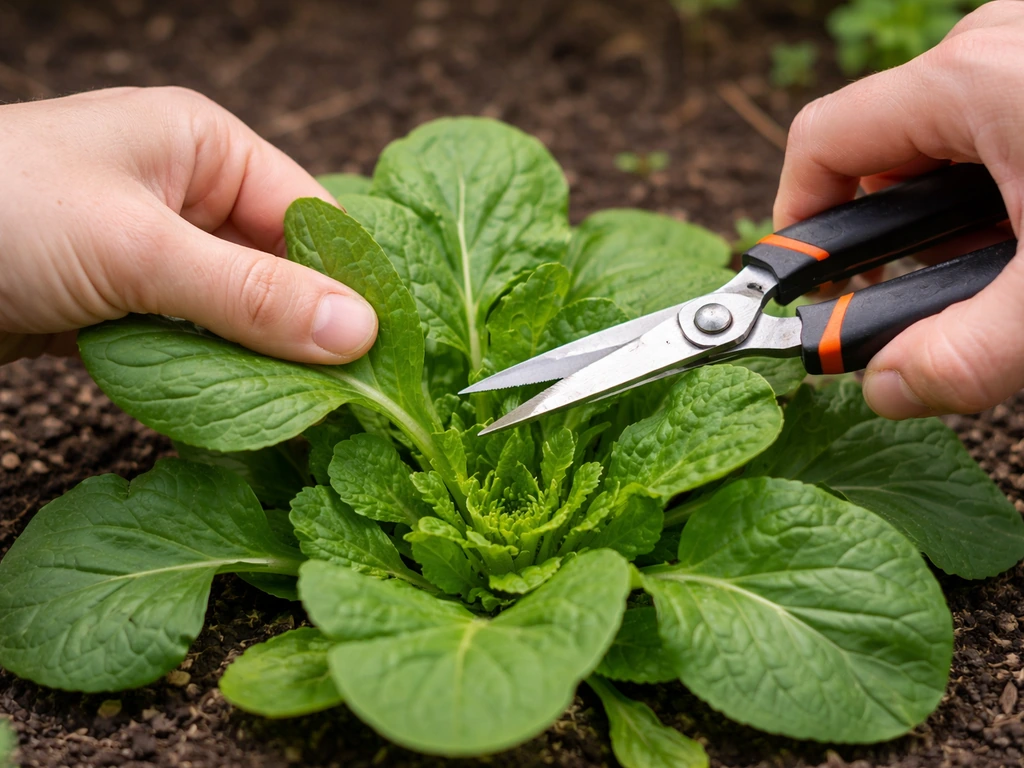
This is the part that trips up most beginners. The crown, also called the basal growing point, is the tight cluster of tiny new leaves right at the center of the plant, just above the soil in the pod. If you cut into it or snap it off, the plant stops producing. There is no recovery from that. Here is exactly how to avoid it:
- Grab a clean pair of small scissors or garden snips. Fingernails can work in a pinch, but scissors give you much more control.
- Look at the plant from above and identify the tight, pale center growth. That is your off-limits zone.
- Find the largest outer leaves, the ones farthest from the center. These are your harvest targets.
- Hold a leaf gently near its base and trace your scissors down to where it connects to the stem, usually about 1–2 cm above the soil surface or pod opening.
- Cut there, not at the leaf tip, not halfway down, but right at the base of that individual leaf. You are removing the whole leaf, stem included.
- Take no more than one-third of the total leaves in any single harvest session. The plant needs enough foliage to keep photosynthesizing and growing.
- Work from the outer edge inward over multiple harvest sessions, never touching the small central cluster.
- For a whole-plant harvest, cut across the entire plant about 1 cm above the soil or pod surface. Everything above that cut comes off cleanly.
The single most common mistake I see is cutting too low out of habit, especially if someone is used to harvesting herbs like basil. With lettuce in a pod, you have less margin for error because the growing point sits very close to the surface. When in doubt, cut higher rather than lower.
Harvesting by lettuce type: leaf vs head-forming varieties
Not all Click & Grow lettuce behaves the same in a pod, and your harvest technique should reflect that.
Loose-leaf lettuce (like Green Lettuce pods)
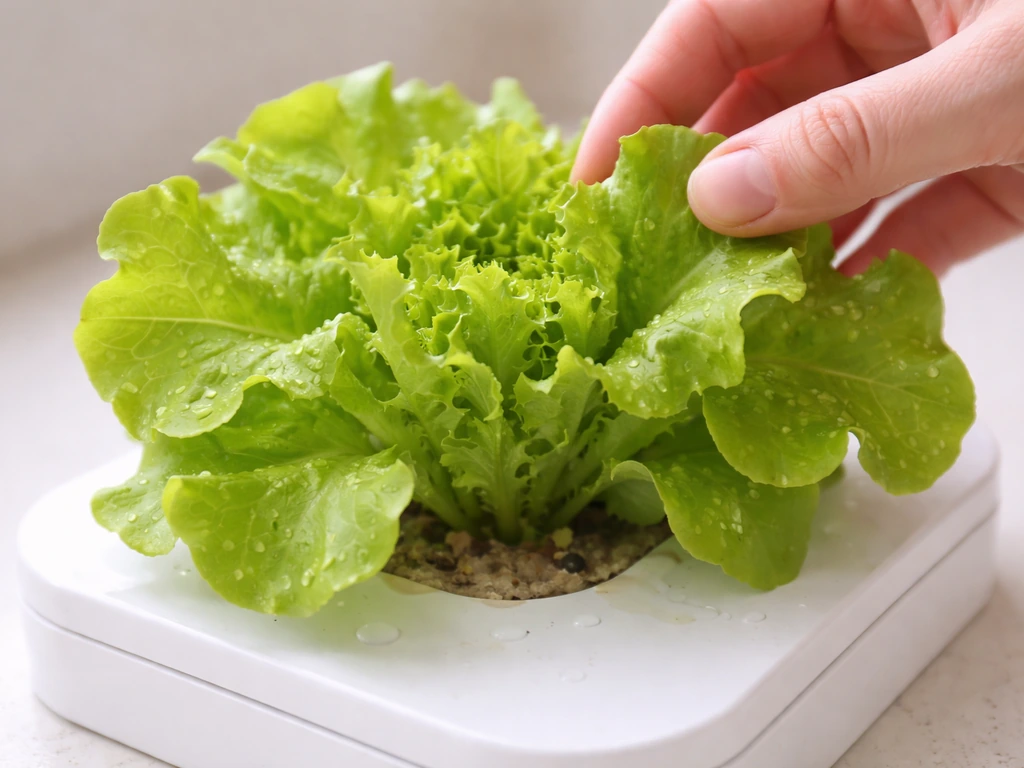
Loose-leaf varieties are the most forgiving and the most productive under cut-and-come-again. Because they never form a tight head, the outer leaves stay separate and easy to identify and remove cleanly. You can start harvesting earlier, around 3–4 weeks from planting per community experience, and keep going until week 5–7. These pods are designed for repeated small harvests. Take a few outer leaves every 2–3 days and the plant will barely seem to notice.
Romaine and butterhead-style varieties
Romaine in a Click & Grow pod grows upright and can form a loose head structure. Click & Grow's own guidance says you can start outer-leaf harvesting at around 25 days, with a full-head harvest at 30–35 days. Because romaine forms a tighter structure, you need to be more careful distinguishing the outer wrapper leaves from the inner growing heart. If you are going for the full head, wait until it has some size and density, then cut just above the soil. If you are doing cut-and-come-again with romaine, take only the clearly separated outer leaves and leave everything compact at the center alone.
Butterhead types sit somewhere in between. They form a soft, loosely cupped head but the outer leaves are still distinct enough for repeated harvesting. Just watch the center more carefully than you would with loose-leaf, and consider doing a full harvest a little earlier since butterhead bolts faster under warmth.
What to do right after harvesting
Washing and storing your harvest
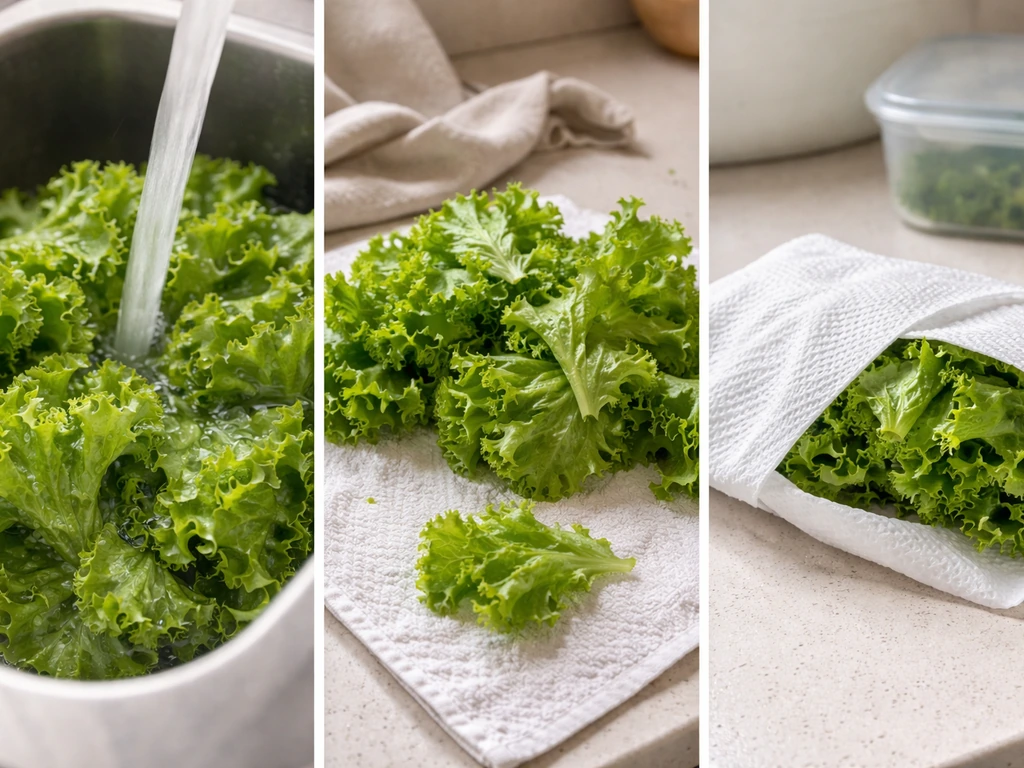
Always wash your Click & Grow lettuce before eating it, even though it is grown indoors without soil-based pests. Rinse the leaves under cool running water and dry them gently with a salad spinner or paper towel. If you want the cleanest results, let the lettuce dry fully after rinsing so it stays crisp and ready to eat how to clean lettuce grow farmstand. Wet leaves stored in a bag or container will turn slimy quickly.
For storage, wrap the dried leaves loosely in a paper towel, place them in an airtight container or zip bag, and refrigerate. Properly stored like this, freshly cut Click & Grow lettuce stays crisp for 5–7 days. For the best flavor, honestly, eat it the same day you harvest. Indoor-grown lettuce at that optimal 5-week stage has a freshness that fades noticeably in the fridge over time.
Keeping the plant going after a partial harvest
After a cut-and-come-again session, leave the plant alone for 3–5 days. It needs time to direct energy into the crown and push out new leaves. Do not harvest again until fresh leaves have visibly emerged from the center and the outer leaves have grown large enough to cut. Resist the urge to keep snipping before that recovery period. The pod is working, just give it space.
Make sure the water reservoir in your Click & Grow garden is topped up after each harvest. The plant puts a lot of effort into regrowing and increased water availability helps significantly. Light exposure is equally important: keep the lamp on the standard recommended cycle and avoid moving the unit to a darker spot post-harvest.
Fixing common harvest problems
Leaves taste bitter
Bitterness usually means one of two things: the plant is stressed by heat, or it has started bolting. Click & Grow recommends keeping room temperature between 18–24°C (64–75°F) for lettuce. If your space runs warmer than that, especially above 24°C, bolting and bitterness can develop fast. Try positioning a small fan near the garden to lower the ambient temperature around the plants. If the lettuce is already bitter, soaking the harvested leaves in cold water for 10–15 minutes can tone it down meaningfully. Also, harvest earlier in the day when leaf sugars are highest and temperature stress is lowest.
Leaves are too small
If you are harvesting before week 3–4, the leaves will simply be undersized. That is a timing issue, not a plant problem. Wait until the outer leaves are clearly larger than the inner ones before you start. If the plant has been growing for 4 or more weeks and leaves are still tiny, check your light distance and cycle, low light is the most common culprit in indoor pod systems. Also confirm your water reservoir is not running dry between refills.
Plant is bolting too early
If you see a tall central stalk stretching up before week 5, the plant is bolting prematurely. Heat and skipping harvests are the two main triggers. Once bolting starts, do a full whole-plant harvest immediately rather than waiting. Do not try to cut the stalk and continue with cut-and-come-again harvesting. Take everything usable now before the bitterness fully sets in across the whole plant.
Slow or no regrowth after harvesting
If the plant is not pushing out new leaves within 5–7 days of a partial harvest, check three things. First, confirm you did not accidentally damage the crown. If the very center of the plant looks brown, dried out, or flat rather than pale and upright, the growing point was compromised and the plant will not recover. Second, check whether the pod is simply at the end of its productive life, which for most varieties is 5–7 weeks total from planting. Third, verify that your water and light levels are adequate. If the crown looks healthy and conditions are good, just wait a few more days, sometimes the plant takes up to a week to visibly respond after a heavy harvest.
Leggy, stretched growth between harvests
Legginess (long, thin, weak stems on new growth) almost always comes from insufficient light. Make sure the Click & Grow lamp is positioned at the correct height above the pods and that the light cycle is running the full recommended duration. If the light is too far away, the plant stretches upward looking for more. Adjust the arm down to the correct setting and the next round of leaves should come in more compact and sturdy.
How harvesting changes across different growing setups
The core principles of lettuce harvesting are the same whether you are working with a Click & Grow pod, an outdoor raised bed, a balcony container, or a hydroponic farmstand. Protect the crown, harvest outer leaves first, do not take more than a third at once, and beat the bolt. If you want a lettuce seedling alternative, consider starting with seedling-ready options rather than waiting on seed germination protect the crown. But there are real differences in how these principles play out in practice.
| Growing setup | Key harvesting difference | Watch out for |
|---|---|---|
| Click & Grow pod (indoor) | Pod has a finite life of 5–7 weeks; harvest must begin by day 25 or the window closes fast | Heat from indoor lighting and warm rooms accelerating bolting |
| Outdoor soil bed | Longer growing season possible (25–60 days to maturity depending on variety and season); more recovery time between harvests | Sun, heat, and drought stress triggering bolting in summer |
| Container / balcony | Similar to outdoor but in a smaller soil volume, dries out faster and heats up quicker in direct sun | Root-bound conditions and irregular watering shortening productive harvest window |
| Hydroponic farmstand | Faster growth due to nutrient delivery; whole-plant harvest cycles often reset with new seedlings rather than relying on regrowth | Rapid bolting in warm indoor environments; monitor temperature closely |
If you are expanding beyond your Click & Grow system into a larger hydroponic setup or a container garden on a balcony, the harvesting fundamentals transfer well. The biggest adjustment is pacing. A Click & Grow pod has a built-in urgency because of its compact size and 5–7 week productive window. Outdoor and container lettuces give you a bit more runway, especially in cooler weather, before bolting becomes a real threat.
However you are growing your lettuce, the advice is always the same at its core: start harvesting earlier than you think you need to, protect the crown, and do not wait for the plant to look overgrown before you act. Lettuce rewards attentive, regular harvesting far more than patient waiting.
FAQ
What should I do if I accidentally cut too close to the crown or damage it while harvesting?
If you accidentally nick or partly cut the crown, the plant often stops after a few days, but sometimes it produces a smaller, slower regrowth. The sure sign is the center turning brown, flat, or dried out. If you see that change, switch to whole-plant harvesting right away rather than continuing cut-and-come-again.
Can I harvest more frequently than every 2 to 3 days to get more lettuce faster?
Yes, you can harvest lightly more often, but don’t exceed the “outer leaves only” approach. As a rule, take small amounts and keep at least a few outer leaves growing on the plant between sessions. If you harvest again sooner than 3 days, you increase the chance of crown stress and slower regrowth.
How low can I cut the outer leaves during cut-and-come-again without reducing future yields?
Avoid cutting every outer leaf down to tiny nubs. The plant needs enough mature leaf surface left for energy capture, otherwise regrowth comes slowly and leaves may turn undersized. If you want maximum output, remove the largest outer leaves and leave clearly smaller leaves and the tight center untouched.
My lettuce is starting to bolt, should I keep doing cut-and-come-again or harvest differently?
If you notice a seed stalk or tall central stem, stop cut-and-come-again. Do a whole-plant harvest immediately (cut above the soil line) because bitterness spreads quickly as the plant shifts resources to bolting.
Is it ever better to do a whole-plant harvest from the start instead of cut-and-come-again?
A full whole-plant harvest is mainly for the end-of-cycle window. If you harvest the whole pod earlier than the stated maturity range, you will lose the benefit of regrowth and the lettuce may taste flatter because sugars peak closer to mid-stage. If your goal is ongoing production, start with outer-leaf harvesting and reserve the full cut for week 5–6 (or the variety’s typical window).
What if the Click & Grow app reminder says harvest is due, but my leaves don’t look ready (or they look ready early)?
Don’t rely on the app reminder alone if the plant looks different. For example, if leaves are ready but the reminder is early, use the visible leaf size and crown health as your deciding factors. If the unit reports “not yet” but outer leaves are clearly mature, you can harvest those leaves safely, leaving the crown intact.
Why is my lettuce getting leggy, and how do I confirm it’s a light problem rather than something else?
Legginess can also happen if the light cycle is interrupted, not just because the lamp is too high. Check that the lamp arm height matches the pod setting and verify it is running the full recommended on-time. If the garden was moved to a darker spot, move it back to a bright location but keep lamp adjustments within the device’s settings.
My lettuce is growing but the leaves are too small to harvest, how can I troubleshoot before waiting another week?
If leaves are small at around day 25 to week 3, first confirm the reservoir isn’t running low between refills, then check lamp height and cycle length. Low light is common, but consistently dry conditions can also delay leaf expansion. If everything is correct and the crown looks healthy, give it a few more days before starting a new harvesting cycle.
How do I reduce bitterness if my lettuce tastes bitter even though I harvested at the right time?
If lettuce tastes bitter, warm stress and bolting are the two biggest causes. First check for early bolting signs (a tall center stalk). If bolting isn’t present, lower room temperature if possible, harvest earlier in the day, and consider a short cold-water soak (10 to 15 minutes) before eating.
My plant didn’t regrow after I harvested. What are the most likely causes and when should I give up and harvest everything?
If your cut-and-come-again session doesn’t bounce back within 5 to 7 days, assess crown condition first, then check water availability and light output. Also consider that very heavy partial harvests can delay visible regrowth, so ensure you didn’t remove too much at once. If the center looks healthy but nothing changes after another week, plan a whole-plant harvest rather than repeated partial cuts.
What’s the best way to store harvested Click and Grow lettuce so it stays crisp?
For storage, make sure leaves are fully dry after rinsing, then use a paper towel in the container to absorb extra moisture. Don’t pack them tightly, and keep them cold. Expect crispness to drop after a few days, so for best flavor and texture, eat within about a week of harvesting.