Sow lettuce seeds directly into your outdoor bed about 1/4 to 1/2 inch deep, keep the soil consistently moist, thin seedlings to 8–12 inches apart once they're a couple inches tall, and you'll be cutting fresh leaves in as little as 40 days. The key is timing it right around cool weather, because lettuce is a cool-season crop that bolts fast once temperatures push past 75–80°F for several days in a row. Get the timing and variety right, and outdoor lettuce is genuinely one of the easiest things you can grow from seed.
How to Grow Lettuce From Seed Outdoors Step by Step
Marcus Holloway
18 May 2026
Pick the right variety and nail your timing
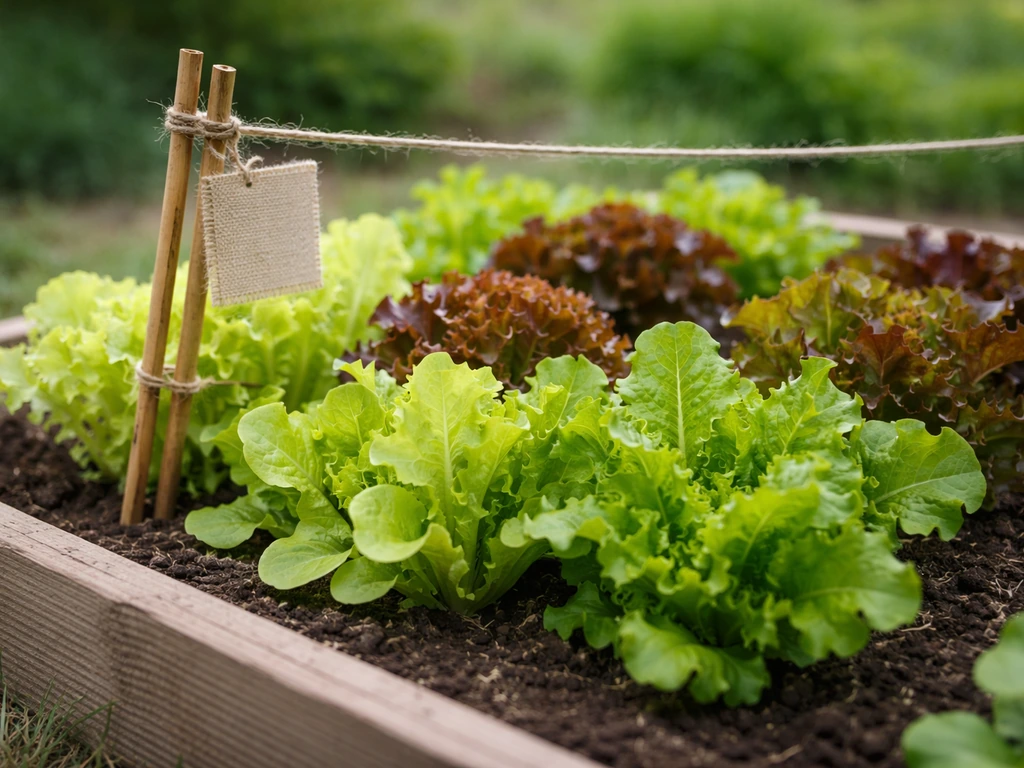
Not all lettuce handles outdoor conditions equally. Loose-leaf types are the most forgiving for beginners because they mature faster and tolerate more variation in soil and weather. Romaines and butterheads take longer and need more consistent care. If you're planting now in late spring or heading into summer heat, variety choice matters a lot more than it would in early spring or fall.
For heat resistance and slow bolting, a few varieties consistently outperform generic mixes. Super Jericho romaine matures in about 50–55 days and holds up well in warm stretches. Little Gem romaine comes in at 40–60 days and handles heat better than most compact varieties. Cimmaron is another solid romaine at 55–65 days with good heat tolerance. Oak-leaf types in general are worth seeking out if bolting has been your nemesis in past seasons. Loose-leaf varieties like Black Seeded Simpson or Red Sails are also quick and forgiving.
Timing is everything with outdoor lettuce. Lettuce can germinate in soil as cold as 32–35°F, but it does best when soil temps are between 60–75°F. You can direct sow as soon as soil temperatures hit 40–50°F in spring, which often means 4–6 weeks before your last frost date. For fall, count backward from your first expected frost by 60–70 days and sow then. Lettuce tolerates light frost, so a little cold at the end of the season won't kill it. The danger zone is sustained heat above 80°F, not cold.
| Variety | Type | Days to Maturity | Heat Tolerance |
|---|---|---|---|
| Super Jericho | Romaine | 50–55 days | High |
| Little Gem | Romaine | 40–60 days | High |
| Cimmaron | Romaine | 55–65 days | High |
| Oak-leaf types | Loose-leaf | 45–60 days | High |
| Black Seeded Simpson | Loose-leaf | 40–50 days | Moderate |
| Buttercrunch | Butterhead | 55–70 days | Moderate |
Prepare your bed and figure out sun vs. shade
Lettuce likes loose, well-draining soil that also holds moisture well. Before you sow, work in a couple inches of well-rotted compost or aged manure. This improves both drainage and moisture retention at the same time, which sounds contradictory but is exactly what shallow-rooted plants like lettuce need. Aim for a soil pH of 6.0 to 6.8. If you don't have a soil test handy, compost amendments generally push pH toward that sweet spot on their own. Avoid heavy clay or compacted soil. If you're working with either, raised beds or containers with quality potting mix are your best shortcut.
For sun: lettuce prefers full sun in spring and fall when temperatures are cool. In the summer months, afternoon shade becomes a real advantage. A spot that gets 4–6 hours of direct morning sun and is shaded during the hottest part of the afternoon will extend your lettuce season noticeably. If you're only growing in full sun, lean heavily on heat-tolerant varieties and be ready to harvest early before bolting kicks in. Tall plants or a shade cloth (30–40% shade) rigged over the bed works well once daytime temperatures regularly break 70°F.
How to direct sow lettuce seeds outdoors
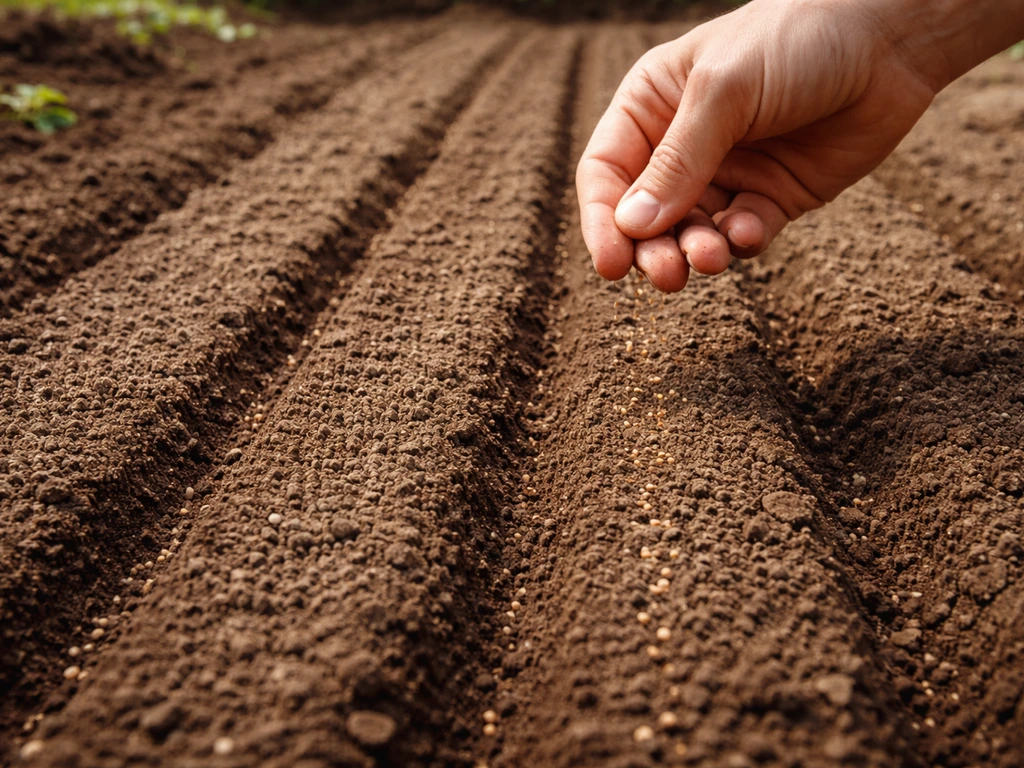
Direct sowing is the simplest approach and works well for most home gardeners. Lettuce seeds are tiny, so sow them thinly rather than dumping a cluster in one spot. Here's how to do it cleanly:
- Rake the bed smooth and remove any clumps or debris. Lettuce seeds need good contact with fine soil to germinate.
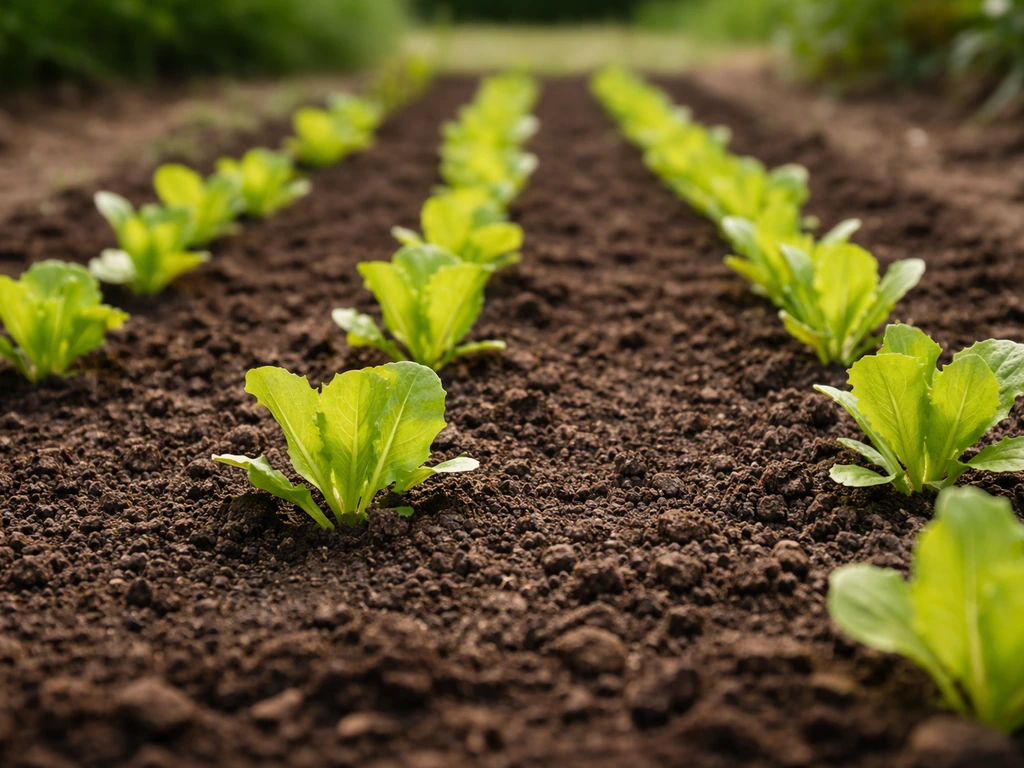
- Make shallow furrows about 1/4 to 1/2 inch deep. Rows should be spaced 18–30 inches apart for head types, or 12–18 inches for loose-leaf if you're tight on space.
- Sprinkle seeds thinly along the furrow. You're aiming for roughly one seed per inch to minimize waste, but a little overcrowding is fine since you'll thin anyway.
- Cover with a thin layer of fine soil or seed-starting mix and gently firm it down. Do not bury seeds deeper than 1/2 inch. Lettuce needs light to germinate well, and burying too deep slows emergence significantly.
- Water gently with a fine mist or a watering can with a rose head. You want moisture without washing seeds sideways or compacting the soil surface.
- Keep the seed bed consistently moist until germination, which typically takes 7–14 days depending on soil temperature.
Thinning: don't skip this step
Once seedlings are about 2 inches tall, thin them out. For loose-leaf varieties, aim for 6–8 inches between plants. For romaine or head lettuce, give each plant 8–12 inches. Crowded lettuce doesn't just produce smaller heads. It also creates poor air circulation, which leads to disease problems and faster bolting. Thin by snipping at soil level rather than pulling, so you don't disturb neighboring roots. The thinnings are completely edible and taste great in a salad right away.
Watering, fertilizing, and keeping lettuce from bolting
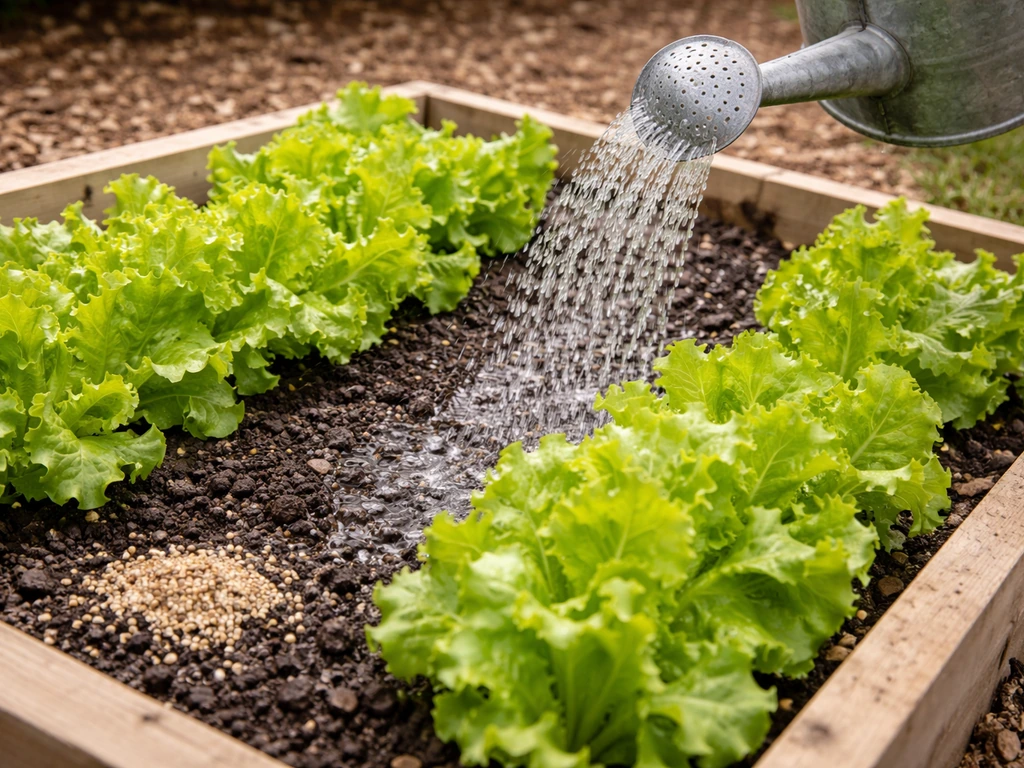
Lettuce has a shallow root system, which means it dries out faster than deeper-rooted vegetables and needs more consistent attention to watering. Target about 1–2 inches of water per week total, whether from rain or irrigation. Water in the morning so foliage dries before nightfall, which reduces disease pressure. Drip irrigation is ideal for lettuce because it delivers water directly to the root zone without wetting the leaves. If you're using overhead watering, just make sure to do it early.
Don't let the soil dry out completely between waterings. Lettuce under water stress turns bitter and bolts faster. Tipburn is commonly linked to water stress, which can cause a transient calcium deficiency in rapidly expanding leaf tissue under water stress. In the few days leading up to harvest, giving the plants a good drink actually makes leaves crisper and more flavorful. Think of it as a pre-harvest rinse from the inside out.
For fertilizing, lettuce is not a heavy feeder, but it does respond well to a nitrogen boost. About four weeks after transplanting or right at thinning time, side-dress with a nitrogen fertilizer. A practical rate is about 1/4 cup of a 21-0-0 fertilizer per 10-foot row. If you prefer to go organic, a thin top-dressing of compost (no more than 1 inch per 100 square feet) provides a gentle, slow-release nitrogen source. Avoid over-fertilizing with nitrogen late in the season. It pushes leafy growth but can also accelerate bolting.
Preventing bolting in warm weather
Bolting is when lettuce sends up a flower stalk and the leaves turn intensely bitter and tough. UMN Extension notes that lettuce can become extremely bitter after flowering, and that cool-season stress and bolting reduce overall quality leaves turn intensely bitter and tough.
It's triggered by sustained high temperatures, typically multiple days above 75°F, and by long daylight hours. Once a plant starts bolting, you can't reverse it. Your best tools are: choosing slow-bolt varieties, providing afternoon shade, watering consistently to avoid heat stress, and harvesting on the early side before the plant decides it's done. If you see a central stalk starting to rise and elongate, harvest everything immediately.
Bitter lettuce is still edible, just not pleasant to eat raw.
Troubleshooting common outdoor lettuce problems
Most outdoor lettuce problems are predictable and fixable once you know what you're looking at. Here are the ones I run into most often and what to do about them:
- Poor germination: Usually a soil temperature problem or seeds buried too deep. If soil is below 40°F or above 80°F, germination stalls. Try again when soil temps hit 55–70°F, and keep seeds no deeper than 1/2 inch. Also check that the seed bed stayed consistently moist during the germination window.
- Damping off (seedlings collapsing at the soil line): This is a fungal problem caused by Pythium or Rhizoctonia, typically in overly wet, cool, or poorly drained soil. Improve drainage, reduce overhead watering, avoid overwatering early seedlings, and make sure you're not sowing too densely.
- Slug and snail damage (ragged holes in leaves, slime trails): Slugs are most active on cool, wet nights. Hand-pick them in the evening with a flashlight. Iron phosphate slug bait is effective and safe around edible plants. Reducing mulch directly around seedlings also removes hiding spots.
- Cutworms (seedlings cut off at soil level overnight): Often the first sign is a seedling simply gone at the base with no other symptoms. Collars made from cardboard or plastic pushed 1 inch into the soil around seedlings help physically block cutworms.
- Aphids (sticky residue, curled or yellowing leaves): Look on the undersides of leaves. A strong stream of water knocks them off effectively. Insecticidal soap spray works for heavier infestations. Consistent monitoring and catching them early prevents a real problem.
- Downy mildew (pale yellow patches on top of leaves, gray-purple fuzz underneath): Common in cool, wet conditions with poor air circulation. Thin plants to improve airflow, avoid wetting foliage at night, and remove affected leaves promptly.
- Tipburn (brown, dry edges on inner leaves): Caused by water stress leading to calcium deficiency in fast-growing leaf tissue. Consistent watering and avoiding extreme temperature swings are the best prevention. Not a pest issue.
- Bitter or tough leaves: Almost always heat or drought stress, or a plant that's been left too long. Harvest earlier, water more consistently, and choose slow-bolt varieties for warm-season planting.
- Yellowing leaves: Can be nitrogen deficiency, overwatering, or aster yellows disease spread by leafhoppers. If the yellowing is uniform across the plant and you haven't fertilized recently, a nitrogen side-dressing often fixes it. If the plant looks distorted and mottled, pull it to prevent spread.
Harvest often and keep succession sowing for non-stop greens
The best thing about lettuce is that you don't have to treat it as a single harvest. For loose-leaf types, cut outer leaves as soon as they're big enough to use (usually 3–4 inches tall), leaving the central growing point intact. The plant regrows and gives you another cut. This cut-and-come-again method can give you multiple harvests from a single plant over several weeks. For head types like romaine, harvest the whole head when it's firm but before it starts to elongate. The flavor window for lettuce is best before hot, dry weather arrives, so don't wait.
Succession planting is how you avoid the feast-or-famine problem where everything matures at once and then nothing is ready for weeks. Sow a new row or small patch every 2 weeks throughout the cool growing season. This staggers your harvests so you always have something coming in. Loose-leaf lettuce matures fast enough that you can sow four or five successions in spring alone. In late summer, start your fall succession around 60–70 days before your first expected frost, using the same two-week stagger.
If you want to go further with lettuce growing in different settings, the fundamentals shift when you move indoors or into containers. Growing lettuce from seed indoors follows slightly different rules around light intensity and air circulation. Growing lettuce from seed indoors follows slightly different rules for light intensity, temperature, and airflow than outdoor sowing how to grow lettuce from seeds indoors.
And if you're exploring growing lettuce at home without seeds, transplants can shortcut the germination phase entirely when your outdoor timing is tight. For more detail on the full process, see how to grow lettuce at home as a beginner-friendly guide. If you want an even faster start, look for healthy store-bought lettuce seedlings or use transplants from a local nursery instead of trying to germinate from seed growing lettuce at home without seeds.
But if you're starting fresh outdoors with seeds in hand, the direct sow method described here is genuinely the most rewarding approach, and once you get the timing dialed in, you'll be cutting fresh lettuce for months. If you want the details step by step, this guide on how to grow lettuce from seed walks you through sowing, thinning, and timing for steady harvests direct sow method described here.
FAQ
How long do lettuce seeds take to germinate outdoors?
Yes, but timing matters. If you sow too early into cold soil, germination can be slow and uneven. A practical approach is to wait until soil is consistently around 40–50°F for direct sowing, then protect the row with a lightweight cold frame or row cover if nighttime dips are frequent.
What’s the biggest seeding mistake when learning how to grow lettuce from seed outdoors?
A common mistake is planting too deep. With lettuce seeds, stick close to 1/4 inch, press the soil gently over the seed row, and keep the surface moist until sprouts appear. If you bury them deeper than about 1/2 inch, many will fail to emerge.
Can I transplant lettuce seedlings outdoors instead of direct sowing?
You can, but it changes your spacing and watering needs. If you start in a tray and transplant, keep root disturbance minimal, water in well, and consider a slightly tighter spacing than direct sow because established seedlings will fill in faster. However, avoid transplanting into hot weather, since it can trigger bolting earlier.
What should I do if my lettuce seeds won’t sprout or seedlings collapse? (damping-off/rotting)
If your soil stays cold and wet, lettuce can rot before it ever sprouts or can develop damping-off in the seedling stage. Improve drainage with compost, avoid sowing in muddy ground, and use a row cover that still allows airflow. Remove cover during warm daytime stretches to prevent overheating.
How do I water lettuce outdoors when temperatures swing day to day?
Keep watering steady rather than soaking heavily then letting it dry. For small beds, aim for even moisture in the top few inches, and feel the soil surface daily during heat waves. Mulch can help conserve moisture, but keep mulch pulled slightly away from the base of seedlings to reduce slug and crown-rot issues.
My lettuce bolted, what can I do now, and how do I prevent it next time?
If they bolt, harvest immediately and do not try to “save” the plant. For future success, switch to cut-and-come-again loose-leaf types, provide afternoon shade (even temporary shade cloth), and start succession planting earlier so you are harvesting before sustained heat arrives. Also, avoid nitrogen boosts after the weather turns hot.
How can I tell whether bitter lettuce is from bolting or from watering problems?
Not all bitterness is bolting. Mild bitterness can come from uneven moisture, dry spells, or heat stress. In the short term, keep watering consistent and harvest leaves promptly. If the center stalk is elongating, that is true bolting and you should harvest everything right away.
Are days to maturity accurate for outdoor lettuce grown from seed?
Lettuce seed packets list “days to maturity,” but real timing changes with temperature. Use the guide’s cool-season window as your anchor, then start checking for size 1 to 2 weeks before the packet estimate. Once outer leaves reach useable size, cut-and-come-again can extend your harvest beyond the first “maturity” date.
How should I thin lettuce seedlings without damaging roots nearby?
If you have foot-traffic in the garden, consider edging or a light barrier so you do not compact the soil. For thinning, snip at soil level, keep the thinned plants (they are edible), and recheck spacing after a week because fast-germinating patches can crowd again.
When is the best time to harvest outdoor lettuce, and how often can I pick it?
For best leaf quality, avoid harvesting when the plants are waterlogged or during late-day heat. Morning harvest after dew has dried gives crisp texture and helps leaves keep better. For cut-and-come-again, remove only outer leaves and leave the central growing point untouched.
Do I need fertilizer for lettuce grown from seed outdoors, and when should I apply it?
A simple rule is to fertilize lightly and only at the right time. Side-dress around thinning time or when plants are established, then stop adding nitrogen once warm weather is driving growth changes. Too much late nitrogen can push tender leafy growth that also becomes more prone to quick bolting.
Can I grow lettuce from seed outdoors in containers, and what changes?
Yes, especially for small gardens. Containers dry out faster, so you may need more frequent, lighter watering, and you should use quality potting mix with good drainage plus a consistent moisture routine. Choose compact loose-leaf types if space is tight, and provide morning sun with afternoon relief in summer.
Will lettuce seedlings survive frost, and should I use a cover?
Light frost usually is not the main problem, but hard freezes and wind can damage tender seedlings and slow regrowth. Use a cold frame or row cover on nights with severe lows, and vent the cover during the day to prevent overheating. Bring protection in gradually so seedlings do not get a sudden temperature shock.