You can grow lettuce from seeds indoors in as little as 6 to 8 weeks from sowing to first harvest, and you don't need a greenhouse or special skills to do it. When you move outdoors, aim to sow lettuce seeds in cool weather and keep the soil evenly moist until seedlings establish grow lettuce from seeds indoors.
How to Grow Lettuce From Seeds Indoors Step by Step
Marcus Holloway
7 May 2026
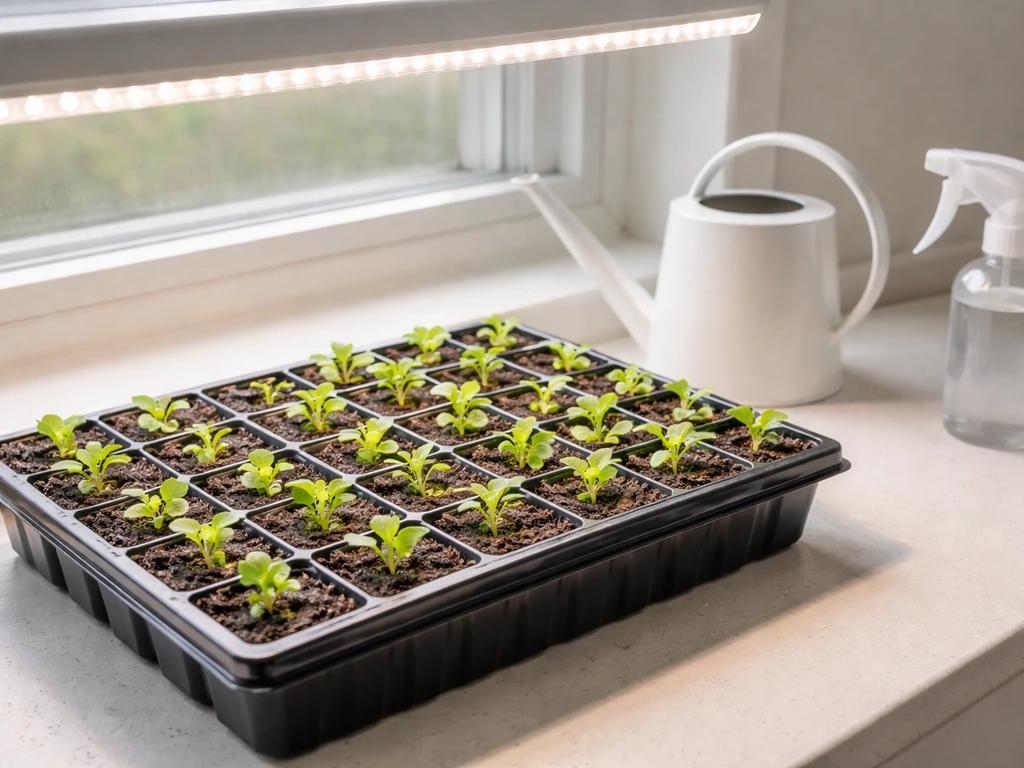
Sow seeds in a sterile seed-starting mix, keep the soil between 60 and 75°F, give seedlings 12 to 16 hours of light per day, and you'll have tender leaves ready to cut well before any outdoor garden gets going. The whole process is forgiving once you understand a few key rules, and this guide walks you through every step.
Once you have the basics down, you can follow the rest of this guide to nail the timing, light, and care needed for healthy lettuce right at home how to grow lettuce at home.
Choosing the right lettuce variety for indoor growing
Not all lettuce types are equally well-suited to life indoors, and variety choice is one of the biggest factors in your success. Lettuce falls into four main groups: looseleaf, romaine (cos), butterhead (bibb), and crisphead (iceberg). For indoor growing, looseleaf and butterhead varieties are your best friends. Looseleaf types like 'Black Seeded Simpson,' 'Oak Leaf,' and 'Salad Bowl' can be harvested in as little as 40 to 50 days and respond beautifully to cut-and-come-again harvesting. Butterhead varieties like 'Buttercrunch' and 'Tom Thumb' take around 60 to 70 days and form small, loose heads that work perfectly in containers.
Avoid crisphead (iceberg) types indoors. They need a long, cool growing season of up to 85 days and demand consistent outdoor-style conditions that are difficult to replicate inside. Romaine is workable but takes more vertical space and a longer commitment. My recommendation for beginners: start with a looseleaf mix or a butterhead variety, get confident with the process, and then experiment with romaine once you have the basics dialed in.
If you want a continuous harvest rather than a single big cutting, choosing two or three varieties that mature at different rates is a smart move. You get the short-season looseleaf types producing quickly while the butterhead types catch up a few weeks later. This is essentially succession planting built into your variety selection, and it's a technique worth keeping in mind whether you're growing indoors or out.
What you need before you start: supplies and setup
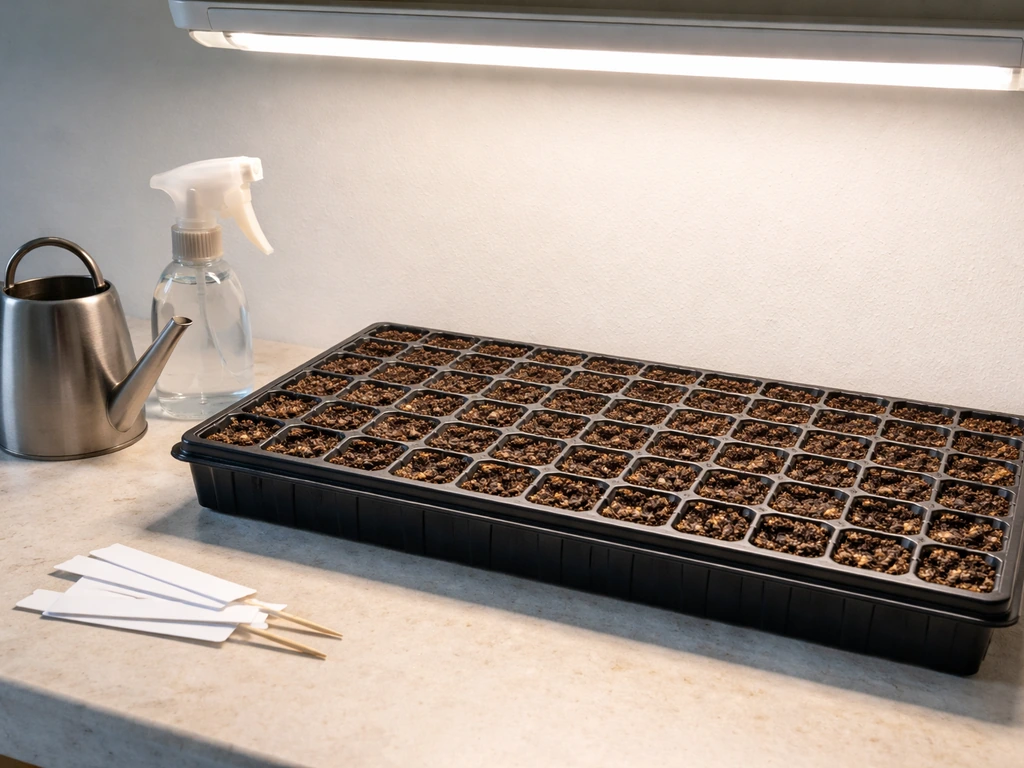
Getting the right setup from the beginning saves a lot of frustration. Here's what I'd gather before sowing a single seed.
- Seed-starting mix: Use a commercial peat or coco-based seed-starting mix, or make your own with equal parts peat moss (or coco coir), perlite, and vermiculite. Do not use garden soil indoors. Garden soil compacts in containers, drains poorly, and brings in pests and pathogens. A sterile, soilless mix is non-negotiable for indoor starts.
- Containers or seed trays: Small cell trays (72-cell or 128-cell inserts) work great for germination. Once seedlings are ready to transplant, move them into individual 4- to 6-inch pots or a longer window box that gives each plant at least 6 inches of space. Every container must have drainage holes.
- A tray or saucer underneath: Captures drainage and allows bottom-watering, which keeps the surface drier and reduces damping-off risk.
- A humidity dome or plastic wrap: Covers the tray during germination to hold moisture. Remove it as soon as seeds sprout.
- A grow light: Crucial indoors. A basic LED grow light mounted 4 to 6 inches above the seedlings is enough. If you plan to grow on a sunny south-facing windowsill, you can try it, but results are usually disappointing without supplemental light.
- Labels and a marker: Label every tray. Once seedlings emerge, all lettuce looks the same, and forgetting which variety is which is extremely common.
- A spray bottle or watering can with a gentle rose head: For watering seedlings without blasting them out of the soil.
One detail that matters more than people expect is drainage. Soggy roots are the number-one killer of indoor lettuce seedlings. If you're reusing old containers, wash them with a dilute bleach solution (about 1 part bleach to 9 parts water) to kill any lingering pathogens before filling with fresh mix.
How to germinate lettuce seeds indoors
Timing your indoor sow
Lettuce can be started indoors at almost any time of year as long as you control conditions, but the most practical windows are late winter through spring (to get a head start before outdoor planting) and late summer through fall (when outdoor temperatures get too hot). For most home gardeners, starting seeds indoors 3 to 5 weeks before you plan to transplant them to a bigger container or an outdoor bed is the standard approach. That 3-to-5-week seedling stage aligns well with the 6-to-8-day germination period, so plan roughly 4 to 6 weeks total from sowing to transplant-ready seedlings.
The germination process step by step
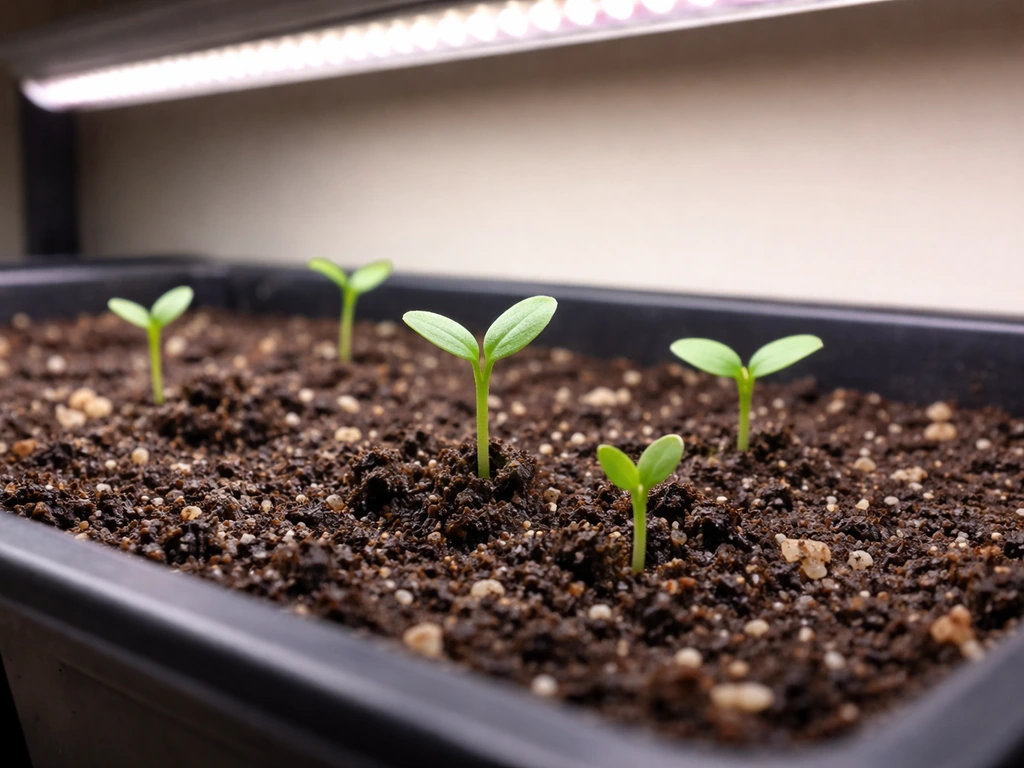
- Fill your cell tray or small pots with moist (not soaking wet) seed-starting mix. Water it before sowing so the mix settles and you're not disturbing seeds after the fact.
- Sow seeds about 1/4 to 1/2 inch deep. Lettuce seeds are tiny, so just press two or three into each cell and lightly cover. Here's something worth knowing: lettuce seeds actually need a little light to germinate well, so don't bury them deeply. A thin dusting of mix over the top is all you need.
- Mist the surface gently with a spray bottle and cover the tray with a humidity dome or plastic wrap.
- Keep the tray at 60 to 75°F. This is the optimal germination range. Avoid temperatures above 80°F because heat will push lettuce seeds into dormancy, meaning they simply won't sprout until things cool down. A kitchen counter away from direct heat vents usually works fine.
- Check the tray daily. The soil should stay evenly moist but never waterlogged. If condensation builds up heavily inside the dome, lift it briefly to air things out.
- Expect germination in 6 to 8 days under good conditions. Once you see sprouts, remove the dome immediately and move the tray under your grow light.
Light is critical the moment seedlings emerge. If they don't get strong light right away, they will stretch toward any available source and become weak and spindly within days. Set your grow light to run 12 to 16 hours per day and keep it just 4 to 6 inches above the tops of the seedlings. Raise the light as the plants grow to maintain that gap.
Transplanting seedlings and getting spacing right
Seedlings are ready to transplant when they have developed their first set of true leaves, which are the real lettuce-shaped leaves that appear after the initial rounded seed leaves (cotyledons). This typically happens about 3 to 5 weeks after germination. At this stage, thin or transplant so each plant has its own space, because crowded roots lead to stunted, bitter lettuce.
When thinning cell trays, wait until seedlings have 3 to 4 true leaves, then snip the extras at soil level with small scissors rather than pulling them out. Pulling disturbs the roots of the seedling you want to keep. For transplanting into larger containers, use divided containers or individual pots so roots don't grow together and get torn apart when you try to separate them later.
Spacing guidelines depend on what you're growing into. For looseleaf lettuce in containers, 6 inches between plants is a workable minimum. Butterhead varieties need a bit more room, around 6 to 8 inches apart, because they form small heads. If you're growing in a window box or trough, you can stagger plants to fit more in, but don't crowd them. Crowding reduces airflow, which raises your risk of disease.
Handle seedlings gently when transplanting and water them in well right after. Avoid fertilizing immediately at transplant time. Let the roots settle for a few days first.
Caring for indoor lettuce: light, temperature, water, and fertilizer
Light
Light is the most common limiting factor for indoor lettuce. Aim for 12 to 16 hours of artificial light per day. A full-spectrum LED grow light works well and runs cool enough that it won't warm the air around your plants too much. If you're relying on a window, a south-facing window in winter provides roughly 4 to 6 hours of usable light on a clear day, which is usually not enough on its own. Supplement with a grow light, or accept that window-only plants will grow slowly and be more prone to bolting.
Temperature
Lettuce is a cool-season crop and genuinely prefers cooler conditions than most other vegetables. During the day, aim for 65 to 70°F. At night, 45 to 55°F is ideal, though most home environments stay warmer than that. Temperatures consistently above 75 to 80°F will push lettuce toward bolting (more on that in the troubleshooting section). If your growing space gets warm, a small fan helps with air circulation and mild cooling, and placing pots away from heating vents or radiators makes a real difference.
Watering
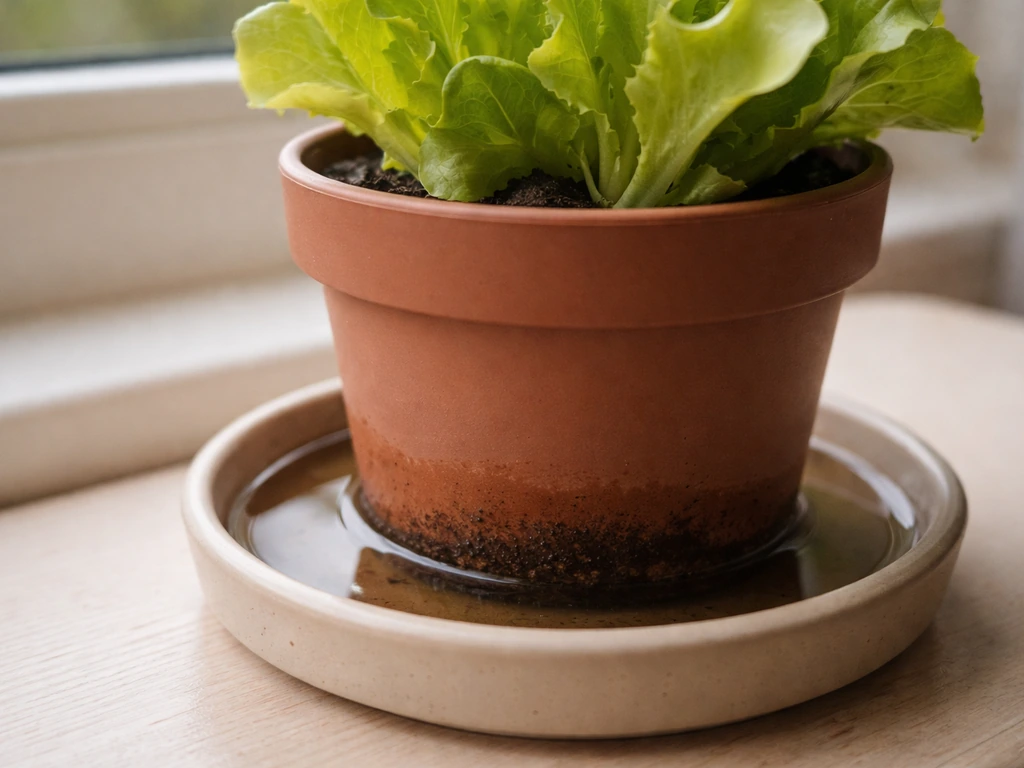
The goal is to keep the growing medium evenly moist but never saturated. For indoor containers, bottom-watering (pouring water into the saucer and letting the roots draw it up) is a great technique because it keeps the soil surface drier and reduces the chance of fungal problems. Water when the top inch of mix starts to feel dry to the touch. Avoid letting pots sit in standing water for more than an hour or two after watering.
Fertilizing
Lettuce is a fast-growing leafy crop that responds well to nitrogen. About 4 weeks after transplanting (or when you thin seedlings in a larger container), a light nitrogen fertilizer application will kick growth into gear. A diluted liquid fish emulsion or balanced liquid fertilizer (like a 5-1-1 or 10-10-10 diluted to half strength) applied every 2 weeks works well for containers. If you want a simpler approach, a small amount of a granular nitrogen fertilizer (like 21-0-0) worked lightly into the top of the soil achieves the same result. Don't over-fertilize, though. Too much nitrogen late in the growth cycle can make leaves soft and may accelerate bolting.
Harvesting your lettuce and keeping it producing
When and how to harvest
Looseleaf lettuce can be harvested starting when outer leaves are about 4 to 6 inches long, which typically happens 40 to 50 days after sowing. Don't wait for the whole plant to look "finished." Harvest individual outer leaves regularly and the plant keeps producing from the center. This is the cut-and-come-again method, and it's the most productive way to grow lettuce indoors. After a cutting, plants can regenerate and be ready for another harvest in about 2 to 3 weeks, as long as you keep watering and give a light fertilizer boost.
For butterhead types, you can either harvest the whole head once it forms (around 60 to 70 days) or harvest outer leaves the same way as looseleaf. Harvesting outer leaves extends the butterhead plant's productive life significantly.
Always harvest in the morning when leaves are crisp and hydrated. Cut with clean scissors rather than pulling, and rinse leaves immediately if you're eating them fresh.
Succession planting for a continuous supply
A single tray of lettuce will eventually run out of steam, especially as plants start to bolt. The best way to keep fresh lettuce coming is succession planting: sow a new small tray of seeds every 2 weeks. That way, you always have seedlings at different stages, and when one batch starts to go bitter or bolt, the next is ready to take over. This approach is far more reliable than trying to squeeze every last leaf out of an aging plant.
You can also mix variety timing as a built-in form of succession. Sowing a fast looseleaf variety alongside a slower butterhead in the same session means they won't both peak at the same time, giving you a slightly spread-out harvest window without the effort of staggered sowing dates.
Troubleshooting common indoor lettuce problems
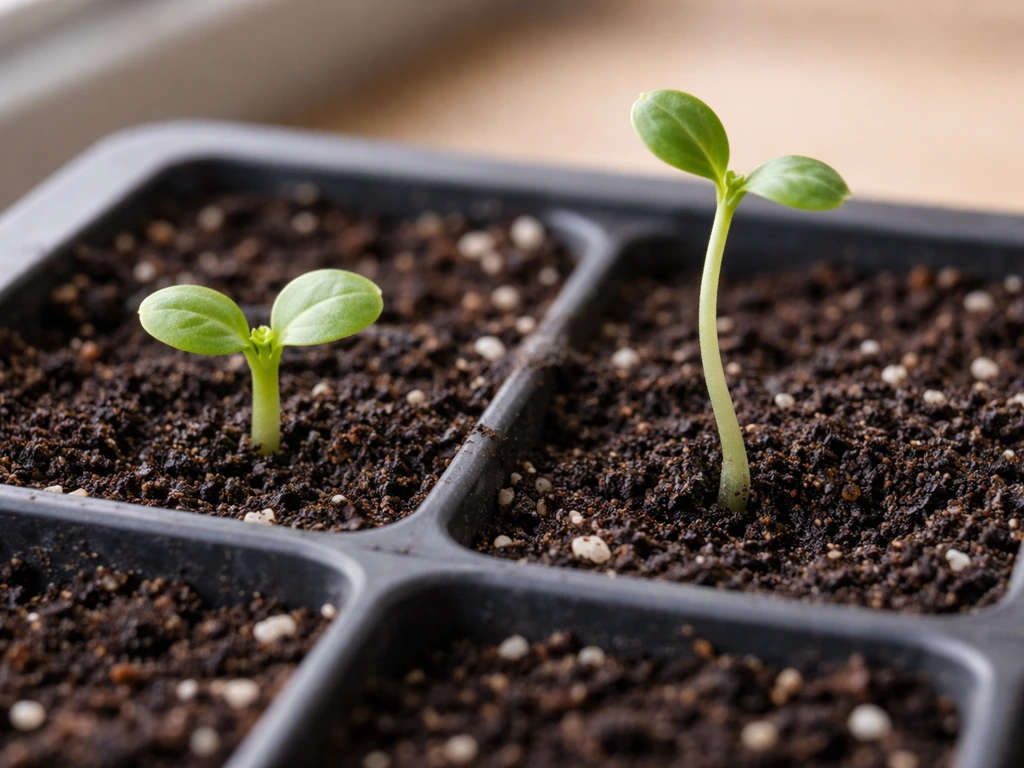
Leggy, stretched seedlings
If your seedlings are tall and spindly with a lot of stem between the soil and the first leaves, they're not getting enough light. This is the most common indoor seedling problem. Fix it immediately by lowering your grow light to within 4 to 6 inches of the seedling tops and increasing the photoperiod to 14 to 16 hours. Unfortunately, severely leggy seedlings rarely recover their shape, but you can bury a bit of the stem when transplanting to add some support. Prevention is much easier than the fix: get light close from day one.
Damping off
Damping off is a fungal disease that causes seedlings to suddenly collapse at the soil line, almost like they've been pinched off. It's caused by overwatering and/or using non-sterile soil. If you see it in one cell of a tray, it can spread quickly to neighboring seedlings. Remove affected plants immediately, improve air circulation with a small fan, and let the soil surface dry slightly between waterings.
To prevent it in the first place: always use sterile seed-starting mix, avoid waterlogging, and never let the tray sit in standing water for extended periods. If you’re reusing old containers or trays, sterilizing them with a 10%, 15% bleach solution for about one hour and then rinsing with clean water is recommended to reduce damping-off risk.
Slow or no germination
If seeds haven't sprouted after 10 to 12 days, temperature is usually the culprit. Check that your germination area is between 60 and 75°F. Temperatures above 80°F will push seeds into heat dormancy, meaning they go dormant rather than germinating. Move the tray somewhere cooler, wait a few more days, and in many cases seeds will sprout once the temperature drops. Also double-check that seeds weren't buried too deeply. Old seed stock can also cause poor germination, so always use seeds from the current season or stored in cool, dry conditions.
Bolting
Bolting is when lettuce sends up a central flower stalk, leaves turn bitter, and the harvest is essentially over. It's triggered by a combination of long days, high light intensity, and heat. Indoors, the most common cause is temperatures consistently above 75 to 80°F. If your plants bolt, there's no reversing it, but you can slow it down by harvesting aggressively, moving plants to a cooler spot, and making sure they're not under lights for more than 16 hours a day. The best prevention is temperature management and choosing bolt-resistant varieties (look for "slow to bolt" on seed packets).
Tipburn
Tipburn shows up as brown, papery edges on the inner young leaves, and it looks alarming, but it's not a disease. It's a localized calcium deficiency in rapidly growing tissue, triggered by inconsistent watering (especially drought followed by heavy watering) that disrupts calcium uptake in the fastest-growing leaves. The fix is simple: water more consistently so the soil stays evenly moist rather than going from dry to saturated. Improving airflow around plants also helps.
Aphids and other pests
Indoor lettuce can attract aphids and spider mites, especially in dry conditions. Aphids are tiny and green (or yellow or black) and cluster on new growth and the undersides of leaves. Mites cause stippled, silvery-looking leaves. For both, start with a strong spray of water to knock pests off the plant. Follow up with insecticidal soap or neem oil, applied according to label directions, covering both sides of leaves. Repeat every 5 to 7 days for 2 to 3 applications. Since you're growing for food, rinse harvested leaves thoroughly. Keeping humidity from getting too low (dry indoor air encourages mites) and inspecting new plants before bringing them near your lettuce are the best preventive steps.
Yellowing leaves and nutrient issues
If older lower leaves start turning pale yellow while new growth looks normal, the plant is probably nitrogen-deficient. This is common in container-grown lettuce because regular watering flushes nutrients out of the mix. Apply a diluted liquid nitrogen fertilizer and the plant should green up within a week. If the yellowing is in new growth rather than old leaves, that points to a different issue (possibly iron or manganese), which is less common in standard seed-starting mixes. In that case, try a balanced liquid fertilizer with micronutrients.
Variety comparison: which lettuce type works best for your indoor setup
| Lettuce Type | Days to Harvest | Container Suitability | Cut-and-Come-Again | Best For Beginners |
|---|---|---|---|---|
| Looseleaf | 40–50 days | Excellent | Yes, very productive | Yes, top pick |
| Butterhead/Bibb | 60–70 days | Good | Yes, outer leaves | Yes, great second choice |
| Romaine/Cos | 70–80 days | Moderate (needs height) | Partially | Moderate |
| Crisphead (Iceberg) | 75–85 days | Poor | No | Not recommended indoors |
If you're growing indoors for the first time and want reliable, fast results, start with looseleaf. It's the most forgiving, the fastest, and the most productive under indoor light conditions. Once you're comfortable with the process, the techniques here apply equally well if you decide to move your growing outdoors or experiment with other growing methods. If you want to try growing lettuce at home without seeds, you can use simple regrowing methods from store-bought lettuce to get leaves without starting from seed how to grow lettuce at home without seeds.
FAQ
Can I start lettuce seeds in a regular potting mix instead of seed-starting mix?
You can, but it raises the risk of damping off. Seed-starting mix is lighter and less likely to stay waterlogged. If you must use potting soil, sterilize containers well, use a very fine, well-draining mix, and avoid overwatering (let the surface dry slightly between waterings).
How deep should I sow lettuce seeds indoors?
Sow very shallowly. Lettuce seeds need light to germinate well, so burying them too deeply commonly delays or prevents sprouting. If in doubt, press seeds lightly into the mix and cover with a thin dusting rather than a thick layer.
My seedlings germinated but stopped growing, what should I check first?
Check light first, then temperature. Stagnant growth indoors is usually from insufficient photoperiod or a light left too high above the plants. Also verify your growing medium is kept evenly moist, not repeatedly drying out and re-wetting.
Do lettuce seedlings need darkness at night under grow lights?
They do not need a total dark period, but constant, very long light can contribute to bolting pressure. A practical approach is to keep the same daily schedule you started (about 12 to 16 hours) and give at least an “off” window so plants can regulate their growth rhythm.
Should I thin seedlings immediately, or can I wait?
Thin once they have 3 to 4 true leaves. Waiting longer keeps roots crowded longer, which increases bitterness risk and makes plants compete for light. When thinning, snip extras at soil level to avoid disturbing roots of the remaining seedlings.
Is bottom-watering always necessary?
No, but it helps. If you top-water, do it gently to avoid washing soil away from the stems, and water only until the top inch is evenly moist. Bottom-watering mainly reduces fungal risk by keeping the surface drier.
When do I start fertilizing, and how do I avoid burning lettuce?
Begin around 4 weeks after transplanting (or after thinning in larger containers) with diluted liquid nitrogen. Use half-strength and avoid fertilizing right after transplanting, because stressed roots absorb salts poorly. If leaves look dark and soft or growth turns overly lush, reduce frequency or concentration.
How can I tell if lettuce is bitter from overgrowth versus heat?
Bitter flavor is often tied to heat and bolting stress, especially when daytime temperatures run above about 75 to 80°F. If bitterness appears alongside slower growth and tougher leaves, try moving to a cooler spot and harvesting outer leaves sooner, because regrowth works better than letting plants fully mature.
What humidity level helps, and will misting hurt?
You want enough humidity to prevent overly dry conditions that favor spider mites, but not so much that foliage stays wet. Instead of frequent misting, focus on airflow (a small fan) and consistent watering, then aim for a stable indoor environment rather than wet leaves.
Can I grow multiple lettuces in the same container?
Yes, if you match spacing to the type and allow airflow. Looseleaf generally needs about 6 inches between plants, butterhead about 6 to 8 inches. If you pack them closer, expect higher disease risk and uneven harvest quality.
My seedlings are leggy (tall and thin), can I save them or should I restart?
You can sometimes improve mild legginess by lowering the light to within 4 to 6 inches and extending light hours to about 14 to 16. If they are severely stretched with long bare stems, prevention was better than cure, and restarting may produce a more uniform crop, especially if transplanting would weaken already-stressed seedlings.
How do I handle seedlings that are ready to transplant but I cannot upgrade the setup yet?
If they are about to outgrow their space, reduce stress by keeping light close and maintaining cooler temperatures, then transplant as soon as possible into individual pots or divided containers. Avoid heavy fertilizing while delayed, because crowded, stressed roots combined with extra salts can slow recovery.