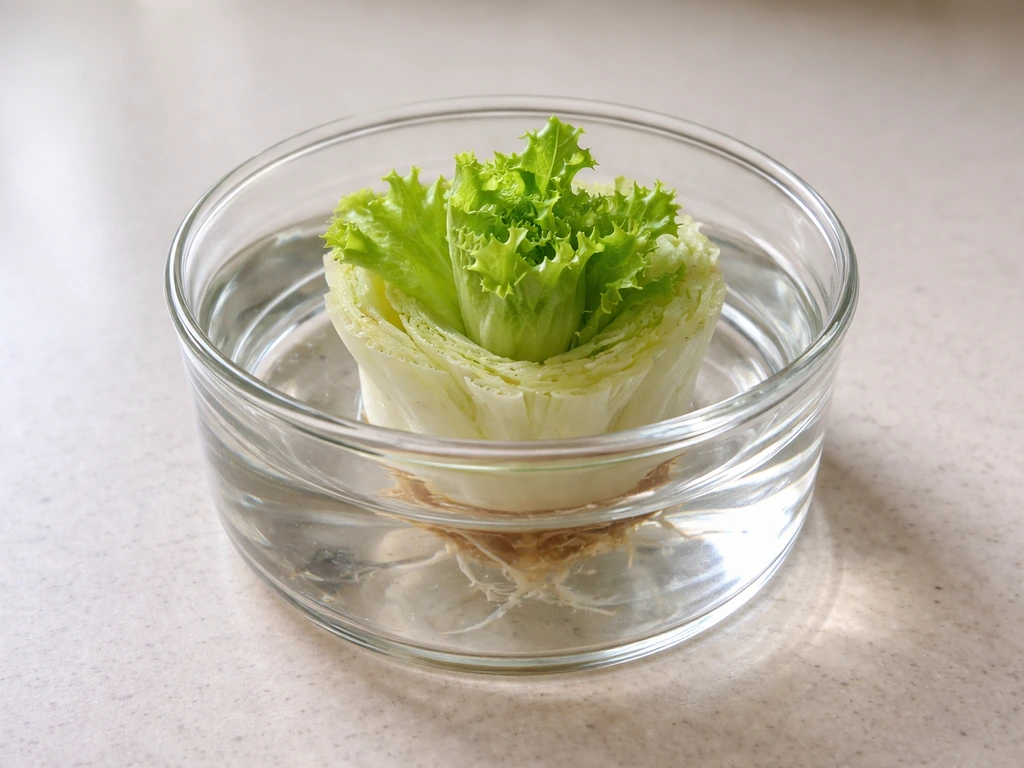
Yes, you can grow lettuce at home without seeds, and the most reliable way to do it is by regrowing lettuce from a store-bought head or bunch. You save the bottom 1 to 2 inches of the base, set it cut-side up in a shallow dish of water, keep it on a bright windowsill, and within about a week you'll see new leaves pushing out of the crown. It won't grow you a full head of lettuce every time, but you'll get real, harvestable leaves, often within 12 days, and you can repeat the process two or three times before the base is spent.
How to Grow Lettuce at Home Without Seeds: Regrow Guide
Marcus Holloway
30 Apr 2026
Can you actually grow lettuce without seeds?
The honest answer is yes, with one important caveat: seedless regrowth is not the same as growing lettuce from seed. If you want the full process, this guide on how to grow lettuce from seed covers seed choices, timing, and the steps to get strong seedlings growing lettuce from seed. When you grow from seed, you get a full plant with a full lifecycle.
When you regrow from a base or cutting, you're essentially waking up the crown tissue that's still alive in the stem and coaxing it to push out new leaf growth. That's genuinely useful, especially if you want fresh leaves quickly and don't have seeds on hand, but it's worth knowing what you're getting into. You're not going to reliably recreate a full, grocery-store-sized head.
What you will get is a flush of tender, young leaves, sometimes a couple of them, and that's worth doing.
This method works because lettuce keeps its growing point, called the crown or apical meristem, right at the base of the plant. As long as that tissue is intact and hasn't been cut away or rotted, it can regenerate. The seedless route is especially popular for people in apartments or anyone who just wants to stretch a grocery purchase a little further before starting a full growing setup. If you eventually want to go deeper into lettuce growing from scratch, starting from seed indoors or outdoors is a different process entirely, but the regrowth method is a perfectly legitimate starting point.
Your seedless options at a glance
There are a few ways to grow lettuce without sowing a single seed, and they're not all equal in terms of how reliably they work.
Regrowing from a store-bought head (the most reliable method)
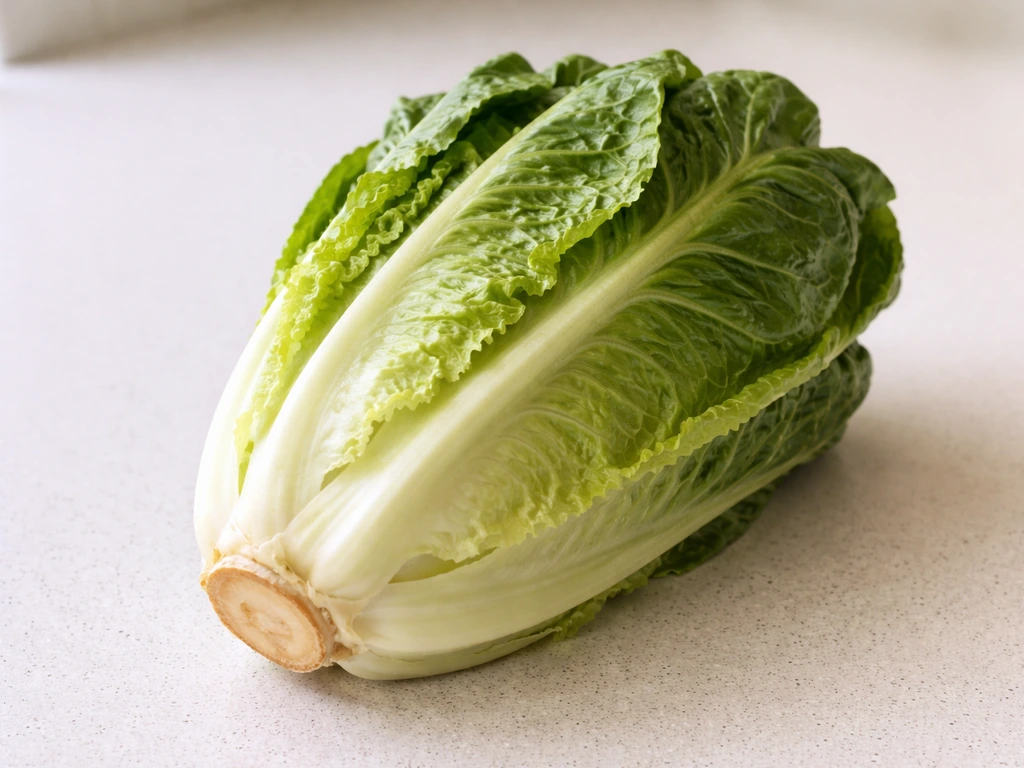
This is the one that actually works consistently. You buy romaine, butterhead, or even iceberg lettuce, use the leaves for a salad, and save the bottom inch or two of the stalk. That pale, dense stub is the crown, and it's the part that regrows. You place it in shallow water, and new leaves emerge from the center within days. Romaine is the easiest variety to work with because it has a sturdy, compact base that holds moisture and energy well. Butterhead works too. Iceberg can work if you save at least the bottom inch of the head including the root node.
Leaf cuttings
Some gardeners try rooting individual lettuce leaves in water or moist growing medium, but this is much less reliable than the base method. Individual leaves don't have crown tissue, so they rarely produce roots or new growth. I wouldn't count on this approach if you want results.
Romaine base or root cuttings
If you're harvesting lettuce from a plant you're already growing (in a container or outdoors) and you cut it back rather than pulling the whole plant, you can leave about 1 to 2 inches of the base in the soil or growing medium and the plant will often regrow a flush of new leaves. This is sometimes called the cut-and-come-again method, and it can be repeated one to three times at roughly 10-day intervals before the plant's energy and leaf quality start to decline noticeably.
Step-by-step: regrowing lettuce from a store-bought base
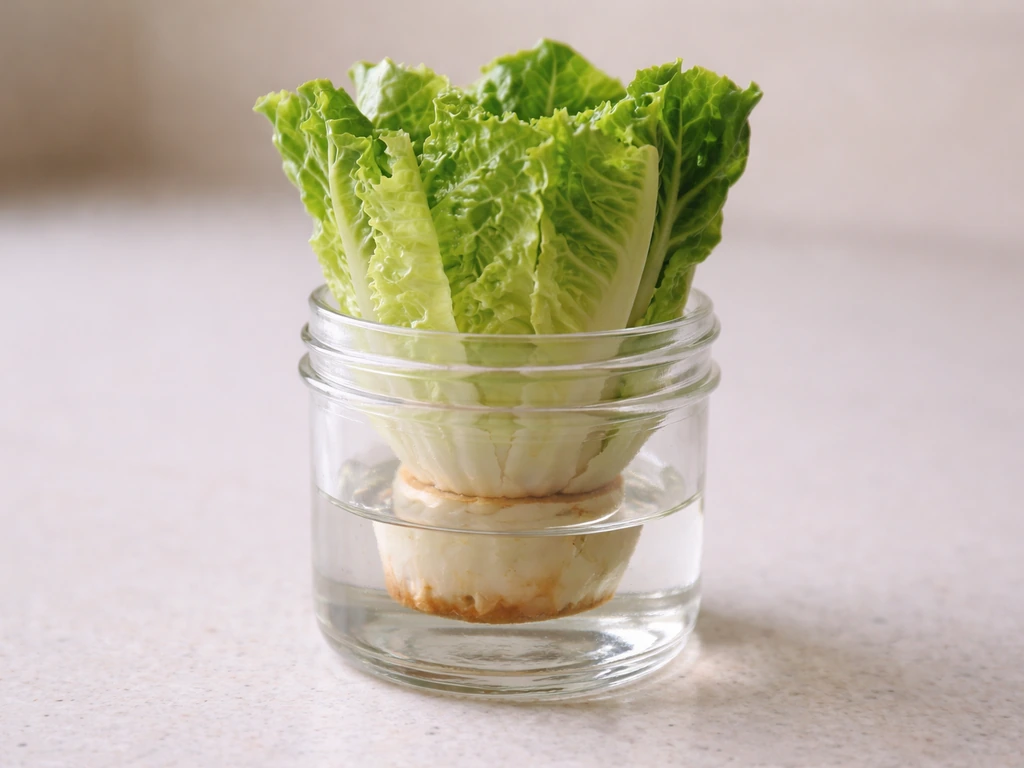
Here's exactly what to do, from the moment you open the bag or unwrap the head to your first harvest.
- Cut the base cleanly. Leave about 1 to 2 inches (roughly 3 to 5 cm) from the very bottom of the stalk intact. For romaine, cut across the stem about 2 inches up from the root end. The key is preserving that dense, pale crown tissue in the center. If it looks slimy or mushy at the cut, trim a little more off the top of the base until you reach firm tissue.
- Remove any outer leaves that are wilted or damaged, but leave the center intact. You want the crown exposed and facing upward.
- Find a shallow dish, a bowl, or even a wide-mouth jar. Place the base cut-side up, with the crown facing up toward the light. This part confuses people sometimes: the cut end goes up, the root end (the bottom of the stalk, which is more rounded) faces down into the water.
- Add just enough water to come about halfway up the base, roughly half an inch to an inch. You don't want the crown sitting in deep water or it will rot. Change the water every one to two days to keep it fresh and prevent bacterial buildup.
- Place the dish somewhere bright. A sunny windowsill with at least 6 hours of indirect or gentle direct light is ideal. A south-facing or east-facing window works well indoors.
- Watch for tiny new leaves emerging from the center of the crown within 3 to 5 days. Roots may appear from the base within 5 to 7 days, though not always right away.
- After about 10 to 12 days, you'll have a small but real flush of new leaves ready to snip and eat. Harvest by cutting the new growth above the crown, leaving the crown intact for another cycle.
- If you want to transplant into soil or a hydroponic setup instead of harvesting immediately, wait until you see roots that are at least half an inch long before moving the base.
The most common mistake I see is people leaving too much water in the dish and submerging the crown. That causes rot fast. Keep the water level low, just enough to reach partway up the base, and you'll have much better results.
What to do after it sprouts: soil, containers, or hydroponics
Once you've got roots and new leaves going, you have three main options for where to take the plant next. Each has different demands and different payoffs.
Growing in a container with soil
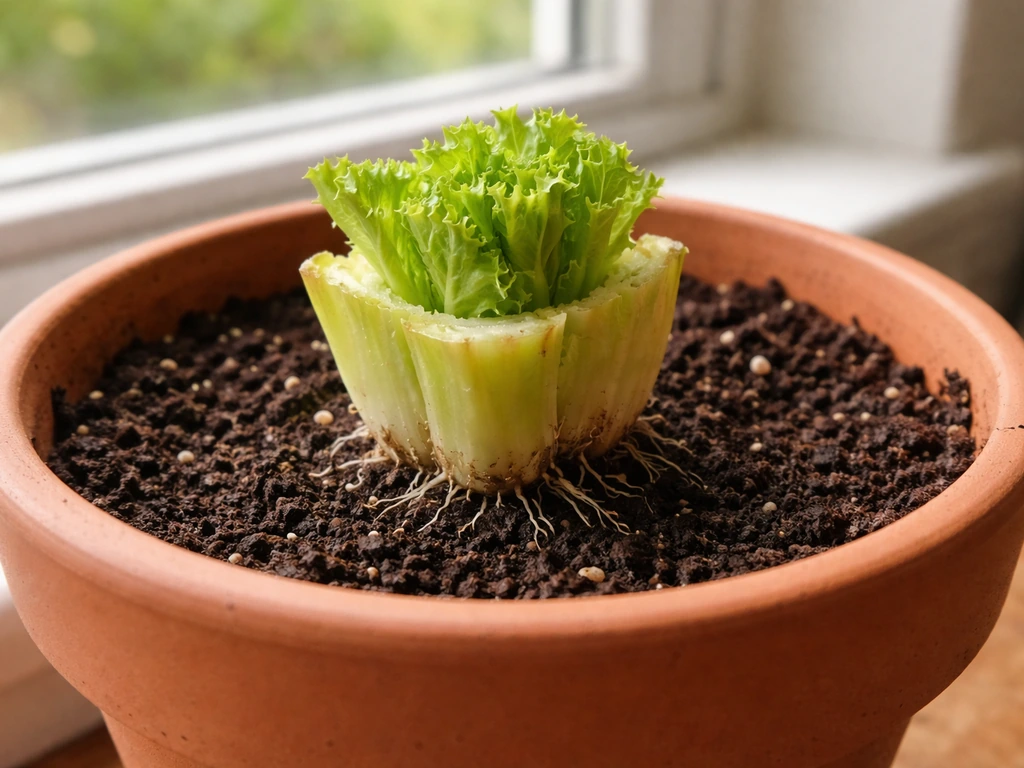
This is the easiest transition for most home gardeners. Once your regrown base has visible roots (at least half an inch), plant it into a pot with good-quality potting mix. Nestle the base into the soil so the crown is just at or barely above the soil surface. Water gently and keep the soil consistently moist but not waterlogged. A pot that's at least 6 inches deep works fine for a single plant. Use a container with drainage holes so excess water escapes. From transplant into soil, expect harvestable new leaves within about two to three weeks.
Growing outdoors in a garden bed
If you're transplanting your rooted base outdoors, wait until nighttime temperatures are reliably above 40°F (about 4°C). If you want the fuller head-growing route, the next step is learning how to grow lettuce from seed outdoors so you can plan timing, spacing, and thinning. Lettuce thrives in cool conditions, ideally daytime temperatures between 60 and 70°F (around 15 to 21°C). Plant it in a prepared bed with loose, well-draining soil, spacing it about 6 to 8 inches from other plants if you're adding multiple bases. Keep it well-watered, especially during warm or dry stretches, since brief moisture stress can really knock back leaf quality and development.
Growing in a hydroponic setup
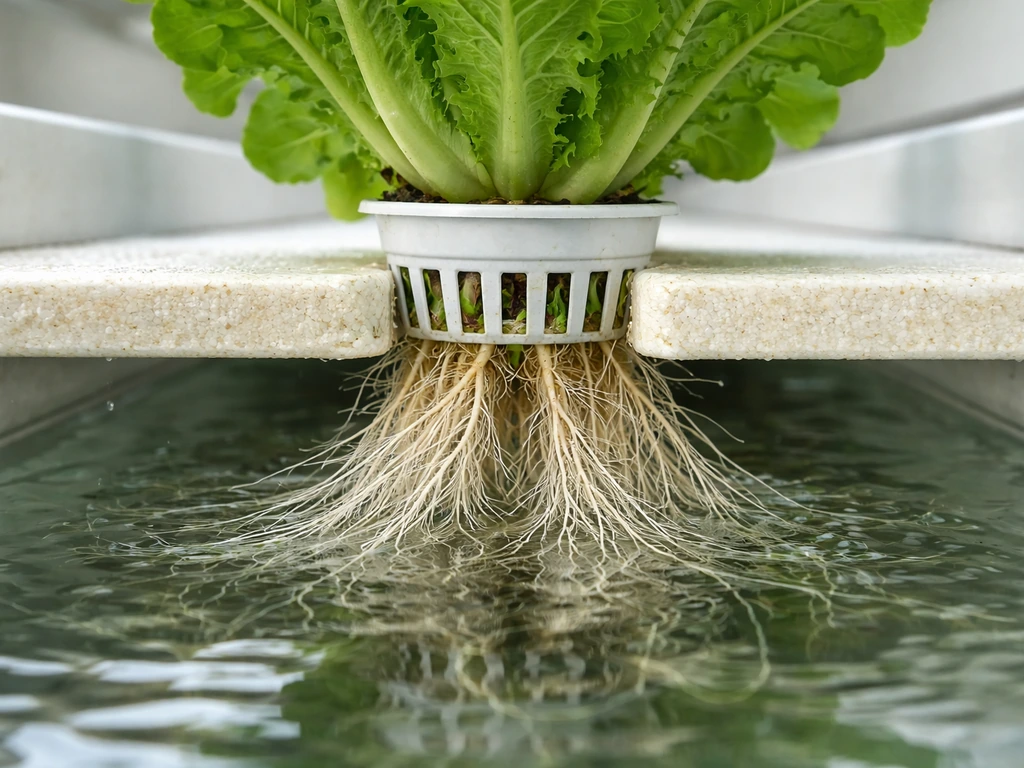
Hydroponics is actually a great fit for lettuce regrowth because you get precise control over what the roots receive, and lettuce is one of the most forgiving crops for simple water-culture systems like the blank" rel="noopener noreferrer">Kratky method. Once your base has roots, you can nestle it into a net cup with a little growing medium (like hydroton or rockwool) and suspend it over a nutrient solution. Target a pH of 5.
For hydroponic systems, nutrient solution pH is commonly maintained in the 5. 5 to 6. 5 range, and EC is managed using units like mS/cm [a pH of 5](https://extension. missouri.
edu/media/wysiwyg/Extensiondata/Pub/pdf/agguides/hort/g06984. pdf). 5 to 6. 5 and an electrical conductivity (EC) of about 1.
0 to 2. 0 mS/cm for lettuce. Check and adjust the solution every few days, since both pH and EC drift over time. In a well-maintained system, regrown lettuce can produce harvestable leaves within 10 to 14 days of being transferred.
Light, temperature, water, and timing
Getting these four things right is really what determines whether your seedless lettuce thrives or just sits there doing nothing.
| Factor | Ideal Range / Target | Notes for Regrowth |
|---|---|---|
| Light | 12–16 hours for active growth; minimum 6 hours bright indirect light | A sunny windowsill works for water-rooting; supplement with a grow light if your home is dim |
| Temperature | 60–70°F (15–21°C) daytime; nights not above 59°F (15°C) ideally | Romaine tolerates slightly higher temps than head types; avoid anything above 75°F consistently |
| Water (in-vessel) | Change water every 1–2 days; keep level at half the base height | Stale water causes rot and slows rooting; freshness matters more than people expect |
| Water (in soil/hydroponics) | Keep soil consistently moist; for hydro, replenish solution as levels drop | Lettuce has a high water requirement; even brief dry periods stunt leaf growth |
| Time to first leaf harvest | About 10–12 days from water rooting | Lower in cool, bright conditions; longer in dim or warm spots |
| Repeat harvest cycles | 1–3 cycles at roughly 10-day intervals | Quality declines after the third cut; start fresh with a new base after that |
One thing I want to call out on light: if you're growing indoors in a room without a genuinely bright window, the regrowth will be slow and leggy. You don't need a fancy setup, but a basic LED grow light positioned a few inches above the plant makes a real difference and is worth the small investment if you're serious about indoor regrowth.
When things go wrong: troubleshooting seedless lettuce
No roots forming after 10+ days
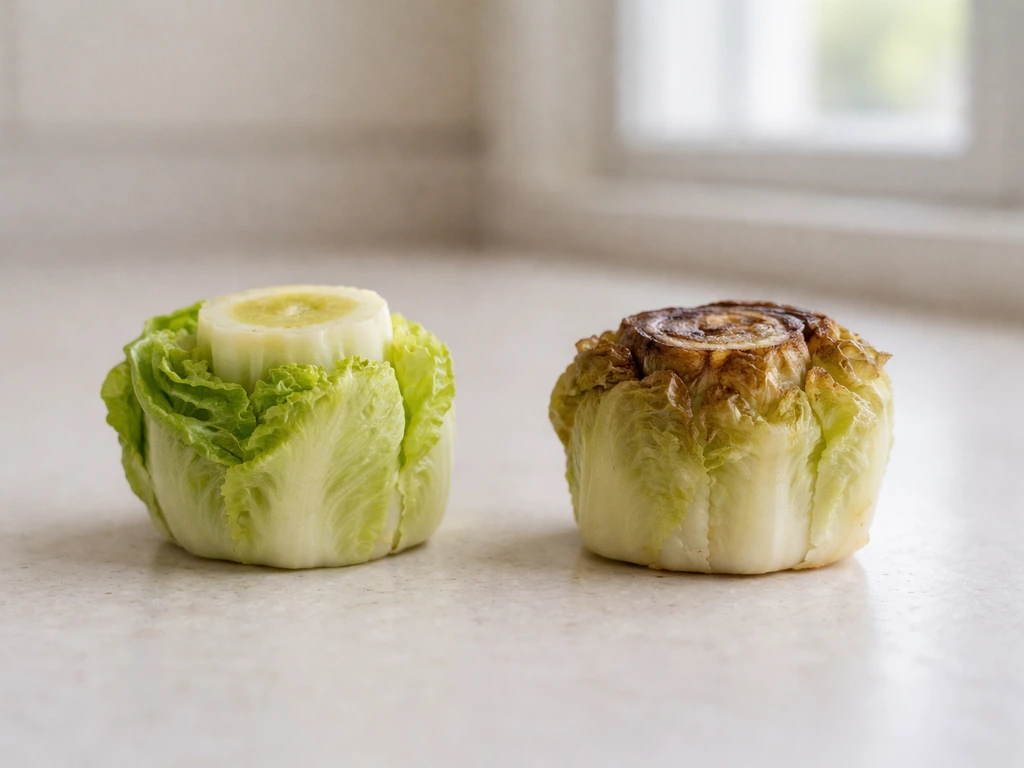
First, check that the crown tissue is still firm and pale, not brown or slimy. If it's degraded, you've lost the growing point and rooting won't happen. Trim back any mushy tissue until you reach firm material and try again with a fresh base. If the base looks healthy but still isn't rooting, the water is probably too deep, submerging the crown, or the temperature is too cold. Move it somewhere warmer and brighter and lower the water level.
Rotting base
Rot is almost always caused by too much water touching the crown, stale water that hasn't been changed, or a base that was already damaged at the cut. Change the water every day if needed in warm conditions. Keep the water level low enough that just the bottom of the base is submerged, not the crown. If rot appears, cut it back to healthy tissue immediately. If more than half the base has rotted, start with a fresh piece.
Bitter taste in leaves
Bitterness in regrown lettuce usually means the plant is stressed, either from heat, inconsistent watering, or having been regrown too many times from the same base. If temperatures are climbing above 75°F regularly, that alone can trigger bitterness. Move the plant somewhere cooler, water more consistently, and start fresh with a new store-bought base if you're past the second or third harvest cycle.
Bolting (plant goes to flower before you get a good harvest)
Bolting happens when lettuce gets too much heat or too many hours of light and thinks it's time to set seed. Bolting is when lettuce shifts into reproductive growth and begins sending up a flower stalk, and bitterness is associated with this bolting stage bolting (plant goes to flower). If your regrown plant suddenly sends up a tall center stalk and the leaves start tasting bitter and getting narrow, it's bolting.
There's no reversing it once it starts. The fix is preventive: keep temperatures in the 60 to 70°F range, avoid more than 16 hours of light per day, and time your regrowth for cooler months or cooler spots in your home. Romaine bolts later than most types, which is another reason it's the go-to for this method.
Slow or stunted growth
Slow regrowth almost always comes down to one of three things: not enough light, temperature too low, or water that's gone stale. If the little leaves that emerged look pale or are barely growing, add more light first. If the base is in a cold spot (below 55°F), move it somewhere warmer. And always make sure you're refreshing the water regularly.
Wilting after transplanting into soil
Some wilting in the first day or two after transplanting from water to soil is normal. The roots need to adjust from a water environment to a soil one. Keep the soil moist, shade the plant for the first day or two if you're transplanting outdoors in bright sun, and it should perk back up. If it's still wilting after three days, check that the soil isn't either waterlogged or bone dry.
Which lettuce types work best, and what to expect from each
Not all lettuce is equally suited to seedless regrowth. The success of the base method depends almost entirely on whether the variety has a dense, intact crown with stored energy. Here's a realistic breakdown.
| Lettuce Type | Regrowth Suitability | What to Expect |
|---|---|---|
| Romaine (Cos) | Best | Compact, sturdy base regrows reliably; multiple cycles possible; tolerates slightly warmer temps than other types |
| Butterhead (Boston, Bibb) | Good | Works well; softer base than romaine so watch for rot; produces tender leaves on first and second regrowth cycles |
| Iceberg (Crisphead) | Moderate | Save at least the bottom inch including the root node; produces leaves but often doesn't reform a full head; more sensitive to rot |
| Loose-leaf varieties | Poor to Moderate | Individual loose-leaf types lack the compact crown structure that drives reliable regrowth; results are inconsistent |
| Red leaf / Green leaf | Poor | Similar to loose-leaf; scattered leaf structure means less stored crown energy; not recommended for base regrowth |
Regardless of type, what you should realistically expect from seedless regrowth is a flush of young, tender leaves, not a replica of the head you bought. That first harvest of regrown leaves is genuinely good: mild, fresh, and usually ready in about 12 days from starting the water method. After two to three harvest cycles from the same base, the leaves get smaller, slower to grow, and the flavor often suffers. That's the natural endpoint for a regrown base, and it's completely normal. Once you've run through those cycles, start fresh with a new store-bought base or, if you want to keep growing indefinitely, transition to growing from seed to have a continuous supply.
If you find yourself wanting more lettuce, more reliably, and with more variety options, growing from seed is the natural next step from here. If you want to move beyond regrowing and learn how to grow lettuce from seeds indoors, the process is a bit different but it lets you plan for steady harvests. Seed-based growing gives you full control over the plant's whole life, faster growth in ideal conditions (baby leaves in as little as 25 days), and access to dozens of varieties you'll never find at a grocery store. But for a quick, no-cost, no-fuss way to get fresh lettuce from your kitchen scraps right now, the base regrowth method is genuinely hard to beat.
FAQ
Can I regrow lettuce from a head that looks wilted or has the bottom trimmed?
Yes, but only if the crown is still intact and firm. Discard any head where the base is brown, slimy, hollow, or has been cut away below the crown. For best odds, choose lettuce that was recently harvested and still has a dense, pale stem stub (the crown node) at the bottom.
If I harvest the leaves from regrown lettuce, will it keep producing or do I need to start over every time?
You can, but plan to start with a fresh, uncut crown for the best results. Once you have regrown roots, you can harvest leaves and then let it regrow from the same plant for a couple cycles. If you want continuous harvest without re-beginning the water step, keep a schedule so you transplant or move new bases in waves.
How often should I change the water during the regrowth phase?
Aim for cleanliness and low oxygen-stagnation. Use room temperature water and change it daily in warm rooms, every 1 to 2 days if your home is cooler. Don’t rinse the crown itself aggressively, but do remove any decaying leaf bits so they don’t foul the water.
What if my lettuce base stays firm but never sprouts any new leaves?
Test for viability by checking the crown texture, then the timing. If after about 5 to 7 days you see no new growth and the base stays firm but unchanged, it often means the crown tissue is damaged or too cold. Try a warmer bright spot and lower the water level first; if there is still no sign by day 10, switch to a new store base.
Can I regrow multiple lettuce bases in one pot or dish?
Yes, but container and spacing matter. For a window or small patio pot, you can grow multiple regrown bases as long as each has enough room, ideally several inches apart, and all crowns sit at the right soil height. If the plants shade each other or crowd tightly, you’ll get smaller, paler leaves and more bolting risk.
Is seedless regrowth basically the same as growing lettuce from seed, just faster?
No, because the regrowth method relies on living crown tissue and stored energy, not seed germination. Leaves you harvest are a second growth flush from an existing plant, so the flavor and size decline after repeated cycles. If you want ongoing, varied harvests, rotate fresh store bases or move to seed-grown plants.
Can I use a deeper jar or keep the lettuce base fully submerged to speed it up?
Not ideal. Water-culture in the dish works best because it’s easy to control water depth. If you keep the crown submerged or the water is too deep, rot becomes the main failure mode. If you prefer a container, use a shallow dish or a cup where only the very bottom of the base touches water.
How can I tell whether bitterness is from stress versus bolting?
Softer, flavorful leaves are easiest with cool conditions and consistent moisture. If you notice thin, narrow leaves with a bitter taste and a rising center stalk, it may be bolting. Reduce heat exposure, cut day length if indoors, and move to cooler light, but once bolting starts the taste usually won’t improve.
For cut-and-come-again lettuce, how low can I cut without ruining regrowth?
Yes, particularly for cut-and-come-again setups. However, the number of productive cycles depends on variety and how often you trim. If you cut too low, remove the crown by accident, or let the plant dry out, the next flush will be weak or stop entirely.
What’s the best way to maintain a steady lettuce supply using store-bought regrowth?
If you want to keep it simple, switch varieties when performance drops. After two to three regrowth cycles, start fresh with a new store-bought base to maintain leaf size and sweetness. If you want the most consistent results, stagger your starts so you don’t end up with all plants “peaking” at once.