Lettuce stops growing for a handful of very fixable reasons: it's too hot, too dark, too wet, too dry, nutrient-starved, or the seeds were planted wrong in the first place. Most of the time it's one of those six things. Work through this guide to find exactly where your lettuce is stuck, then follow the corrective steps at the end to either rescue what you have or restart smarter today.
Why Won’t My Lettuce Grow? Troubleshooting and Fixes
Marcus Holloway
26 Jun 2026
Quick diagnosis: what stage is your lettuce stuck in?
Before you start adjusting things, figure out which failure you're actually dealing with. The fix for seeds that won't sprout is completely different from the fix for seedlings that stopped growing, and both are different from a plant that's bolting. Narrow it down first.
| Symptom | Most likely stage | Jump to section |
|---|---|---|
| Seeds haven't sprouted after 10+ days | Germination failure | Soil/container setup and seed-starting mistakes |
| Sprouts appeared then collapsed at soil level | Damping-off (fungal) | Pests and diseases that stop lettuce from growing |
| Seedlings are tall, thin, and pale | Leggy / light-starved | Light, temperature, and bolting prevention |
| Leaves are yellowing from the bottom up | Nutrient deficiency | Nutrition problems |
| Plant is growing but slowly, leaves stay small | Temperature or water stress | Watering, drainage, and root health issues |
| Plant is shooting up a tall center stalk | Bolting | Light, temperature, and bolting prevention |
| Leaves have holes, discoloration, or sticky residue | Pest or disease damage | Pests and diseases that stop lettuce from growing |
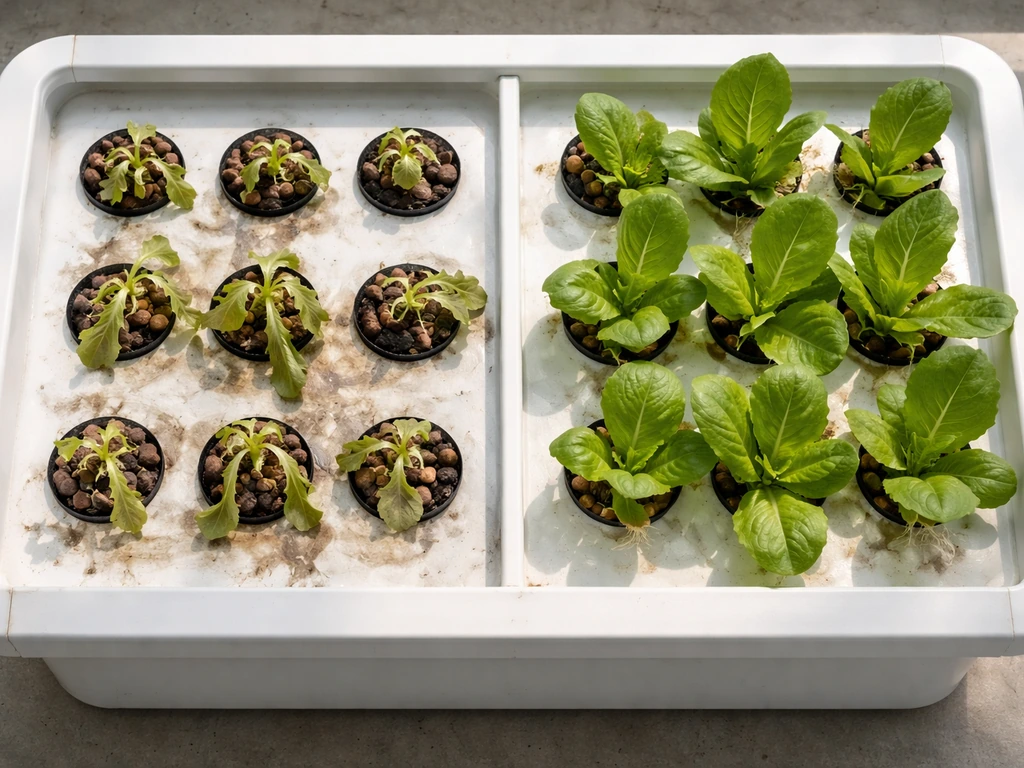
| Hydroponic plant wilts or roots turn brown | Root rot or pH/EC issue | Nutrition problems (including hydroponic nutrient basics) |
Light, temperature, and bolting prevention
These two factors cause more lettuce failures than anything else combined, and they're closely linked. Lettuce is a cool-season crop that thrives at 60 to 65°F. Once temperatures push consistently above 75 to 80°F, germination slows dramatically or stops, growth stalls, leaves turn bitter, and the plant redirects its energy toward flowering. That's bolting, and once it starts you can't reverse it. You'll see the center of the plant push up a thick stalk, leaves become narrow and intensely bitter, and the whole plant is done as a food source within days.
Bolting is triggered by a combination of heat, long day lengths (more than 12 to 14 hours of light), and water stress. In practical terms: if you're growing outdoors in summer without shade and your region regularly hits 80°F, your lettuce will bolt before you get a full harvest. A quantitative proteomics study on lettuce found that high-temperature treatment can initiate bolting, with early bolting observed by about an 8-day time point after heat exposure bolting before you get a full harvest. Indoors, if your grow light is running for 18 hours a day in a warm room, you're stacking two bolt triggers at once.
For leggy, stretched seedlings indoors, the cause is almost always too little light. A sunny windowsill gives maybe 2 to 4 hours of usable light on a good day, which is well below what lettuce needs. Under grow lights, keep the light source 4 to 6 inches above the tops of seedlings and run it for 14 to 16 hours per day. If seedlings are stretching toward the light and flopping over, the light is too far away.
- Outdoors in summer heat: add a 30 to 40 percent shade cloth over your bed and time plantings so harvest lands before your hottest weeks
- Outdoors in shoulder seasons: row covers or low tunnels trap warmth and can extend your window by 4 to 6 weeks on either end of the season
- Indoors near a window: supplement with a small LED grow light even in south-facing windows during spring and summer
- Indoor grow light setup: keep the light 4 to 6 inches above canopy, 14 to 16 hours on, 8 to 10 hours off — don't run 18+ hours unless you're using a bolt-resistant variety
- Hydroponics: keep your grow space temperature at or below 70°F — warm nutrient solution accelerates bolting and root disease
Watering, drainage, and root health issues
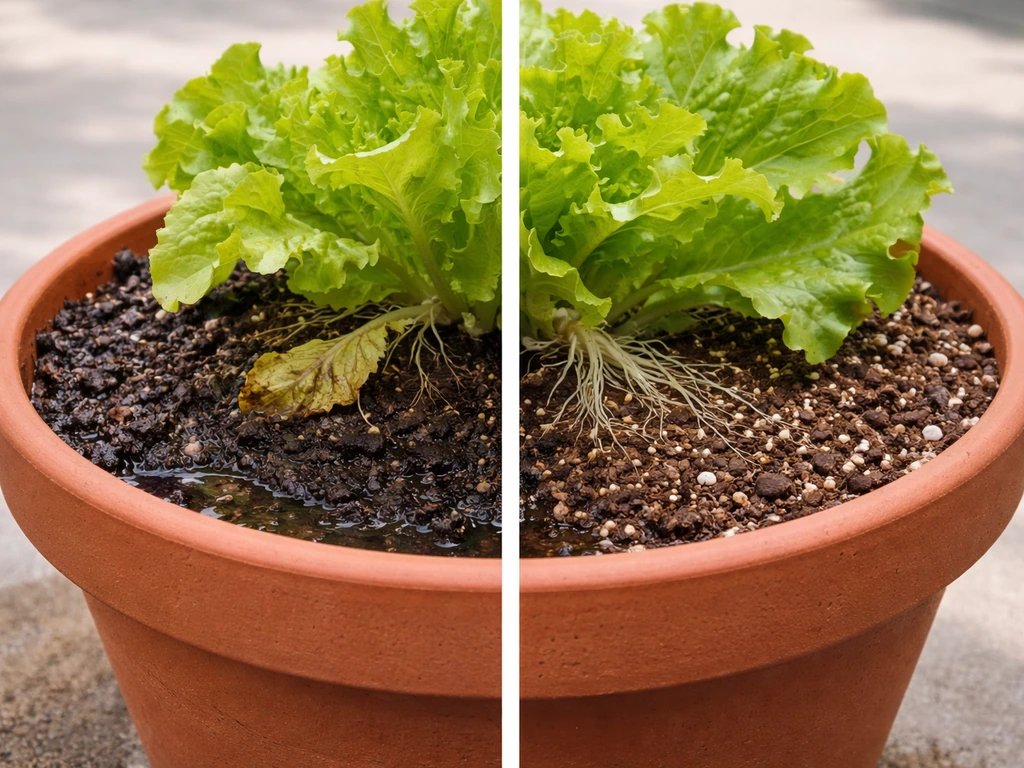
Lettuce has a shallow, relatively fine root system, which means it's sensitive to both overwatering and underwatering. The signs look surprisingly similar: wilting, slow growth, and pale or yellowing leaves. The difference is in the soil. If it's soggy or smells musty, you're overwatering. If it's bone dry an inch below the surface, you need more water.
In containers, poor drainage is the single most common watering-related failure. If your pot doesn't have drainage holes, or the holes are blocked, roots sit in standing water and begin to rot within days. Roots can't take up water or nutrients when they're rotting, so the plant acts like it's drought-stressed even when the soil is soaking wet. Always use containers with drainage, and never let a pot sit in a saucer full of water for more than an hour or two.
Outdoors in raised beds or garden soil, check that water isn't pooling after rain. Lettuce in heavy clay soil drowns quickly. If the soil forms a crust on top, it may be shedding water rather than absorbing it. In either case, working in compost or perlite improves drainage fast. For outdoor direct-seeded beds, the surface must stay consistently moist until germination, which means watering lightly once or twice daily in warm or windy weather. Letting the seed bed dry out even once can break germination for seeds that were just starting to crack.
- Containers: water when the top inch of soil is dry, not on a fixed schedule
- Outdoor beds: keep the top 2 inches moist from seeding through germination, then water deeply but less frequently once plants are established
- Check drainage holes before planting — run water through and confirm it exits freely
- Hydroponics: roots need oxygen as much as water — if roots are brown and slimy, root rot has set in; increase oxygenation and reduce water temperature
- If leaves wilt in the afternoon but recover at night, that's heat stress more than water stress — prioritize shade before adding more water
Soil, container setup, and seed-starting mistakes
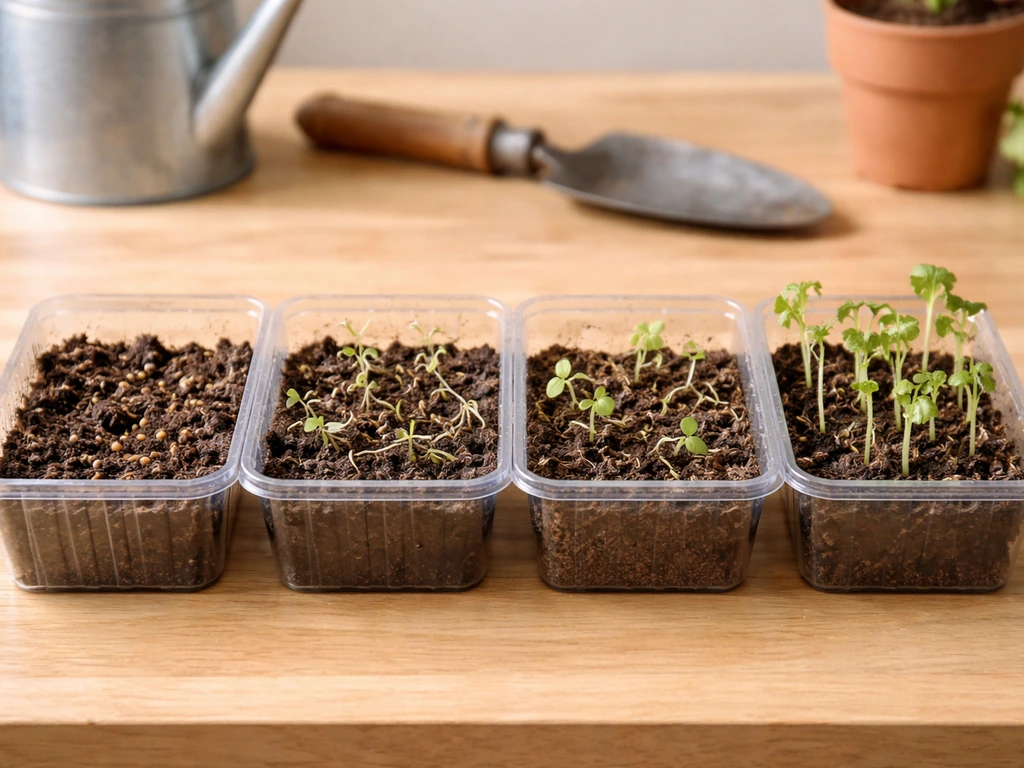
A lot of lettuce failures happen before the seed even gets a chance to sprout. The most common mistake is planting seeds too deep. Lettuce seeds are tiny, and they need light to germinate. The standard guidance is to barely cover them, about 1/8 inch deep at most. If you press them in the way you'd plant a bean or a pea, they may never break the surface. When direct seeding outdoors, SARE's guidance is to create a fine, firm seedbed: break up any clods, rake the surface smooth, and firm it lightly after seeding so the tiny seed has consistent contact with moist soil.
Container choice matters more than most people think. Lettuce needs at least 6 to 8 inches of soil depth for most leaf varieties and up to 10 to 12 inches for romaine types. Shallow window boxes (under 4 inches of actual soil depth) will produce stunted plants because the roots hit the bottom and stop. Bigger containers also stay moist longer, which is a real advantage for lettuce's shallow roots.
The growing medium itself is just as important. Garden soil straight from the ground is usually too dense for containers and often too heavy for good germination. Use a quality seed-starting mix or a well-draining potting mix for containers. For outdoor beds, incorporate 2 to 3 inches of compost into the top 6 inches of soil before planting. Avoid using fresh uncomposted manure near lettuce because nitrogen burns and pathogen risk are real problems.
- Seed depth: 1/8 inch maximum, or simply press seeds onto the surface and mist
- Soil temperature for germination: 60 to 80°F is the usable range, with 65 to 70°F ideal — below 40°F or above 80°F, germination essentially stops
- Container depth: minimum 6 inches for loose-leaf varieties, 10 to 12 inches for romaine
- Potting mix: use a light, well-draining mix — avoid garden soil in containers
- Spacing: thin seedlings to at least 4 to 6 inches apart for loose-leaf and 8 to 12 inches for head types — crowded plants compete for light and air and grow slowly
- Transplanting seedlings: handle roots gently, water in immediately, and protect from direct sun for the first 2 to 3 days to reduce transplant shock
Nutrition problems (including hydroponic nutrient basics)
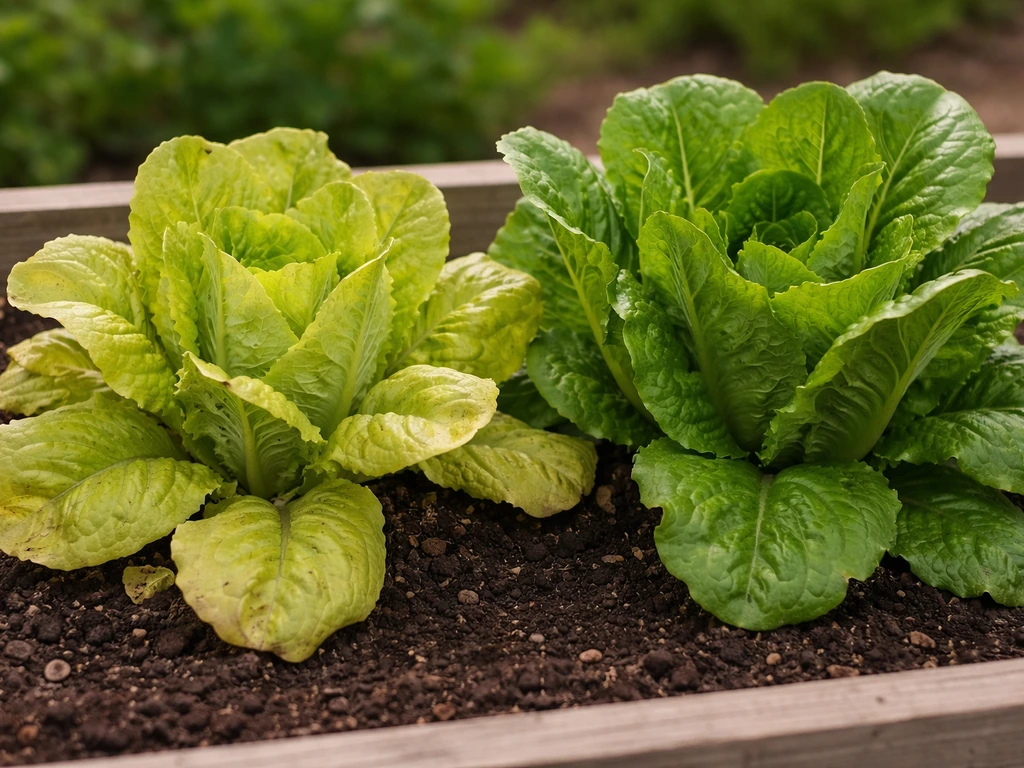
Lettuce is a leafy green, so it's a nitrogen-hungry plant. Nitrogen drives leaf production, and a nitrogen deficiency shows up as slow growth and yellowing that starts on the oldest (lowest) leaves and works upward. In containers, nutrients get used up and washed out faster than most people realize. If you've been growing in the same potting mix for more than 6 to 8 weeks without feeding, nitrogen is almost certainly low.
For outdoor beds, a soil test is the most reliable way to diagnose deficiencies, but if you're just starting out, working in compost before planting and side-dressing with a balanced vegetable fertilizer every 3 to 4 weeks covers most bases. Many gardeners wonder whether Miracle-Gro is good for lettuce, and the answer depends on the exact product and how often you feed. For containers, a diluted liquid fertilizer (fish emulsion or a balanced liquid feed) applied every 2 to 3 weeks keeps things moving. Don't overdo nitrogen though: too much produces lush growth that's more attractive to aphids and more susceptible to tip burn.
Calcium and magnesium deficiencies are less talked about but they cause a specific problem in lettuce called tip burn, where the edges of inner leaves turn brown and papery. This isn't a watering issue even though it can look like one. Calcium moves through the plant via water uptake, so inconsistent watering, low humidity, or fast growth in hydroponic systems can cause tip burn even when calcium is present in the solution. The fix is to keep watering consistent and, in hydroponics, to ensure good airflow to the plant canopy.
Hydroponic-specific nutrient issues
If you're growing hydroponically and your lettuce looks pale, stunted, or the roots are turning brown, the first things to check are pH and EC (electrical conductivity). For lettuce, the target pH range is 5.5 to 6.5, with 6.0 being the sweet spot. Outside that range, nutrients lock out even if they're present at the right concentrations. EC for lettuce should generally sit between 0.8 and 1.6 mS/cm for established plants. Too low and the plant is nutrient-starved; too high and you'll see tip burn and salt stress.
- Check pH first — a cheap pH meter or test kit pays for itself immediately
- Target pH 5.5 to 6.5 for hydroponic lettuce; adjust with pH up or pH down solution
- Target EC 0.8 to 1.6 mS/cm depending on growth stage (lower for seedlings, higher for mature plants)
- Change your reservoir water every 7 to 10 days to prevent salt buildup and pathogen growth
- In soil/containers: feed with a nitrogen-forward liquid fertilizer every 2 to 3 weeks
- For tip burn: improve consistency of watering and increase airflow over the canopy
Pests and diseases that stop lettuce from growing
Damping-off is the most common disease problem for seedlings and it's devastating because it happens fast. Seedlings that look healthy one day collapse at the soil line the next, with a pinched, water-soaked stem at the base. The cause is fungal pathogens (usually Pythium or Rhizoctonia), and they thrive when soil stays too wet, drainage is poor, or seedlings are overcrowded. Once it starts in a tray, it spreads. The prevention is always better than the cure: use fresh, sterile seed-starting mix, don't overwater, ensure airflow, and don't crowd seedlings. If damping-off hits a tray, remove affected seedlings immediately and let the remaining soil dry slightly between waterings.
Aphids are the most common pest on lettuce and they can bring a plant to a near standstill by sucking sap from new growth. Look for clusters of soft, tiny insects (green, black, or gray) on the undersides of leaves and at growth points. A hard spray of water knocks them off. Neem oil or insecticidal soap handles heavier infestations. Flea beetles chew small round holes in leaves and can be especially damaging to young seedlings outdoors. Row covers are the simplest physical barrier.
Slugs and snails cause irregular ragged holes and are most active at night and after rain. In hydroponic systems, fungus gnats are more of a nuisance to seedlings, with larvae damaging fine roots. Let the growing medium dry more between waterings to break their life cycle, or use yellow sticky traps to monitor and reduce adults.
| Pest or disease | What you see | Fix |
|---|---|---|
| Damping-off | Seedlings collapse at soil line, pinched stem | Improve drainage, reduce watering, increase airflow, remove affected plants |
| Aphids | Sticky leaves, distorted new growth, clusters of tiny insects | Water blast, neem oil, or insecticidal soap |
| Flea beetles | Tiny round holes in leaves, especially on young plants | Row covers, diatomaceous earth at soil level |
| Slugs/snails | Irregular ragged holes, slime trails | Beer traps, copper tape, hand-pick at night |
| Downy mildew | Yellow patches on upper leaf, gray fuzz underneath | Improve airflow, avoid wetting leaves, remove affected growth |
| Fungus gnats | Weak seedlings, larvae visible in wet growing media | Let media dry between waterings, yellow sticky traps |
Variety selection and seasonal timing for steady harvests
Not all lettuce varieties behave the same, and choosing the wrong one for your timing or conditions is a quiet reason for failure that often goes undiagnosed. Loose-leaf varieties like 'Black Seeded Simpson' or 'Oak Leaf' are the fastest to mature (as little as 45 days) and the most forgiving. Butterhead types take 60 to 70 days. Full romaine and iceberg types need 70 to 85 days and are the most sensitive to heat and bolt stress. If you're growing in summer heat or under a window in late spring, a fast loose-leaf variety with heat tolerance is your best bet.
For summer growing, look specifically for heat-tolerant or bolt-resistant varieties. 'Jericho' romaine, 'Nevada', 'Muir', and 'Sierra' are bred to resist bolting in warm conditions. 'Black Seeded Simpson' and many red leaf varieties also hold up reasonably well. Avoid head lettuces entirely during summer unless you have reliable climate control. The best outdoor timing in most temperate climates is to plant in early spring (4 to 6 weeks before last frost) and again in late summer for a fall harvest, when temperatures are naturally falling back into the 55 to 65°F sweet spot.
Indoors under grow lights, seasonality matters less, but room temperature still governs how quickly the plant grows and when it bolts. Keeping your indoor grow space below 70°F and running lights for no more than 16 hours gives you the longest vegetative window before bolting becomes a risk. Using a high tunnel or row cover outdoors can extend your effective growing season on both ends, letting you plant earlier in spring and harvest further into fall. If you are specifically trying to learn how to grow lettuce hair, you can use the same bolting and light rules here to keep growth steady.
| Variety type | Days to harvest | Heat tolerance | Best for |
|---|---|---|---|
| Loose-leaf (e.g., Black Seeded Simpson, Oak Leaf) | 45 to 55 days | Moderate to good | Beginners, containers, hot seasons |
| Butterhead (e.g., Buttercrunch, Tom Thumb) | 60 to 70 days | Moderate | Cool-season outdoor beds, indoor containers |
| Romaine (e.g., Jericho, Parris Island) | 70 to 85 days | Low to moderate (Jericho is better) | Spring/fall outdoor, hydroponic systems |
| Heat-tolerant bolt-resistant (e.g., Nevada, Muir, Sierra) | 55 to 65 days | High | Summer growing, warm indoor rooms |
| Iceberg/crisphead | 75 to 90 days | Low | Cool climates only, not for containers or summer |
What to do today: corrective actions and re-start strategy
Here's the practical workflow. If you apply these fixes correctly, you will learn how to get lettuce to grow even when it seems stuck. Work through it in order so you're fixing the right thing first rather than guessing and making multiple changes at once.
- Check your temperature first. If your soil or air temperature is consistently above 80°F, no other fix matters until you get it down. Add shade cloth outdoors, move containers to a cooler spot, or run a fan in your indoor grow space.
- Check your light. Stretch your hand over the seedlings — if you don't see a crisp shadow, the light is too weak. Move grow lights to within 4 to 6 inches of the canopy. Indoors near a window, add a grow light if days are long and bright but plants are still leggy.
- Check the soil moisture at 1 inch depth. Wet and smelly means overwatering — skip a watering, check drainage holes are clear. Bone dry means underwatering — water thoroughly and set a reminder to check daily.
- If seeds haven't sprouted after 10 days: check soil temperature (use a cheap probe thermometer — it should read 60 to 75°F at seed depth). If the surface dried out at any point, germination may have stalled. Re-seed at 1/8 inch depth into moist, fine-textured soil.
- If seedlings collapsed at soil level: remove them and any wet, moldy soil. Improve drainage and airflow. Re-sow in fresh sterile seed-starting mix in a clean tray.
- If leaves are yellowing: apply a diluted balanced liquid fertilizer (half the recommended dose). For hydroponics, test pH and EC immediately and adjust to the target ranges before anything else.
- If plants are bolting: harvest everything usable now — bolted leaves are bitter but still edible in small amounts mixed with other greens. Do not save seeds from bolted plants of hybrid varieties. Plan your next planting with a bolt-resistant variety and adjust timing or shade.
- For a clean restart: choose a fast-maturing loose-leaf variety, start seeds in fresh potting mix at 1/8 inch depth, keep soil at 65 to 70°F until sprouting, provide 14 to 16 hours of light, and water to keep the top inch consistently moist. You should see sprouts within 5 to 7 days under good conditions.
- Once seedlings have 2 true leaves: thin to proper spacing (4 to 6 inches for loose-leaf), begin feeding lightly every 2 to 3 weeks, and monitor daily for any of the pest or disease signs listed above.
Most lettuce failures are totally recoverable with a quick restart. The good news is that lettuce germinates fast, grows fast, and a new planting can go from seed to first harvest in 45 to 55 days with a loose-leaf variety under decent conditions. If you want to dig deeper into speeding up that timeline once your plants are growing, the principles behind getting lettuce to grow faster are worth understanding, as are the specifics of what fertilizers actually move the needle for lettuce. The most important thing right now is to diagnose correctly, make one change at a time, and give your next planting the right foundation from day one.
FAQ
My lettuce looks pale and slow, but the soil isn’t soggy. What’s most likely happening?
Pale, slow growth without wet soil usually points to low nitrogen or a light issue. If the oldest leaves are yellowing, feed lightly with a balanced fertilizer and check your light duration, aiming for 14 to 16 hours under grow lights. If leaves are pale but stretching, raise the light to 4 to 6 inches and increase daily light time before you add more fertilizer.
How can I tell if my lettuce is failing from heat or from watering problems?
Heat bolting tends to show up as rapid leaf bitterness and a center stem developing, while watering stress usually causes leaf droop and color changes without an immediate thick stalk. If temperatures are consistently above 75 to 80°F, prioritize shade, earlier planting, or a faster, bolt-resistant variety. If the room or bed is cooler, then focus on consistent moisture and checking drainage.
Should I thin seedlings? Could crowding be why mine won’t grow?
Yes. Crowding can reduce airflow and intensify damping-off risk, especially in seed-start trays. Thin once seedlings have their first true leaves, spacing to match the variety, and avoid watering on a tight schedule that keeps the surface constantly wet. If you are direct seeding and haven’t thinned, plants may stay small even when conditions are otherwise okay.
My seeds sprouted but growth stopped. What should I check first?
First check light intensity and duration. Legginess and stalled growth are very often from insufficient usable light. Next, verify container depth and drainage, then confirm the watering method by feeling soil 1 inch down. Finally, start feeding after 6 to 8 weeks in the same mix if you aren’t replenishing nutrients.
Is it okay to reuse potting mix from a previous lettuce crop?
Often it leads to nutrient depletion and higher disease risk. Reused containers can also trap salts and reduce oxygen at the root zone. If you reuse, refresh with fresh potting or seed-starting mix and avoid using soil that stayed too wet in the past. For seedlings, use fresh sterile mix to reduce damping-off.
What does lettuce tip burn mean, and should I just water more?
Tip burn is not usually solved by “more water.” It is commonly tied to inconsistent water uptake (or in hydroponics, airflow and nutrient balance) that prevents calcium movement to fast-growing leaf edges. Instead, keep watering consistent, avoid letting plants swing between wet and dry, and in hydroponics ensure good airflow over the canopy.
If my lettuce is growing in hydroponics, how do I know whether pH or EC is the problem?
If leaves are pale or growth is stunted, EC is often too low (nutrient availability limited). If you see tip burn or signs of salt stress, EC may be too high. Then check pH, targeting about 5.5 to 6.5 with 6.0 as a sweet spot, because nutrients can be present but locked out when pH drifts.
Why do my lettuce seedlings collapse even though I’m not overwatering?
Damping-off can still happen if the mix stays too wet between waterings, drainage is poor, or seedlings are overcrowded. Use fresh sterile seed-starting mix, water to moisten not saturate, and increase airflow. If collapse starts in a tray, remove affected seedlings immediately and let the top layer dry slightly before the next watering.
My lettuce has holes or ragged edges. How do I tell slugs from flea beetles?
Slugs and snails usually leave irregular ragged holes and show activity at night and after rain. Flea beetles typically create small round holes and can be worse on young outdoor seedlings. For prevention, use row covers early, and consider night-time monitoring for slugs while using targeted controls for beetle pressure if needed.
Can I fix lettuce that has started to bolt?
Usually not in a way that restores leaf quality. Once a thick center stalk is pushing and leaves turn intensely bitter, it’s past its edible window. Your best move is to harvest what is still usable, then restart with a heat-appropriate or bolt-resistant variety and adjust light and temperature to extend the vegetative phase.