The fastest way to make lettuce grow faster is to start with a quick-maturing variety like Red Sails or Salad Bowl (both ready in about 40 days), keep temperatures between 60 and 70°F, give plants consistent moisture, and thin them early so each plant has room. Do those four things right and you can shave weeks off your harvest window compared to growing under stressed or crowded conditions.
How to Make Lettuce Grow Faster: Quick Tips for Bigger Harvests
Marcus Holloway
29 May 2026
Typical lettuce growth timeline
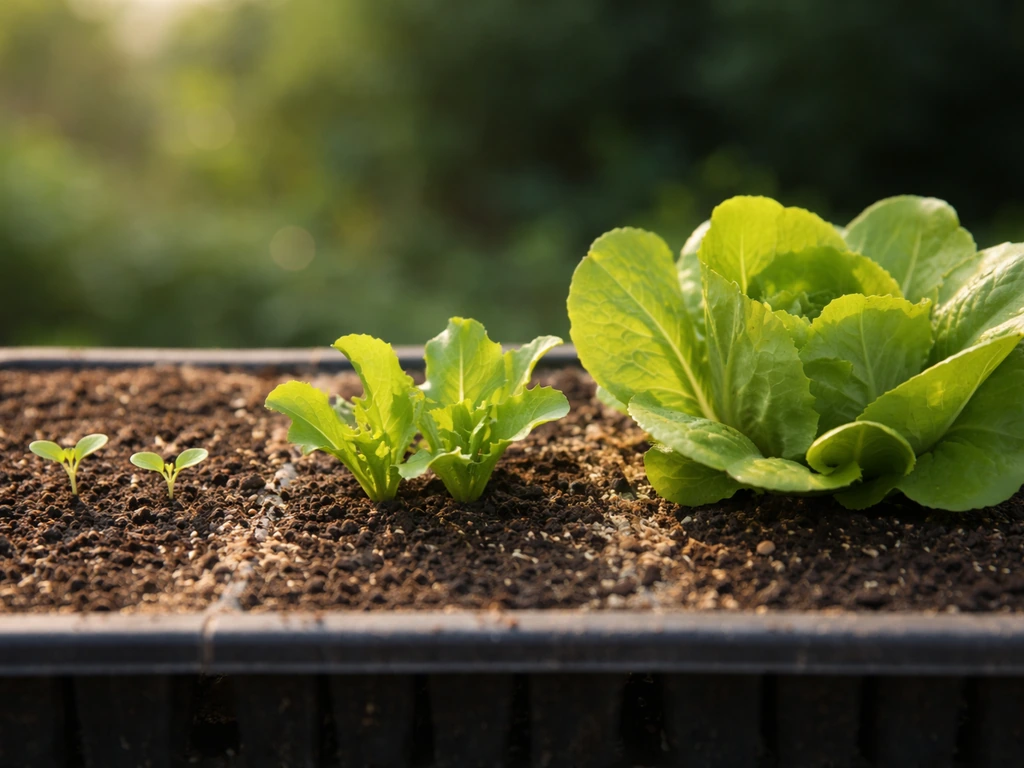
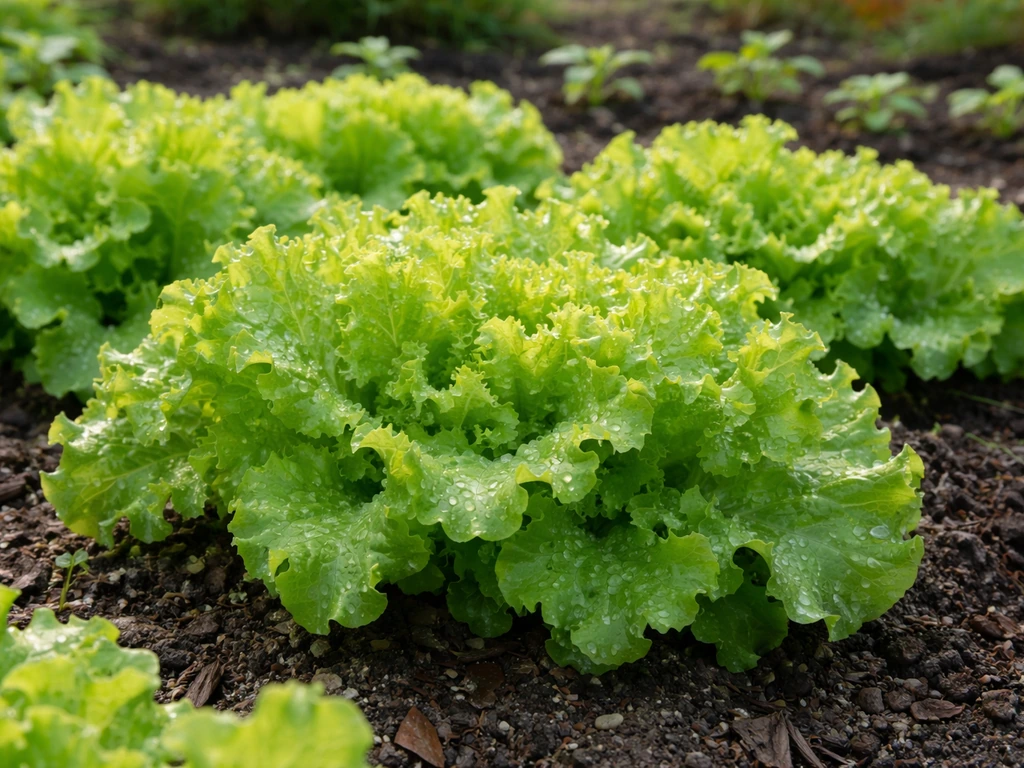
Before you try to speed things up, it helps to know what normal looks like. Lettuce growth timelines vary quite a bit by type. Looseleaf varieties are the fastest, coming in at 40 to 50 days from seed to harvest. Butterhead types take 42 to 70 days for full heads, though you can start picking outer leaves around 21 days. Romaine runs 50 to 85 days depending on the variety, and crisphead (iceberg) is the slowest of the bunch at 60 to 120 days. If you are growing iceberg and wondering why it takes forever, that is just how it works.
| Lettuce Type | Days to Full Harvest | Days to First Leaf Pick |
|---|---|---|
| Looseleaf | 40–50 days | ~27 days |
| Butterhead | 42–70 days | ~21 days |
| Romaine | 50–85 days | ~29 days |
| Crisphead (Iceberg) | 60–120 days | Not practical for baby leaf |
The good news is that for most home growers, you do not need to wait for a full head. You can start harvesting outer leaves from looseleaf and butterhead plants well before they reach full maturity. That cut-and-come-again approach is honestly the biggest practical shortcut of all.
Choose the fastest-growing lettuce varieties
Variety selection is the single biggest lever you have before you even put a seed in the ground. If you plant iceberg when you could plant a looseleaf type, you are adding 30 to 60 days to your wait time before you do anything else wrong.
For the fastest harvests, stick with looseleaf types. A few specific varieties worth growing:
- Red Sails: 45 days, heat-tolerant, slow to bolt, and resistant to tipburn. One of the best all-around choices if you want speed and resilience.
- Salad Bowl: About 40 days. An old reliable looseleaf that produces a lot of leaf in a short window.
- Super Jericho (romaine): 50 to 55 days with excellent heat tolerance and strong bolting resistance. If you want a romaine that does not fall apart the moment summer arrives, this is the one.
- Jericho (romaine): About 58 days with solid heat tolerance, a great option if you are pushing into warmer months.
Leaf lettuce types are consistently faster-maturing and more cold-hardy than head lettuce, according to Mississippi State Extension. If you are a beginner or growing in a container, start there. You will get results sooner and learn what works before moving to slower, harder types.
Speed up growth with temperature control
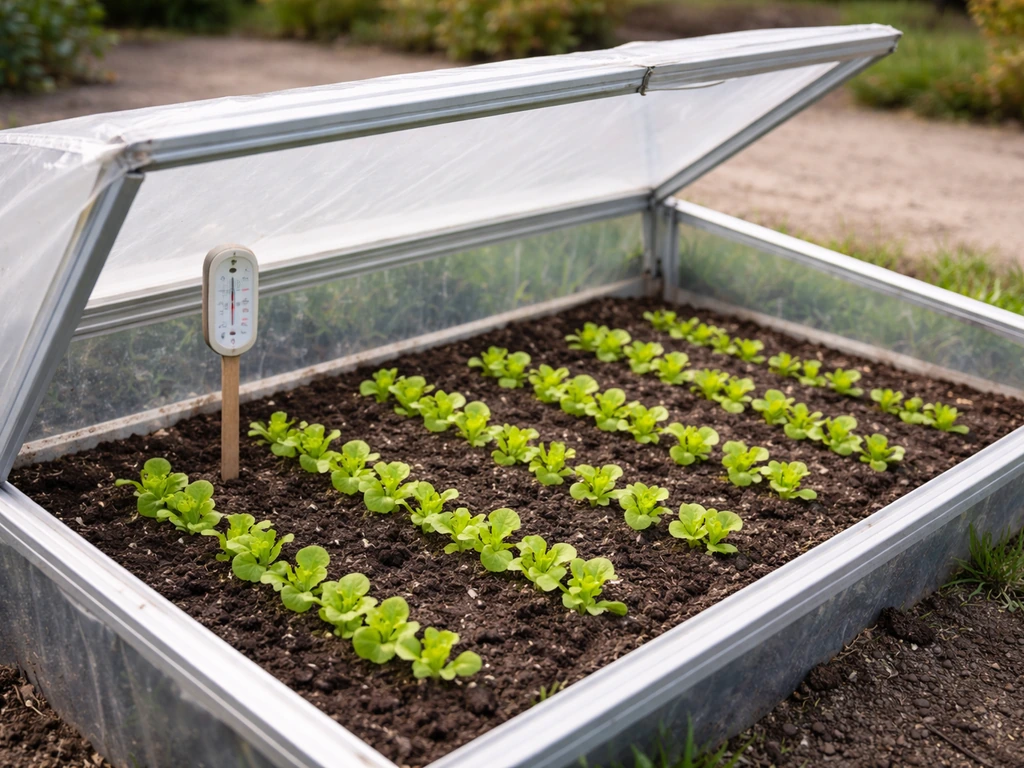
Temperature is the most underestimated factor in lettuce growth speed. Lettuce grows fastest in cool, consistent conditions. The ideal daytime range is 60 to 75°F, with nights staying above 50°F. Once temperatures climb above 75 to 80°F, lettuce stops putting energy into leaves and starts thinking about reproduction. Above 80°F, the plant actively shifts toward bolting (sending up a flower stalk), and at that point growth slows noticeably and the flavor turns bitter.
Germination is also temperature-sensitive. Lettuce germinates best in soil between 55 and 70°F. At 80°F soil temperature, seeds can go dormant entirely rather than sprouting. If your seeds are not germinating, soil temperature is often the culprit, not the seeds themselves.
Managing heat and cold in practice
- In spring and fall: Plant as early as possible. Lettuce tolerates light frost and germinates in soil as cool as 32 to 35°F, so you can get seeds in the ground well before your last frost date.
- In summer heat: Use shade cloth (30 to 50%) over your bed during the hottest part of the day, or grow in containers you can move into afternoon shade. Choose heat-tolerant varieties like Red Sails or Super Jericho.
- For season extension: Lightweight floating row covers can protect plants from frost and add 4 to 8°F of warmth on cold nights, letting you keep growing past your normal season.
- For indoor growing: Keep your grow space at 60 to 70°F. Avoid placing plants near heat vents or sunny windows that spike temperatures in the afternoon.
One thing worth knowing: once bolting starts, you cannot reverse it. Purdue Extension is clear about this. If you see a plant sending up a tall central stalk, harvest whatever is left immediately and replace it. Managing temperature is about staying ahead of that trigger, not fixing it after the fact.
Light and watering strategies to maximize leaf production
Getting the light right
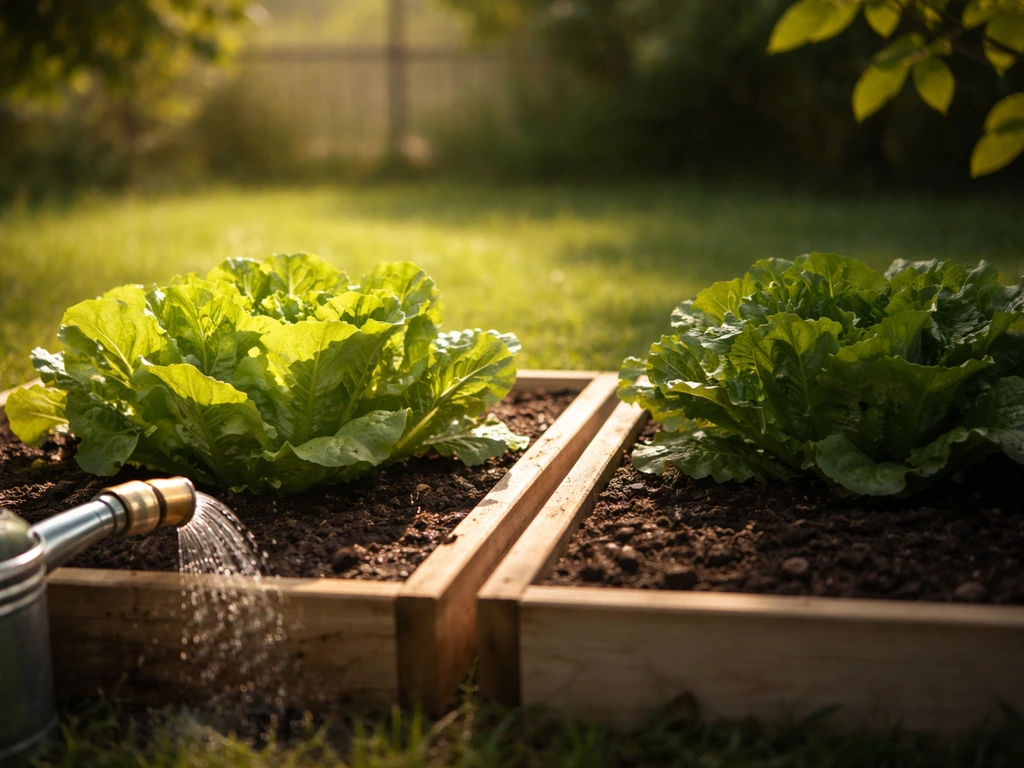
Outdoors, lettuce does well with 6 hours of direct sun in spring and fall. In summer, afternoon shade actually helps it grow better by keeping temperatures down. For indoor growing, you need to provide enough light artificially since window light alone is rarely sufficient for consistent growth.
For indoor and hydroponic setups, research points to a PPFD of around 200 to 250 micromoles per square meter per second as the sweet spot for maximum lettuce biomass. Running lights for 16 hours a day at that intensity consistently outperforms shorter photoperiods. University of Minnesota Extension recommends 12 to 14 hours of light daily for hydroponic lettuce and herbs as a practical minimum for home growers. If you can push to 16 hours with a good LED grow light, you will see noticeably faster growth.
Watering for steady, fast growth
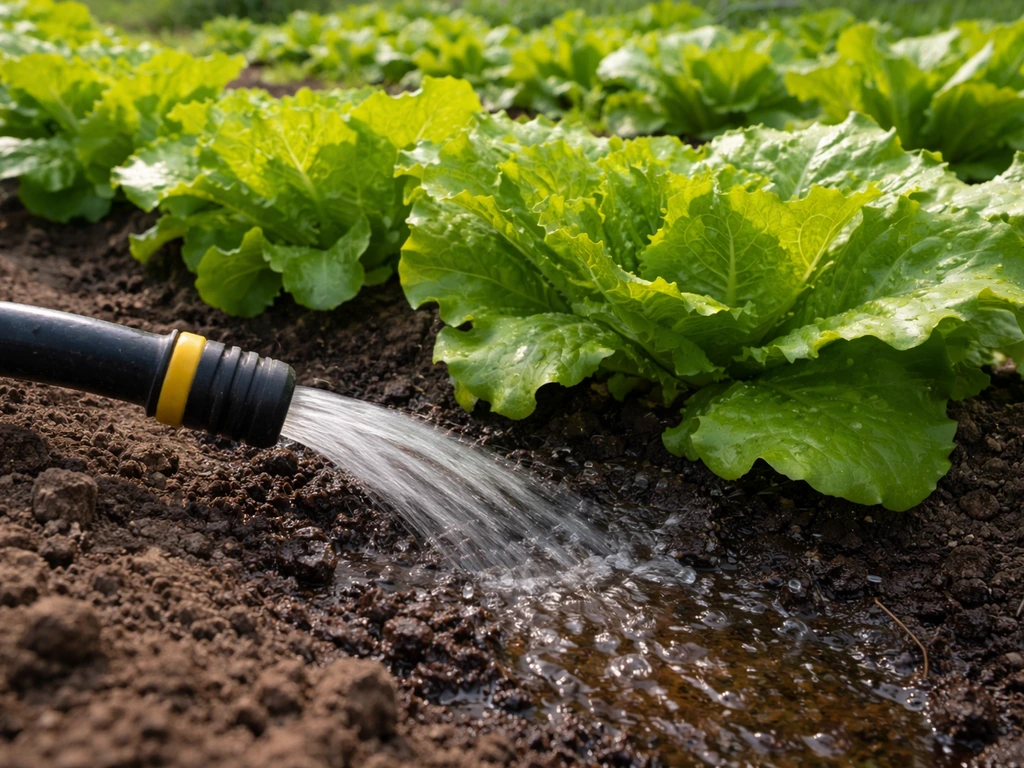
Consistent moisture is one of the biggest drivers of fast, quality leaf production. Lettuce roots are shallow, which means they dry out quickly and cannot buffer against inconsistent watering the way deeper-rooted crops can. OSU Extension specifically highlights consistent water as essential for lettuce production and connects both overwatering and underwatering to bolting and bitter taste.
The practical approach: water deeply enough to saturate the root zone, then let the top inch of soil dry slightly before watering again. In hot weather, that might mean watering every day. If you are growing in containers, check moisture daily because pots dry out much faster than garden beds. Water in the morning so foliage can dry during the day, which reduces disease risk.
During head and leaf development, water stress is especially damaging. UC ANR research notes that lettuce has critical water demands during leaf development specifically. If you let plants dry out during that phase, you will see slower growth, tipburn, and a faster slide toward bolting.
Soil/container vs hydroponics setups for quicker harvest
Outdoor soil and containers
For outdoor beds, well-draining, loose soil with plenty of organic matter gives lettuce roots the easy access they need to grow fast. Amend heavy clay soil with compost before planting. For containers, use a quality potting mix rather than garden soil, which compacts too much in pots. Containers let you control placement, so you can move plants to warmer spots in early spring or shadier spots in summer heat, which gives you a real edge over fixed garden beds.
Hydroponics for the fastest possible growth
Hydroponics is genuinely faster for lettuce than soil growing when set up correctly. Plants get direct, constant access to nutrients and oxygen at their roots, which removes a lot of the growth friction that exists in soil. If you are serious about getting lettuce on your plate in the shortest time possible, a simple deep water culture or nutrient film technique system will beat a soil container by a noticeable margin.
For hydroponic lettuce to grow at its maximum rate, you need to dial in three parameters:
- pH: Keep your nutrient solution between 5.8 and 6.2. Outside this range, plants cannot absorb nutrients efficiently even if the nutrients are present, which directly slows growth.
- EC (electrical conductivity): Start seedlings at about 0.8 to 1.0 mS/cm and raise to 1.2 to 1.6 mS/cm as plants mature. Too high and you will stress roots; too low and plants will not have enough to grow fast.
- Water temperature: Aim for 65 to 75°F in the reservoir. Warmer water holds less dissolved oxygen, which stunts root health. Cooler water in this range keeps roots oxygenated and active.
Check pH and EC at least every other day when plants are actively growing. Drift happens fast in smaller reservoirs, and even a day or two at the wrong pH can set growth back noticeably.
Spacing, thinning, and fertilizing for bigger heads and leaf size
Spacing and thinning
Overcrowding is one of the most common reasons lettuce grows slowly or stays small. Plants competing for light, water, and nutrients will all suffer. For head lettuce, aim for 8 to 12 inches between plants in the row, with 12 to 18 inches between rows. Looseleaf types can be spaced a bit tighter, around 4 to 6 inches apart, since you are harvesting outer leaves rather than waiting for a full head. In hydroponic systems, about 6 to 6.5 inches between plants is a solid starting point for leafy lettuce.
Thin seedlings early and do not feel guilty about it. If you sow seeds thickly (which is common because seeds are small), thin to your target spacing once seedlings have their first true leaves. The seedlings you pull can go directly into a salad. Leaving overcrowded plants in the ground stunts every plant in the row.
Fertilizing to support fast growth
Lettuce is a leafy crop, which means it responds well to nitrogen. Miracle-Gro products are generally designed for many edible plants, but check the label for lettuce-safe rates and whether it is appropriate for leafy greens Miracle-Gro for lettuce. Nitrogen supports vegetative growth, and a deficiency shows up as slow, stunted growth with pale yellow-green older leaves. If your lettuce looks washed out and is not growing, nitrogen is the first thing to check.
For soil and containers, a balanced water-soluble fertilizer applied every two to three weeks works well. Keep potassium adequate too: potassium deficiency causes marginal leaf browning and weak structure, which limits how big leaves can get. For hydroponic systems, your nutrient solution handles all of this if EC and pH are in range. Do not over-fertilize chasing faster growth; high nutrient concentrations at the roots can cause more harm than a slight deficiency.
Tipburn, which looks like brown leaf margins on inner leaves, is usually not a fertilizer problem. UC IPM research shows tipburn is more commonly a water stress and low transpiration issue than a calcium deficiency in the soil. Keep moisture consistent and ensure good airflow around plants before assuming you need to add calcium.
Troubleshooting slow growth and bolting
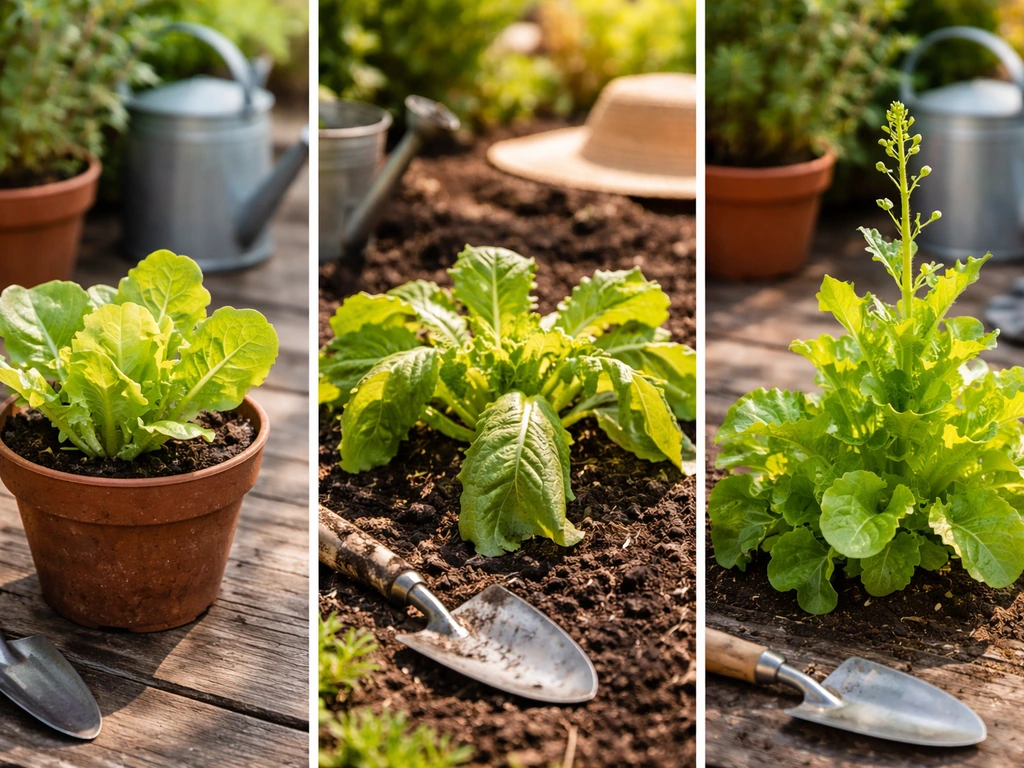
If your lettuce is growing slowly or looks like it is stalling, run through this checklist. Most problems come down to one of these causes:
| Problem | Likely Cause | What to Do |
|---|---|---|
| Slow or stunted growth overall | Nitrogen deficiency, overcrowding, or temperature extremes | Fertilize with a nitrogen-rich feed, thin plants, check soil temps |
| Seeds not germinating | Soil temperature above 80°F or below 35°F | Move to a cooler or warmer spot; germinate indoors if needed |
| Pale yellow-green older leaves | Nitrogen deficiency | Apply a balanced water-soluble fertilizer |
| Brown leaf margins (tipburn) | Inconsistent watering or poor airflow, not calcium deficiency | Water consistently; improve air circulation around plants |
| Bitter taste, plant stretching upward | Heat stress or bolting triggered by long days and high temps | Harvest immediately; switch to heat-tolerant variety next planting |
| Plant sending up a central stalk | Bolting (cannot be reversed) | Harvest what remains and replant with a heat-tolerant variety |
| Leggy, pale indoor plants | Insufficient light intensity or photoperiod too short | Add grow lights at 200–250 PPFD; run for 14–16 hours daily |
| Hydroponic plants not growing | pH out of range causing nutrient lockout, or EC too low | Test and adjust pH to 5.8–6.2; raise EC to 1.2–1.6 mS/cm |
| Wilting despite watering | Root rot from overwatering or warm water temps in hydro | Improve drainage; cool reservoir to 65–75°F; check for root health |
Pests can also slow growth, though they are usually visible before they become a serious problem. Aphids cluster on the undersides of leaves and can weaken plants quickly. Check the undersides of leaves weekly and knock aphids off with a strong water spray or treat with insecticidal soap if populations are building. Slugs are a common nighttime problem in wet gardens: use copper tape around containers or set beer traps nearby.
If you keep running into bolting problems and slow growth during warm months, the issue is likely timing and variety rather than technique. Lettuce is a cool-season crop at its core. The most reliable fix is to grow it in spring and fall when temperatures cooperate naturally, and choose bolt-resistant varieties like Red Sails or Super Jericho when you push into warmer conditions. If slow growth is a recurring theme regardless of season, the companion articles on why lettuce will not grow and how to get lettuce to grow cover the specific diagnostic steps in more detail.
Your simple plan to harvest sooner
Put it all together and here is what a fast-track lettuce plan actually looks like in practice:
- Pick a fast variety: Start with Red Sails or Salad Bowl for a 40 to 45-day harvest. Skip iceberg unless you are specifically after it.
- Time your planting: Get seeds in the ground or containers when soil is between 55 and 70°F. That is when germination is fastest.
- Control temperature: Keep growing conditions between 60 and 75°F. Use shade cloth in summer and row covers in early spring.
- Water consistently: Do not let the root zone dry out fully between waterings, especially during active leaf development. Morning watering is best.
- Provide enough light: Outdoors, 6 hours of sun. Indoors or in hydroponics, 14 to 16 hours at adequate intensity with a good LED grow light.
- Thin early: As soon as seedlings have true leaves, thin to proper spacing (4 to 6 inches for looseleaf, 8 to 12 inches for head types).
- Fertilize regularly: A balanced water-soluble fertilizer every two to three weeks for soil; dial in EC and pH in hydroponic setups.
- Harvest outer leaves early: Start picking outer leaves once plants are a few inches tall. This encourages more leaf production and gives you greens sooner without removing the whole plant.
Following these steps, looseleaf lettuce can go from seed to first harvest in as little as 27 to 40 days under good conditions. That is genuinely fast for a homegrown vegetable, and there is real satisfaction in eating something you planted less than six weeks ago. Start with the variety and temperature control first, since those two factors alone account for most of the difference between a slow crop and a quick one.
FAQ
Can I speed up lettuce by harvesting it earlier, or will it stunt the plant?
Yes. Harvesting outer leaves (cut-and-come-again) works best when you leave the growing point intact. Take only a portion of the plant at a time, and avoid cutting into the center or you will trigger leaf stop and uneven regrowth.
What should I do if there is a sudden cold night or heat wave in the middle of my crop?
Cold snaps can slow growth, but they usually do not permanently ruin lettuce. Use row cover or a low tunnel to buffer wind and night lows, then remove or ventilate during warm daytime periods so plants do not overheat and bolt.
Is transplanting seedlings faster than direct sowing lettuce?
For most home setups, transplanting is not faster than direct seeding, because lettuce hates root disturbance. If you do transplant, keep roots cool and undisturbed, water in well, and transplant when seedlings are small (around the true-leaf stage) for the least shock.
My lettuce germinates but it keeps stalling, what should I troubleshoot first?
If seedlings are coming up but growth stalls, check for overcrowding and nitrogen first, then re-check temperature and watering consistency. Stunted pale growth often points to nutrient deficiency, while crispy edges or bitterness often points to water stress during leaf expansion.
How do I prevent bolting when weather is warming up gradually?
Yes, bolting can be triggered by cumulative stress, not just a single hot day. To reduce the risk, keep temperatures steady, avoid letting beds dry out during the fastest leaf expansion window, and use afternoon shade when daytime temps approach the mid to upper 70s.
How can I tell if I am overwatering versus underwatering lettuce?
Overwatering can be as harmful as underwatering for fast growth, especially in containers with poor drainage. Make sure pots drain freely and do not leave them sitting in runoff, then use a moisture check (top inch rule) before watering again.
Why does my lettuce taste bitter, even though it is growing?
If you are seeing bitter leaves, the most common cause is heat and water inconsistency that pushes the plant toward stress and early reproduction. Improve shading, keep watering consistent, and harvest outer leaves sooner so you are not waiting too long under stress.
Will adding more fertilizer make lettuce grow faster, or could it backfire?
Yes. Apply fertilizer lightly and on schedule, but do not keep pushing nitrogen if plants are already lush and then start wilting from heat or water swings. If you are unsure, pause feeding for a week and focus on stabilizing moisture and temperature.
What is the best way to plan plantings so I always have lettuce ready, without gaps?
If you are replanting quickly for a continuous harvest, stagger sowing every 1 to 2 weeks and pick the next batch based on forecasted temperatures. In warm periods, switch to faster-maturing or bolt-resistant types and harvest outer leaves to extend usability.
Do beneficial insects or natural pest control work well for faster lettuce, or do I need stronger action?
Worms and beneficial insects help in the long run, but for speed and even growth you still need to manage pests early. Check leaf undersides weekly for aphids, use physical barriers when slugs are active, and treat promptly before infestation slows growth.