Yes, Miracle-Gro can work well for lettuce, but you need to pick the right product and dial back the dose. Lettuce is a fast-growing leafy crop that wants steady, moderate nitrogen. Hit it too hard with a concentrated synthetic fertilizer and you get bitter leaves, tip burn, or a plant that bolts before you get a single salad. Use the right Miracle-Gro formula at half to three-quarter strength, and you can get lush, fast growth without any of those problems.
Is Miracle-Gro Good for Lettuce? Best Type and How to Use

Marcus Holloway
23 Jun 2026
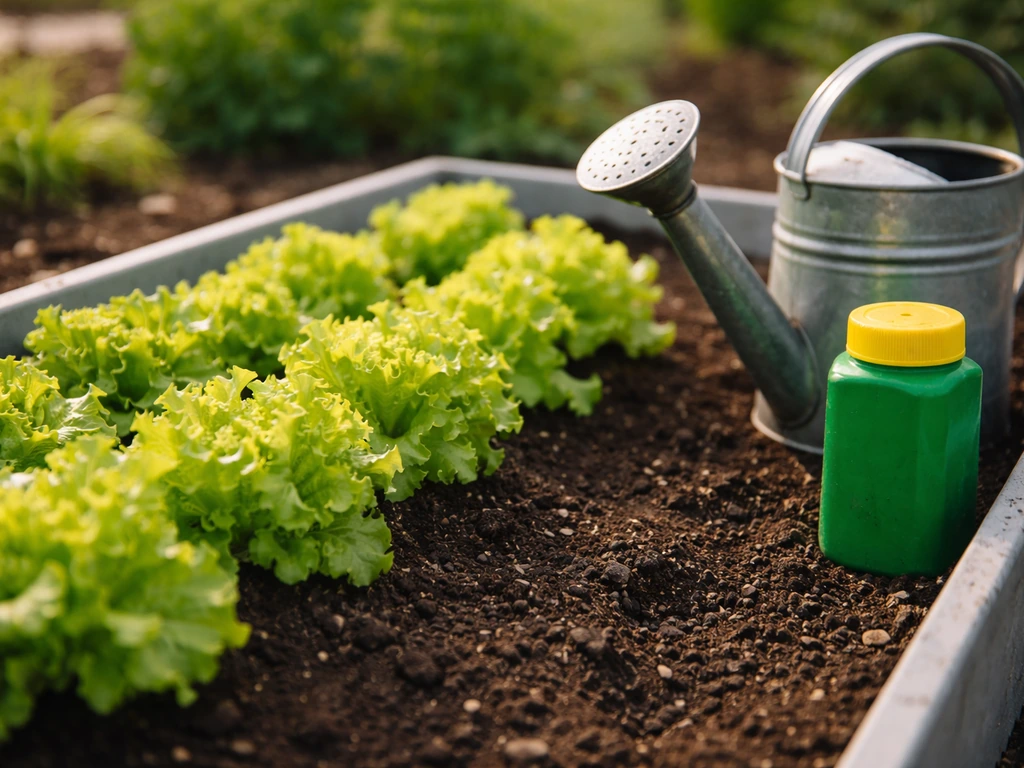
What Miracle-Gro actually contains and why it matters for lettuce
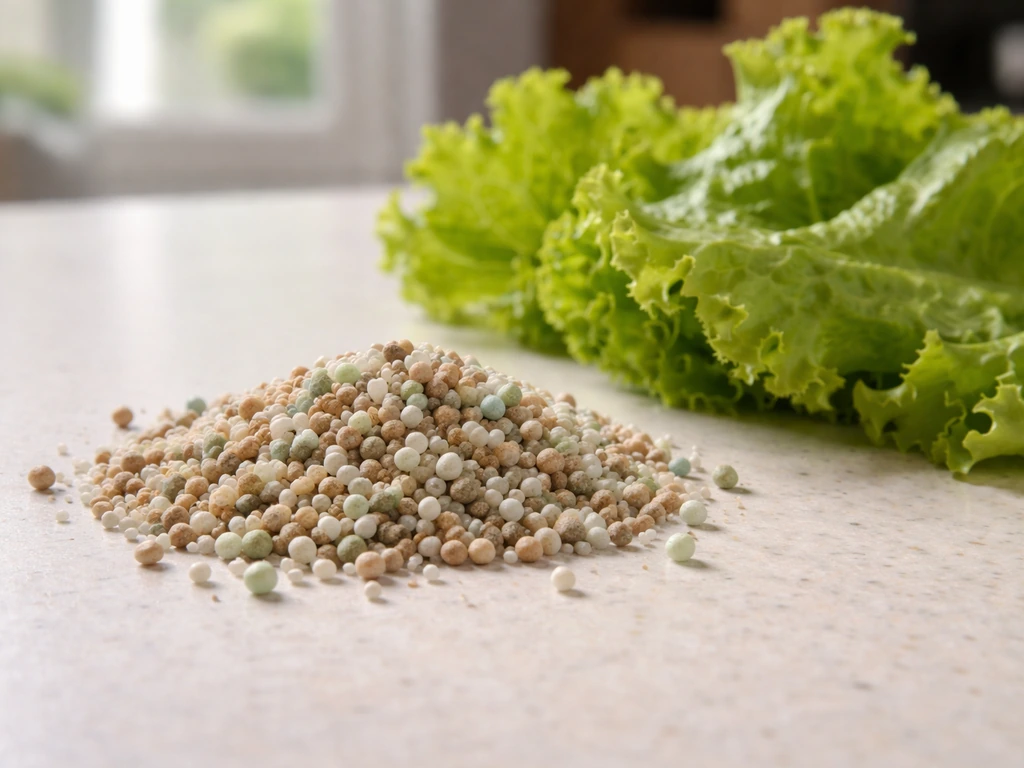
Most Miracle-Gro products are nitrogen-heavy by design. The classic Water Soluble All Purpose formula is 24-8-16 (nitrogen-phosphorus-potassium), and the Shake 'n Feed granular runs 12-4-8. That high nitrogen number is great for pushing leafy green growth, which is exactly what you want with lettuce. But there's a catch: too much nitrogen too fast can cause lettuce to bolt prematurely, produce bitter-tasting leaves, or develop tip burn (those brown, papery edges on the leaf tips). Tip burn is actually a localized calcium deficiency that gets triggered when rapid, nitrogen-fueled growth outpaces the plant's ability to move calcium to young expanding leaves.
The Shake 'n Feed 12-4-8 formula does include calcium (7.6%), magnesium (2.5%), sulfur (3.2%), and micronutrients like iron, manganese, and zinc, which gives it a more complete nutritional profile than the basic water-soluble version. For lettuce, that calcium content is genuinely useful because it helps buffer against tip burn risk. The 24-8-16 liquid formula is more of a fast blast of nutrients with fewer of those secondary benefits. Both work, but they need to be applied differently.
One critical warning: never use any Miracle-Gro product labeled 'Weed and Feed' or anything that combines a fertilizer with a herbicide on lettuce or any leafy greens. The weed killer component can damage or kill your plants, and the residue is not something you want ending up in your salad bowl.
Which Miracle-Gro product is actually best for lettuce
There are three main product types worth considering for lettuce, and they each have a different sweet spot depending on your setup.
| Product | NPK | Best for | Main risk |
|---|---|---|---|
| Water Soluble All Purpose (24-8-16) | 24-8-16 | Quick feeding, outdoor beds, raised beds | Burns if overdosed; no secondary nutrients |
| Shake 'n Feed All Purpose (12-4-8) | 12-4-8 | In-ground beds, raised beds, outdoor containers | Salt buildup in containers over time |
| LiquaFeed All Purpose or Tomato/Fruits/Veg | Varies | Containers, easy weekly feeding | Concentration errors if not measured carefully |
| Osmocote Smart-Release (15-9-12) | 15-9-12 | Containers, low-maintenance setups | Hard to correct if you over-apply; feeds up to 6 months |
My top recommendation for most home lettuce growers is the Shake 'n Feed 12-4-8 for outdoor and raised bed growing. The lower nitrogen concentration and the inclusion of calcium and magnesium make it a more forgiving option. For container growers who want easy control, the LiquaFeed diluted in a watering can gives you the flexibility to feed lightly and adjust week to week. I'd avoid Osmocote for lettuce in containers unless you're very confident in your dosing, because once it's in the soil you can't pull it back out if something goes wrong.
How to fertilize lettuce with Miracle-Gro: rates, timing, and application
When to start feeding
Don't feed seedlings right away. Wait until plants are 2 to 6 weeks old depending on your potting mix and growth rate. If you started in a nutrient-rich potting mix or amended garden soil, lean toward the 4 to 6 week mark. If you're in a lean, peat-heavy seed-starting mix, you can start a light feed around 2 to 3 weeks. Use the same light-feeding approach as the plants grow so you learn exactly how to get lettuce to grow without burning or bolting. The plant needs to have a small root system established before it can handle the salt load that comes with synthetic fertilizers.
Rates and dilution to use
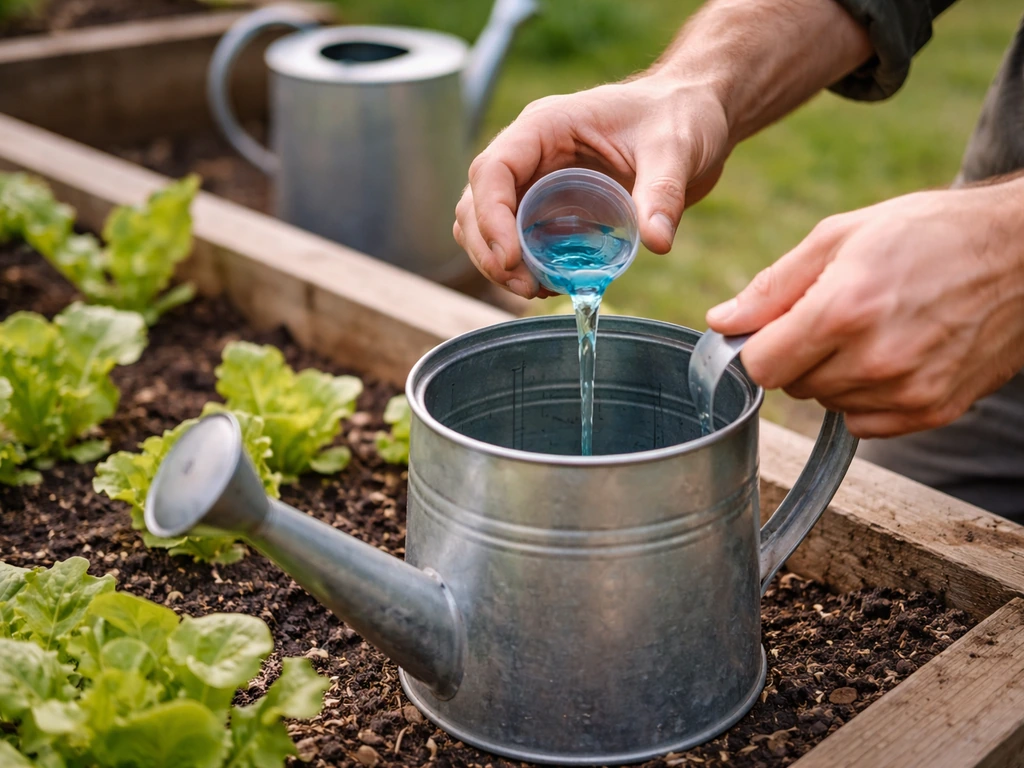
- Water Soluble 24-8-16: Use at half the label rate for lettuce, roughly 1/2 tablespoon per gallon of water instead of the full tablespoon. Feed every 1 to 2 weeks.
- Shake 'n Feed 12-4-8 (granular): Mix lightly into the top inch of soil at the label rate, but for containers, use about two-thirds the recommended amount to reduce salt accumulation. Reapply every 3 months maximum for outdoor beds.
- LiquaFeed All Purpose: Dilute at about 1.5 teaspoons per gallon of water. Apply every 7 to 14 days.
- LiquaFeed Tomato, Fruits & Vegetables: Dilute at about 2 teaspoons per gallon of water. Apply every 7 to 14 days.
- Osmocote 15-9-12: Use only in outdoor or raised beds where you have soil volume to buffer; follow label rates and do not supplement with additional liquid feed.
How to apply without burning plants
- Always water your lettuce thoroughly before applying any fertilizer, especially in containers. Feeding into dry soil concentrates salts and risks burning roots.
- Apply liquid fertilizer at the soil level, not over the leaves. If any solution lands on the foliage, rinse it off immediately.
- Never apply fertilizer to wet leaves. Wait until leaves are dry before feeding.
- For granular products, work the fertilizer lightly into the top inch of soil and water in well. Don't pile granules near stems.
- In containers, run extra water through the pot every 4 to 6 weeks to flush accumulated salts out through the drainage holes.
Indoor, outdoor, and hydroponic: fertilizing isn't the same in every setting
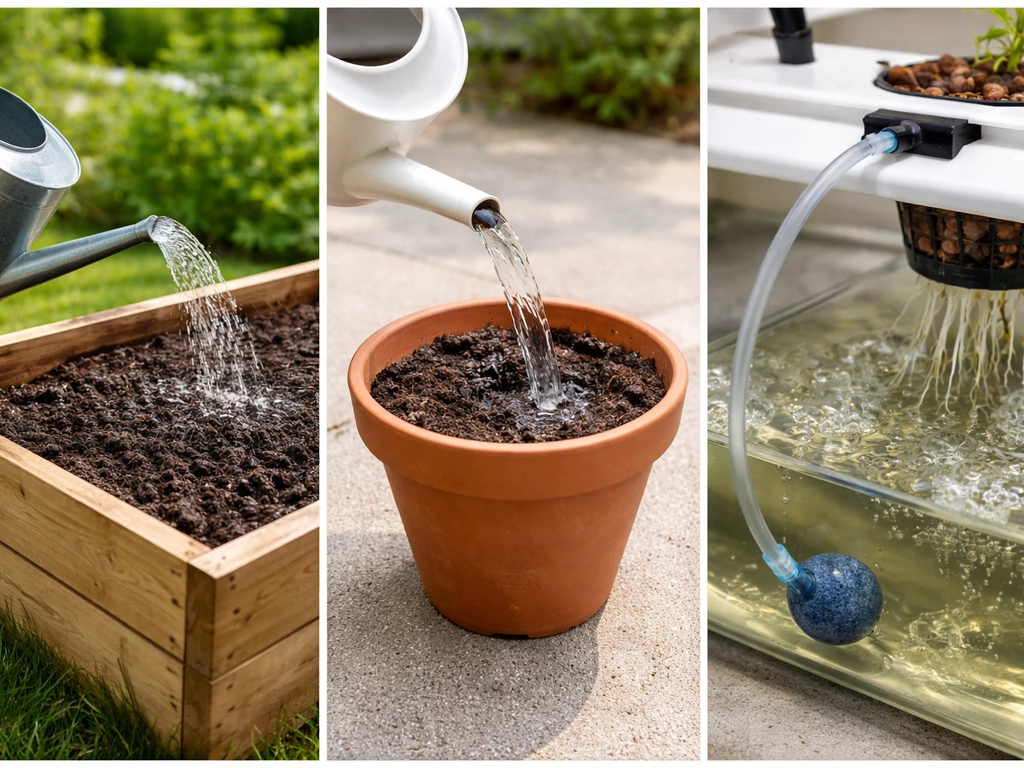
Outdoor beds and raised beds
This is the most forgiving environment. Soil has natural buffering capacity and rain helps flush excess salts. Shake 'n Feed 12-4-8 worked into the soil at planting, followed by occasional liquid feeding if growth slows, is usually all you need. Lettuce in good garden soil often needs less synthetic fertilizer than you'd think, especially if you've added compost.
Containers and pots
Containers are where Miracle-Gro use gets more complicated. The limited soil volume means salts have nowhere to go, and repeated applications build up fast. If you’re wondering why your lettuce won’t grow, salt buildup in containers is a common culprit, so keep doses light and flush regularly. Salt accumulation stresses roots, causing the same symptoms as underwatering: wilting, yellowing, and tip burn. Stick to liquid feeding (LiquaFeed diluted in a can) at half strength, and flush your containers with plain water regularly. If you adjust your schedule, a useful rule of thumb is that if you normally do one full-dose feeding every two weeks, you can switch to a half-dose feeding every week instead to keep nutrient levels steadier without the peaks and valleys.
Indoor growing
Indoor lettuce in pots or grow bags follows the same container rules above, but with extra caution because there's no rainfall to help flush things out and no soil ecosystem to buffer chemical imbalances. I'd go even lighter here: a quarter to half strength liquid feed every 10 to 14 days is plenty if your potting mix had any starter fertilizer in it. Watch the plant closely and respond to what you see rather than sticking rigidly to a schedule.
Hydroponic systems
Standard Miracle-Gro products are not designed for hydroponics, and I'd steer clear of using them in a recirculating system. Lettuce in hydroponics needs a nutrient solution with an electrical conductivity (EC) of about 1.2 to 1.8 mS/cm and a pH of 5.5 to 6.5. Nitrogen concentration should sit around 75 to 150 ppm depending on the system and growth stage. Miracle-Gro formulas aren't calibrated to those targets and can push EC too high, which stresses lettuce roots in water culture. For hydroponics, use a purpose-built hydroponic nutrient formula and measure EC and pH regularly.
Signs you're over- or under-feeding your lettuce (and what to do)
Signs of over-feeding
- Tip burn: brown, papery edges on leaf tips, especially inner leaves. This signals rapid-growth-induced calcium deficiency from too much nitrogen.
- Dark green, oversized outer leaves with smaller, pale inner leaves: a sign that outer leaves are hoarding calcium at the expense of new growth.
- White crusty deposits on the soil surface or pot edges: salt buildup from repeated fertilizer applications.
- Wilting even when the soil is moist: root damage from salt stress.
- Premature bolting: excess nitrogen can trigger early flowering, which ends your harvest and makes leaves bitter.
If you see tip burn or salt crust, stop fertilizing immediately and flush containers thoroughly with plain water. Run water through the pot until it drains freely for several minutes. For in-ground beds, hold off on feeding for 3 to 4 weeks and water deeply. Tip burn itself can't be reversed on affected leaves, but stopping the cause will protect new growth coming in.
Signs of under-feeding
- Pale yellow-green leaves overall, especially older outer leaves: nitrogen deficiency.
- Slow, stunted growth with small leaf size for the variety.
- Reddish or purplish tint on leaves in varieties that don't naturally have it: can indicate phosphorus deficiency.
- Limp, lackluster plants even when watered correctly.
If the whole plant looks pale and growth has stalled, a half-strength liquid feed applied once should show visible improvement within 5 to 7 days. Don't overcorrect by doubling up on doses. Give it a week, then reassess. Wanting to push faster growth is one of the most common reasons people over-fertilize lettuce, so if this is a recurring concern, the sibling topics on how to make lettuce grow faster and how to get lettuce to grow cover additional techniques that don't rely on fertilizer alone.
Alternatives to Miracle-Gro for safer, gentler lettuce feeding
If the salt and concentration risks of synthetic fertilizers feel like too much to manage, especially in containers, there are gentler options that work really well for lettuce. Lettuce is not a heavy feeder, and in many situations, compost alone handles the job.
| Option | How to use | Best for | Lettuce-specific benefit |
|---|---|---|---|
| Compost (well-aged) | Mix 2–3 inches into bed at planting; top-dress containers monthly | All settings | Slow, steady nutrients; improves moisture retention; no burn risk |
| Worm castings | Mix into soil at planting (up to 20% by volume) or brew as a liquid tea | Containers, indoor growing | Gentle, balanced NPK; microbial life supports root health |
| Fish emulsion (3-1-1 or similar) | Dilute per label (usually 1–2 tbsp per gallon); apply every 1–2 weeks | Containers, raised beds | Fast-acting nitrogen without the salt load of synthetic products |
| Balanced organic granular (e.g., 5-5-5 or 6-2-3) | Work into soil at planting; minimal additional feeding needed | Outdoor beds, raised beds | Lower concentration reduces overfeed risk; supports microbial activity |
| Kelp meal or liquid kelp | As a supplement alongside other fertilizer, not standalone | All settings | Micronutrients and growth hormones that support leaf quality |
For most container and indoor lettuce growers, my honest recommendation is to start with a quality potting mix that includes compost, add a small amount of worm castings at planting, and only reach for a diluted liquid feed if growth clearly stalls. That approach avoids the salt and concentration issues entirely and produces lettuce that tastes clean and grows consistently. If your soil or mix is truly nutrient-poor and you need fast results, that's when a carefully dosed, half-strength Miracle-Gro liquid application earns its place.
The bottom line on Miracle-Gro for lettuce is that it works, but it rewards a light hand. If you want a deeper, step-by-step guide, check out how to grow lettuce hair for tips on getting the best texture and growth Miracle-Gro for lettuce. Match the product to your setting, cut the dose, keep an eye on your plants, and you'll get fast, productive lettuce without any of the problems that come from treating a leafy green like a tomato plant.
FAQ
How often should I feed lettuce with Miracle-Gro?
A good starting cadence is every 7 to 14 days at half strength, then adjust based on color and growth rate. If you see tip burn, pale leaves that stay pale after watering, or salt crusting in containers, extend the interval and flush with plain water before the next feeding.
What dilution should I use for Miracle-Gro on lettuce, and does it differ by product?
Yes. For water-soluble formulas, start at about half the label rate, and for containers consider a quarter to half rate. Granular Shake 'n Feed also benefits from light application, because lettuce is sensitive to nitrogen spikes.
Is Miracle-Gro safe for lettuce grown for eating right away?
It is generally fine when used correctly, but you should avoid visible fertilizer buildup on leaves and let plants dry after feeding. If you recently overfed and there is salt residue, flush the soil and wait until new leaves look healthy before harvesting.
Will Miracle-Gro help lettuce if it is already turning bitter or bolting?
Bitter taste and bolting are often responses to stress, including nitrogen overload and heat. Stopping fertilizer and switching to steadier moisture helps, but affected leaves do not recover their flavor, so focus on improving conditions to protect new growth.
What should I do if I see tip burn after using Miracle-Gro?
Stop fertilizing immediately, then flush containers until water drains freely. For beds, pause feeding for several weeks and water deeply and consistently. Tip-burn leaves cannot be repaired, but new growth should look better if you remove the nitrogen trigger and avoid rapid growth spikes.
Can I use Miracle-Gro on romaine, butterhead, or leaf lettuce the same way?
In most cases, yes, because all are leafy, fast-growing crops with similar sensitivity to nitrogen. The main adjustment is how fast your variety grows and how warm your weather is, in hot conditions you should cut dose and feed less often.
Why does my container lettuce look like it is underwatered even though I am watering?
Often the real issue is fertilizer salt buildup, which can stress roots similarly to drought. If you see white crust on soil or frequent wilting, flush the container with plain water and switch to lighter, more diluted feeding intervals.
Should I fertilize lettuce right after transplanting seedlings?
Usually not. Wait until the plants have a small, established root system, commonly around 2 to 6 weeks depending on your starting mix. If your potting mix already contains starter nutrients, delay the first feed longer.
Is Osmocote or other slow-release Miracle-Gro suitable for lettuce in pots?
Slow-release products can work, but they are harder to correct if you overapply because nutrients continue releasing. If you use them in containers, use a very conservative rate and monitor closely for tip burn and salt buildup.
Can Miracle-Gro be used in hydroponics if I adjust the nutrient strength?
Miracle-Gro products are not calibrated for hydroponic targets, so even correct dilution may not match the needed electrical conductivity and pH balance. If you want reliable results, use a hydroponic-specific nutrient and measure EC and pH regularly.
How can I tell if my lettuce needs fertilizer versus just more water or better light?
Pale color and slowed growth can point to low nutrients, but wilting and yellowing can also be from moisture or root stress. Check for salt crust in containers, confirm soil moisture is consistent, then adjust fertilizer only after you rule out overheating and poor light.
Do compost and worm castings change whether I should use Miracle-Gro?
Yes. If your soil or potting mix includes compost and some worm castings, lettuce often needs little or no synthetic fertilizer early on. Treat Miracle-Gro as a backup only if growth clearly stalls after the establishment period.