If you searched 'lettuce hair,' you most likely want to grow the frilly, ruffled, curly-leafed types of loose-leaf lettuce that look almost like a head of green or burgundy curls. Think Lollo Rosso, Lollo Verde, or Tango oakleaf. Those are the varieties people describe as 'hairy' or 'frizzy,' and they are genuinely easy to grow in containers, outdoor beds, or a simple hydroponic setup. Here is exactly how to do it. If you are also wondering how to get lettuce to grow well, the quickest route is to dial in the right variety, temperature, light, and steady moisture.
How to Grow Lettuce Hair: Step-by-Step for Healthy Leaves
Marcus Holloway
1 Jun 2026
What people usually mean by 'lettuce hair'
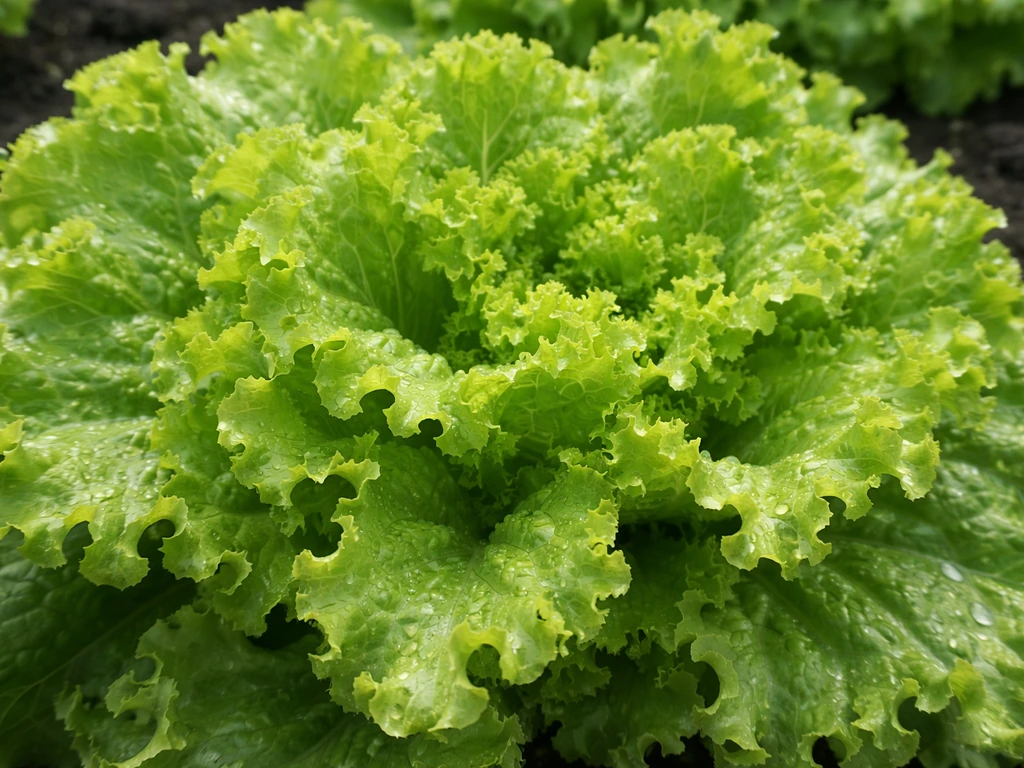
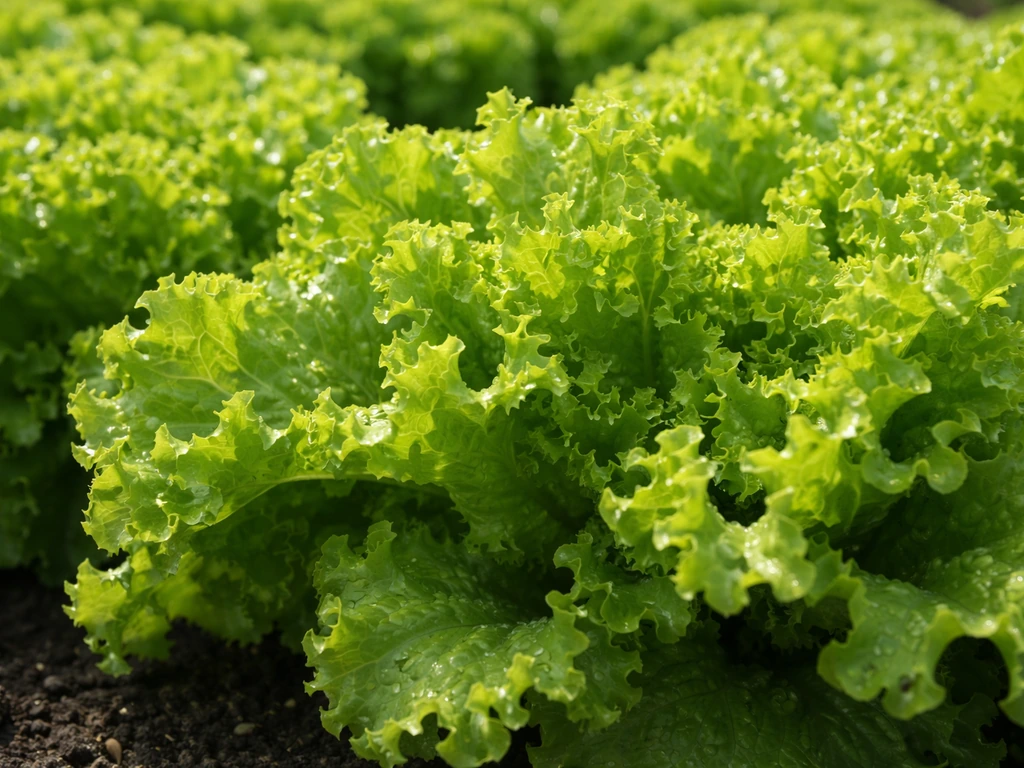
The term crops up in a few different ways, so let's clear it up fast. Most of the time, 'lettuce hair' refers to loose-leaf lettuce varieties with deeply frilled, crinkled, or ruffled leaves that genuinely look like curly hair. Lollo Rosso and Lollo Verde (also called Lollo Bionda) are the classic examples. Both form compact, open rosettes with fan-shaped leaves that are ruffled all the way to the edges. Frillice is another commercial variety explicitly bred for that ultra-frilly texture. Seminis positions Frillice as a “frilled, two-tone” open loose-leaf crisp lettuce type with good bolting tolerance Frillice is another commercial variety explicitly bred for that ultra-frilly texture.. These are all Lactuca sativa, just with a different leaf shape than the flat butterhead or tight romaine you might picture.
Sometimes people use the phrase differently. New gardeners often spot the fine, stringy first roots poking out of a germinating lettuce seed and wonder what those 'hair-like' threads are. That is just the radicle, or seed root, doing its job. Similarly, tiny lettuce seedlings can look confusingly fuzzy or wispy at the cotyledon stage, and beginners sometimes worry they are growing something wrong. If that sounds like you, you are not. Those are healthy signs of germination. A third confusion worth mentioning: curly kale, endive, and frisée seedlings look almost identical to frilly lettuce when they are small, so if you planted something and are second-guessing it, wait for the true leaves before deciding.
Pick the right variety and decide where you are growing
For that curly, hair-like leaf look, stick to loose-leaf types. They grow as open rosettes rather than forming a tight head, which means the frilly texture stays visible and accessible right through harvest. Here are the top picks.
| Variety | Leaf Look | Days to Harvest | Best For | Bolt Resistance |
|---|---|---|---|---|
| Lollo Rosso | Deep red-burgundy, tightly ruffled curls | 50–60 days | Containers, beds, hydroponics | Good (slow bolting) |
| Lollo Verde (Lollo Bionda) | Bright green, frilled fan-shaped leaves | 50–55 days | Containers, beds, hydroponics | Good |
| Frillice | Very frilly, two-tone crisp texture | 50–55 days | Beds, containers | Good |
| Tango (Oakleaf type) | Wavy, crinkled, endive-like frill | 45–55 days | Containers, outdoor beds | Moderate |
For your growing setup, all of these work in containers, outdoor raised beds, or a simple deep-water-culture (DWC) or nutrient-film-technique (NFT) hydroponic system. Outdoors suits you if you have a garden bed or large planter and temperatures are currently in the 60–70°F range. Containers on a patio or windowsill work well year-round if you manage light carefully. Hydroponics is the fastest path to a dense, beautiful result if you are comfortable managing pH and nutrients, and the Lollo varieties in particular are popular in hydroponic lettuce production for exactly this reason.
Starting from seed vs. transplanting, and how to space everything
Starting from seed
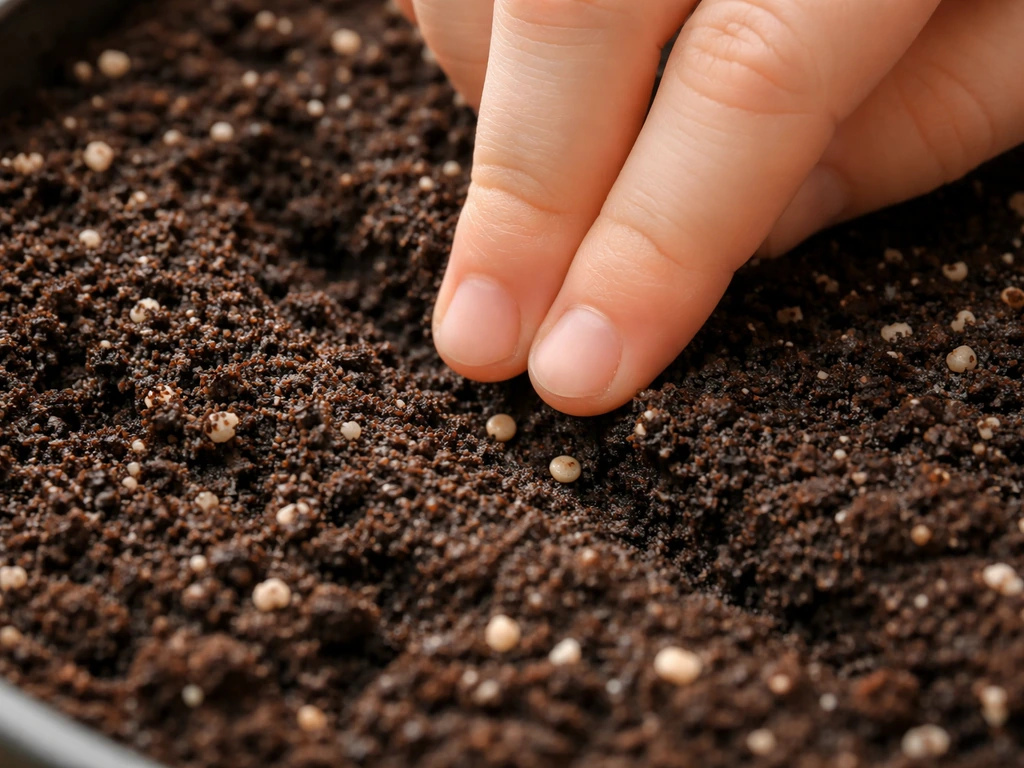
Lettuce seed is tiny, and you do not need to bury it deep. Plant seeds about 1/4 to 1/2 inch deep in a moist seed-starting mix or potting soil. UMN Extension’s guidance for starting seeds indoors similarly follows common extension-style rules, recommending planting seeds about 2 times as deep as the seed width and keeping the medium evenly moist until emergence Plant seeds about 1/4 to 1/2 inch deep in a moist seed-starting mix or potting soil.. Press lightly, keep the surface consistently damp (not soggy), and expect germination in 7–14 days at temperatures between 60–70°F. Do not let the medium dry out between waterings while you are waiting for sprouts. If you are starting indoors, place the tray near your brightest window or under a grow light from day one.
For hydroponics, drop two or three seeds per net pot into a rockwool cube or rapid-rooter plug, keep them moist with plain water (no nutrients yet) until they sprout, then move the seedlings to your system once you see the first true leaves. That usually takes about 10–14 days.
Using transplants
If you want to skip the germination stage, transplants from a nursery work fine. Harden them off for a few days in a shaded outdoor spot before planting them in full conditions, especially if they were grown indoors. Plant at the same soil depth they were growing at in the cell pack.
Spacing and thinning
For full-size loose-leaf plants, aim for 9–12 inches between plants. If you direct-sow and get a thick row of seedlings, thin them early (once they have two true leaves) by snipping the extras at soil level rather than pulling, which disturbs roots. In containers, one large frilly loose-leaf plant per 6-inch pot, or three to four plants per 12-inch pot, works well. Crowded Lollo Rosso plants will still produce, but the ruffled leaf texture fills out much better with room to spread.
Light, temperature, and timing to get those big ruffled leaves
Lettuce thrives when average daily temperatures sit around 60–70°F. That is your sweet spot for fast leafy growth and the best leaf texture. If you want to push growth even faster, fine-tune your temperature, light, and moisture so lettuce can stay in its leafy, non-bolting mode how to make lettuce grow faster. Above 75–80°F for extended periods, the plant shifts resources toward flowering (bolting), leaves get smaller and more bitter, and that beautiful ruffled look gets replaced by tall, spindly stems.
Outdoors, that means spring and fall are your best windows. In most of the US as of early June 2026, daytime highs are already climbing in warm regions, so if you are in a hot climate, prioritize a partly shaded spot (afternoon shade especially) or look at a fall planting. In cooler climates, June planting is still fine as long as you watch temperatures and have a plan for heat waves.
For light, lettuce wants at least 6 hours of direct sun outdoors. Indoors, it needs a lot more than most people expect from a window alone. A south-facing window in summer is borderline. A dedicated grow light (full-spectrum LED, 12–14 hours per day) positioned 4–6 inches above seedlings is a much more reliable approach and prevents the leggy, thin growth that gives seedlings that sad, droopy look. Do not run lights 18 or more hours per day on mature plants, as excessively long photoperiods can trigger bolting.
Watering and feeding without turning your lettuce bitter or leggy
Watering
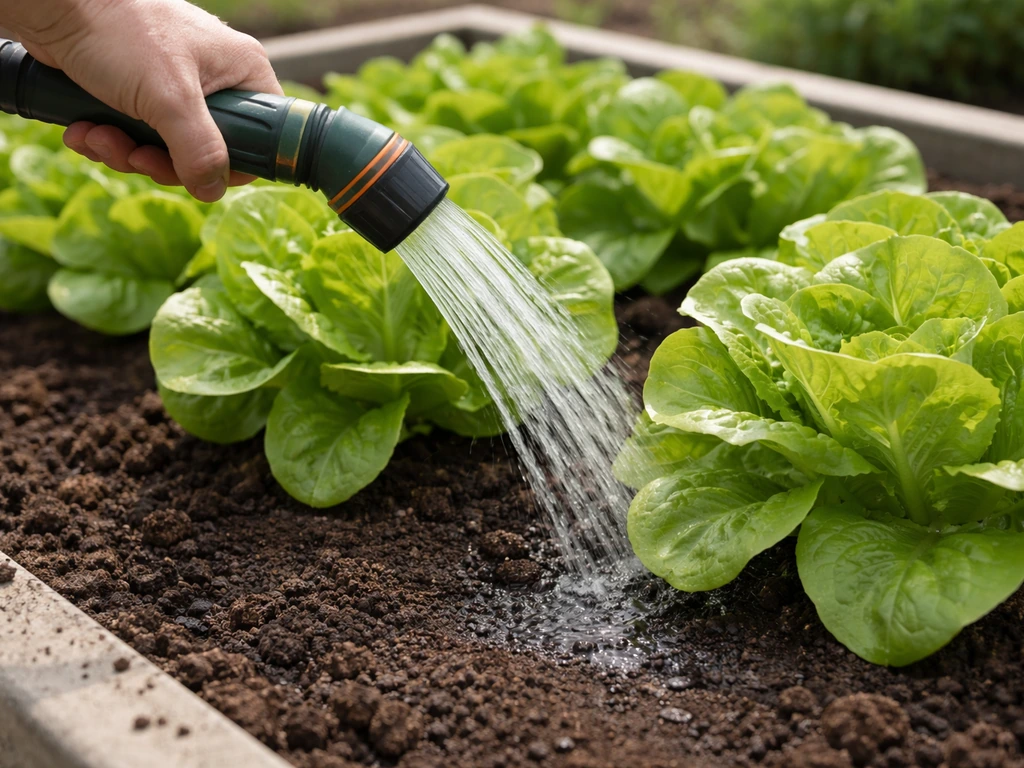
Lettuce wants consistent moisture, not wet-dry cycles. Aim for about 1 inch of water per week in outdoor beds, split into a couple of thorough waterings rather than frequent light sprinkles. In containers, check the soil by pressing your finger 1 inch deep. Water when it feels just barely dry at that depth. In hot weather, containers may need watering every one to two days. The key mistake beginners make is letting the soil dry out completely and then drenching it. That stress cycle encourages bitterness and bolting.
Try to water at the base of the plant, not overhead, to keep leaves dry and reduce fungal risk. If you do water overhead, do it in the morning so leaves dry before nightfall.
Feeding in soil or containers
Lettuce is a light feeder, but it does appreciate nitrogen because that is what drives leafy growth. If you are wondering whether Miracle-Gro is good for lettuce, focus on using a nitrogen-friendly fertilizer at the right rate and timing Miracle-Gro good for lettuce. If you start with a decent potting mix or compost-amended garden bed, you often do not need to fertilize at all for the first month. After that, apply a nitrogen-based fertilizer about 4 weeks after transplanting or when you thin your seedlings. A simple approach: 1/4 cup of a 21-0-0 ammonium sulfate fertilizer per 10 feet of row, worked lightly into the soil. Alternatively, a balanced liquid fertilizer (like a 10-10-10 diluted to half strength) works fine for containers and gives you a bit of everything.
Feeding in hydroponics
In a hydroponic system, target a pH of 5.5–6.5 (most growers aim for 5.8 as their sweet spot). Outside that range, nutrients are present in the water but the plant cannot absorb them properly, which shows up as slow growth, yellowing, or weird leaf texture. For electrical conductivity (EC), lettuce generally performs well at 0.8–1.2 mS/cm, though you can push up to around 1.6 as plants mature. Check pH and EC every one to two days when plants are young, and adjust as needed. This applies to frilly Lollo varieties the same as any other lettuce since they are still standard Lactuca sativa.
Harvesting and keeping the leaves coming
Loose-leaf types like Lollo Rosso and Lollo Verde are ready to harvest at almost any size, but full ruffled texture develops around 50–60 days from seed. You have two main harvest strategies: cut-and-come-again, or whole-head harvest.
For cut-and-come-again, use scissors to cut outer leaves about 1 inch above the soil, leaving the central growing point intact. The plant regrows and you can harvest again in 1–2 weeks. This extends your window from a single plant by weeks. For whole-head harvest, cut the entire rosette at the base just before it looks like it might start sending up a flower stalk.
To keep lettuce coming continuously, do succession plantings every 7–14 days. Start a new small batch of seeds or transplants every two weeks, and you will always have plants at different stages. A single round of Lollo Rosso matures around the same time and then it is done; staggered plantings solve that entirely. This approach also lets you experiment with different varieties batch by batch.
Troubleshooting the common problems
Bolting (plant is suddenly growing tall and sending up a flower stalk)
Bolting is triggered by prolonged heat, prolonged cold, or long daylight hours. If your lettuce is bolting, the harvest window is already closing. Pick whatever leaves you can immediately because they will get bitter fast. To prevent bolting in the first place: grow in the right season (cool months or under shade in summer), keep temperatures below 75°F as much as possible, and avoid running grow lights more than 14 hours per day indoors.
Bitter taste
Bitterness usually means heat stress or inconsistent watering. If your lettuce is bitter: check whether temperatures have been running high, make sure you are not letting the soil dry out completely between waterings, and harvest earlier rather than later. Leaves harvested young are almost always milder than mature ones in warm weather.
Leggy, thin seedlings
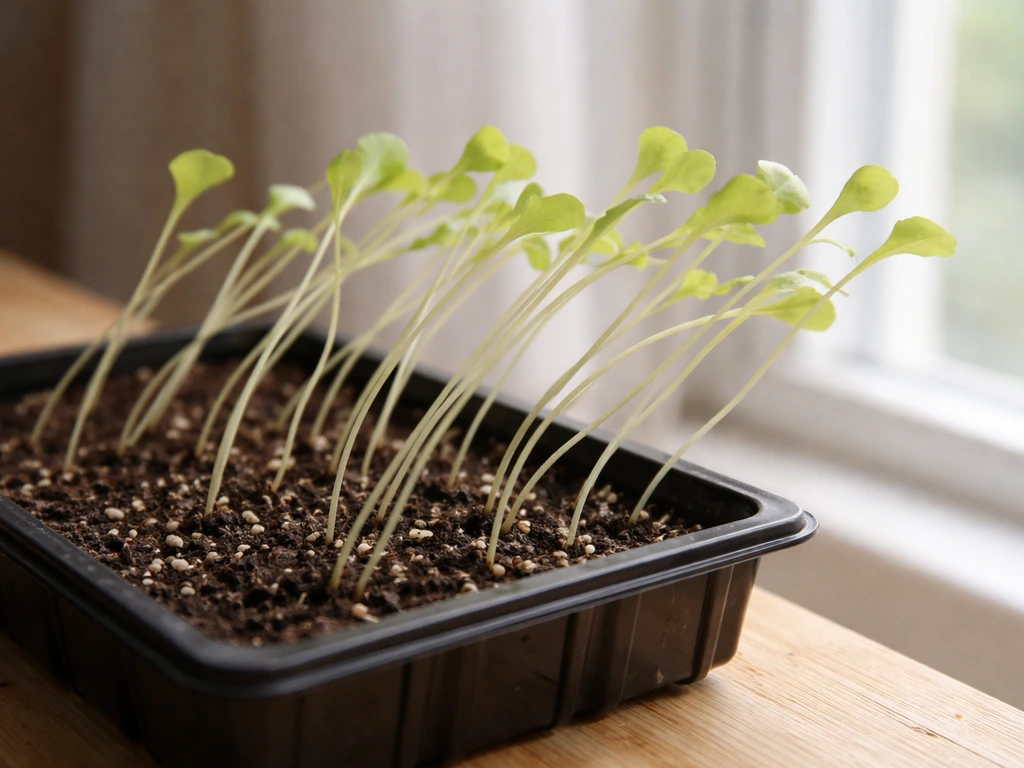
Leggy seedlings almost always mean not enough light. If you are growing indoors and seedlings are stretching toward the light source, get the light source closer (within 4–6 inches for an LED grow light) or increase the daily light duration to 14 hours. Warm germination temperatures can also contribute. If it is already leggy, bury the stem a bit deeper when you pot up and the plant will root along the buried stem.
Poor germination
Lettuce seed has a reputation for finicky germination when the soil is too warm or too dry. Seeds germinate best at 60–70°F. Above 80°F, germination rates drop significantly. If you are struggling with germination in summer, try pre-chilling seeds in a damp paper towel in the fridge for 24 hours before planting, or move your seed tray to a cooler spot. Keep the surface consistently moist until sprouts appear.
Aphids and slugs
Aphids cluster on the undersides of leaves and in the ruffled folds of frilly varieties (those curly leaves are excellent aphid hiding spots). Check weekly. A strong spray of water knocks most of them off. For persistent infestations, insecticidal soap spray is safe and effective on lettuce. Slugs are a nighttime problem in cool, moist conditions. Hand pick them at night or use a shallow dish of beer as a trap. If you see slime trails and ragged holes in leaves, slugs are your culprit.
Fungal problems (downy mildew, gray mold, powdery mildew)
Downy mildew shows up as pale green or yellow patches on top of leaves with grayish mold underneath. It thrives in cool, humid conditions with long periods of leaf wetness. Gray mold (Botrytis) causes soft, brown, fuzzy rot, often at the base of leaves or on damaged tissue. Powdery mildew looks like a gray-white dusty coating. The fix for all three is similar: improve airflow between plants, water at the base rather than overhead, and water in the morning so leaves dry during the day. Remove and dispose of affected leaves promptly so the problem does not spread.
Stringy roots or weird-looking growth
If you are growing hydroponically and see long, stringy, white roots hanging into your reservoir, that is completely normal and actually a sign of a healthy plant. If roots are brown or slimy, that usually points to root rot from poor oxygenation or high water temperatures. Check that your air pump is running properly and that reservoir water is not above 68°F. In soil, if you see thin, hairlike white threads around roots, that is almost certainly mycorrhizal fungi, which is beneficial. Only worry about root issues in soil if you also see wilting or yellowing that does not respond to watering.
Your quick-start checklist
Here is exactly what to do based on where you are right now. Pick your situation and follow the steps.
- Nothing planted yet, outdoor bed or container: Buy Lollo Rosso or Lollo Verde seeds, plant 1/4 inch deep in moist soil, space 9–12 inches apart or thin to that spacing, keep soil consistently moist, and feed once with a nitrogen fertilizer 4 weeks after transplanting.
- Nothing planted yet, indoors: Fill small containers with potting mix, plant 2–3 seeds per pot at 1/4 inch deep, place under a grow light for 14 hours per day, thin to the strongest seedling per pot, and transplant up once roots fill the container.
- Seeds already started but look leggy: Move them directly under a grow light or the brightest window available, reduce overnight temperatures if possible, and bury a bit more of the stem when you pot them up.
- Already growing plants that are bolting: Harvest immediately, cut off the flower stalk to briefly delay the process, and start your next succession batch now.
- Hydroponic setup: Target pH 5.8, EC 0.8–1.2 for young plants, check every couple of days, and choose Lollo Rosso or Lollo Verde for the best frilly texture and slow-bolt performance.
- Want continuous harvests: Stagger new plantings every 7–14 days, harvest outer leaves with scissors as cut-and-come-again, and plan a fall succession if summer heat is a problem in your region.
If you run into speed or growth issues, it is worth looking at whether your conditions might also need a general nutrition or watering adjustment. Some of those problems overlap with broader questions around why lettuce stalls out or grows slowly, which is a whole separate topic worth exploring if tinkering with variety and spacing does not fully solve things. If you are wondering why your lettuce will not grow well, start by checking temperature, light, and moisture, since those are the most common causes why lettuce stalls out or grows slowly.
FAQ
Why did my frilly (Lollo) lettuce lose its ruffled texture?
Lettuce can handle partial shade, but the “lettuce hair” ruffled look needs enough light to stay compact. If leaves are getting flatter or less crinkled, move to brighter conditions (at least 6 hours outdoors, or intensify your grow light) before changing fertilizer.
Can I keep cutting lettuce hair (cut-and-come-again) and harvest for months?
Yes. If you harvest outer leaves, a plant can go for multiple rounds, but eventually it will still bolt when conditions trigger it. Plan succession plantings so you are not relying on one plant to last through a warm spell.
How do I know if my container watering schedule is causing bitterness?
Watering “lightly every day” often creates shallow wetness and then rapid drying deeper in the pot, which leads to bitterness. Instead, water until you get a thorough wetting, then wait until the top inch is just barely dry before watering again.
What should I troubleshoot first if my lettuce is yellowing but not growing fast?
If you see yellowing, check for light first, then moisture extremes, then nitrogen timing. Overfeeding can also tip lettuce into overly soft growth and faster bolting, so use nitrogen at the planned rate and only adjust after you confirm temperature and watering are on target.
What’s the best way to prevent lettuce hair from bolting during heat waves?
Lettuce prefers cool conditions, and “hot” stress usually shows up before the plant visibly wilts. Use afternoon shade outdoors, vent hot rooms, and if you grow indoors, keep lights and any nearby heat sources from raising the leaf zone above your target.
My seedlings are fuzzy and leggy, are they failing or just growing normally?
Sometimes seedlings look fuzzy because of normal germination stages, but if they keep stretching and turning pale after true leaves appear, it is almost always insufficient light. Raise the grow light closer (within a few inches) and increase daily hours, rather than adding more fertilizer.
Does planting too close reduce the “hairy” frilly leaf effect?
Yes, but manage crowding carefully. Let plants touch less than they want to, because very tight clusters reduce airflow and can worsen mildew. If you want max frills, thin earlier and give each plant room to spread so the ruffled leaf edges develop fully.
In a DWC or NFT system, what are the common causes of unhealthy lettuce roots?
For hydroponics, brown or slimy roots often come from low oxygen or warm reservoir water. Make sure your air pump is actually bubbling, keep the reservoir temperature under 68°F, and avoid letting EC or pH drift more than necessary.
What should I do first if I see mildew on my frilly lettuce?
Powdery mildew, downy mildew, and gray mold all prefer different surface conditions, but in every case you can help by improving airflow and keeping water off leaves. Remove affected leaves early, and switch to morning base watering so foliage dries during the day.
Why won’t lettuce hair seeds germinate in warm weather?
If your seedlings won’t germinate, focus on temperature and moisture consistency. Lettuce germinates best around 60 to 70°F, keep the surface moist (not soggy), and consider pre-chilling only if summer heat makes it hard to stay in that range.
How do I acclimate lettuce hair transplants from indoors to outdoors?
You can, but lettuce grows best with stable conditions. If you start seeds indoors, harden transplants in shade first, then gradually add light and time outdoors over a few days to reduce leaf stress and prevent early bolting.
When should I worry about strange roots around my lettuce plant?
Lettuce “roots” are normal, and mycorrhizal threads in soil can also be beneficial. The clue is plant health: only worry about root problems if you also see wilting, persistent yellowing, or foul smell. Otherwise, treat it as observation, not immediate intervention.