You can regrow iceberg lettuce from scraps by saving the bottom 2–3 inches of the cut core, placing it upright in a shallow dish of water, and waiting about 7–10 days for roots to form. StopWaste’s scrap regrow instructions also recommend cutting the base down to keep it intact at about 2, 3 inches, placing it upright, and adding enough water to reach about halfway up the base cut down to keep the base intact at about 2–3 inches.
How to Grow Iceberg Lettuce From Scraps Step by Step

Marcus Holloway
27 May 2026
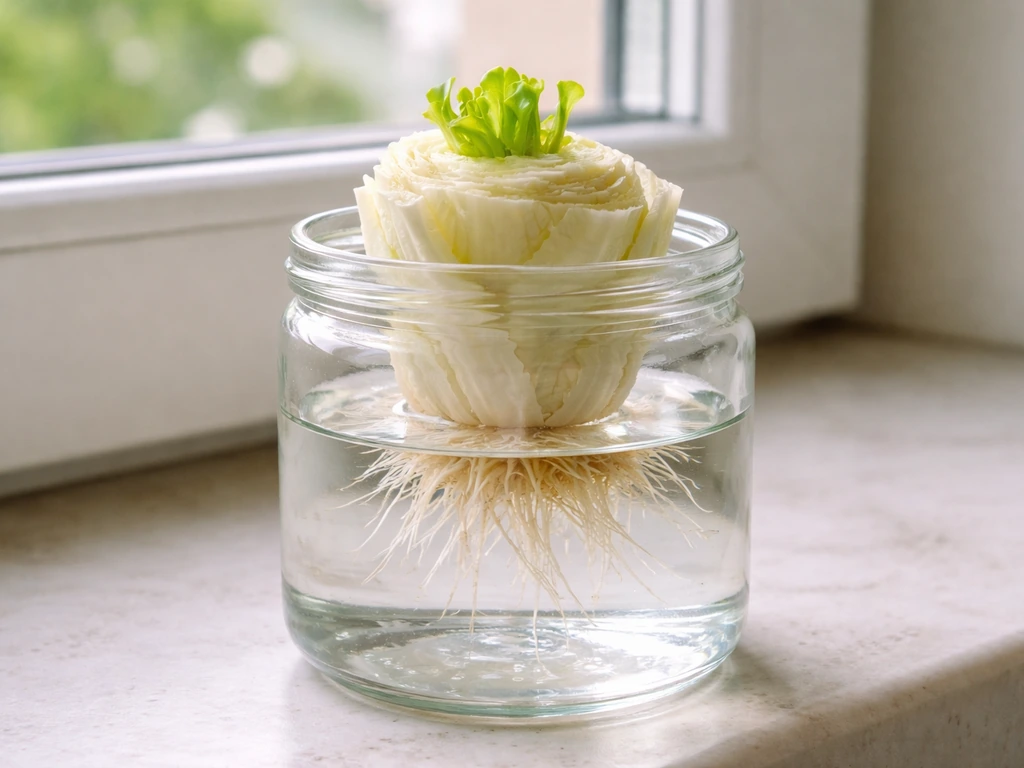
Once those roots reach 3–4 cm long, you transplant it into soil or a container. You probably won't get a picture-perfect tight iceberg head every time (iceberg is genuinely less forgiving than romaine for scrap regrowth), but you will get real edible leaves and, with the right conditions, a reasonably compact second head. Here's exactly how to do it.
Which scraps can actually regrow (and which ones can't)
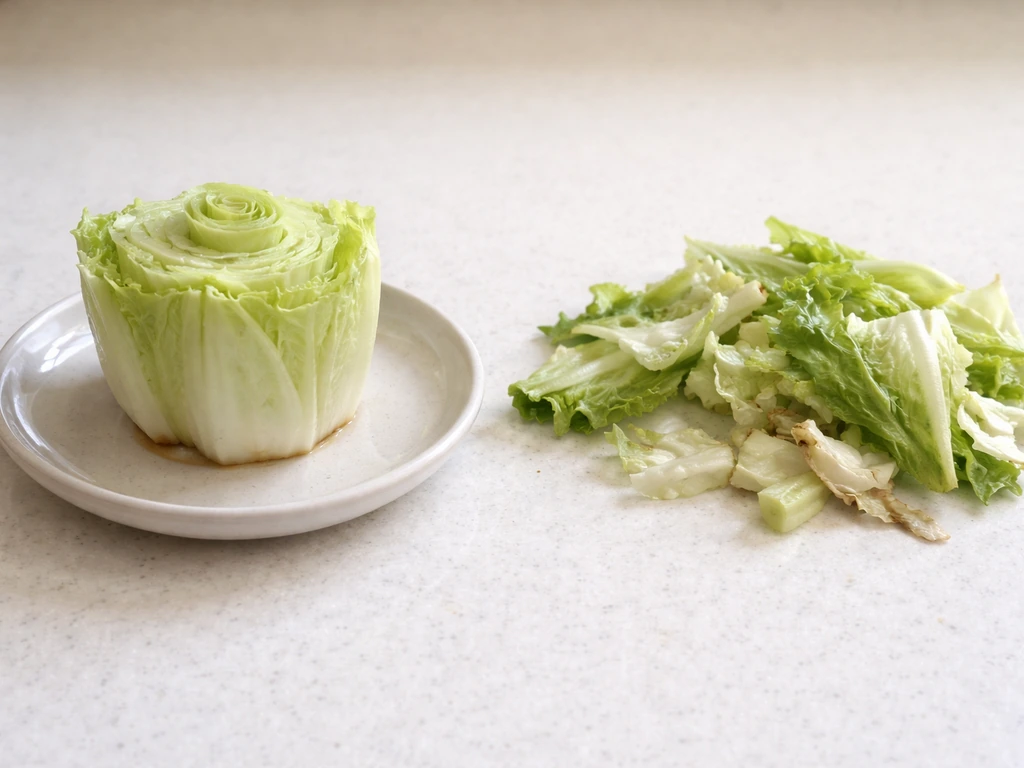
The only part of a lettuce head worth trying to regrow is the dense base or crown: that solid, whitish bottom section left after you've used most of the leaves. It contains the basal growth node that produces new roots and leaves. Individual outer leaves pulled from the head, or floppy bits without that attached base, won't regrow into anything useful. They'll just rot in your water glass.
Iceberg cores can regrow, but I'll be straight with you: iceberg is harder than romaine or loose-leaf types. Romaine cores tend to bounce back vigorously and form a decent second head. Iceberg cores root well enough, but re-forming that famously tight, crunchy ball of leaves is a real challenge because tight head development depends on very specific cool temperatures. What you're more likely to get from an iceberg scrap is a flush of leaves you can harvest cut-and-come-again style, with some chance of a loosely formed head if your conditions are right. That's still worth doing. Just go in with realistic expectations.
- Iceberg core (bottom 2–3 inches of a store-bought or garden head): yes, worth trying
- Romaine or cos lettuce base: great results, more reliable than iceberg
- Loose-leaf lettuce base: good for leaf regrowth
- Individual outer leaves, torn pieces, or tops of leaves: won't root, skip them
- A core that's already slimy, brown, or smells off: discard it immediately, it will just rot
Step-by-step: rooting the core in water
This part is genuinely simple, but a few details matter a lot for avoiding the mushy-core outcome people often complain about.
- Cut the lettuce head so you're left with roughly 2–3 inches (about 5–7 cm) of the solid base. You want at least 3–4 cm of intact core. Use a clean, sharp knife and make one straight cut.
- Peel away any wilted or damaged outer leaves from the base. You want clean, healthy tissue exposed.
- Set the core upright in a shallow cup, bowl, or jar. Fill the container with water only to about halfway up the base. This is important: submerging the whole base causes rot. Only the bottom half should be in contact with water.
- Place it in a spot with bright indirect light, like a windowsill. Avoid direct harsh sun at this stage.
- Change the water every 1–2 days. Fresh water prevents bacterial and fungal buildup, which is the main reason cores go slimy.
- Watch for small white roots emerging from the cut base and tiny new leaves from the center. This typically takes 7–10 days.
- Once roots are about 3–4 cm long (roughly an inch and a half), the core is ready to transplant. Don't wait too long in water or the plant gets leggy and weak before it's even in soil.
If you see no sign of activity after a full week and the base feels soft or smells bad, discard it and try again with a fresher core. Some cores just don't have enough viable tissue left, especially if the original head sat in your fridge for two weeks before you got to it.
Transplanting into soil or containers
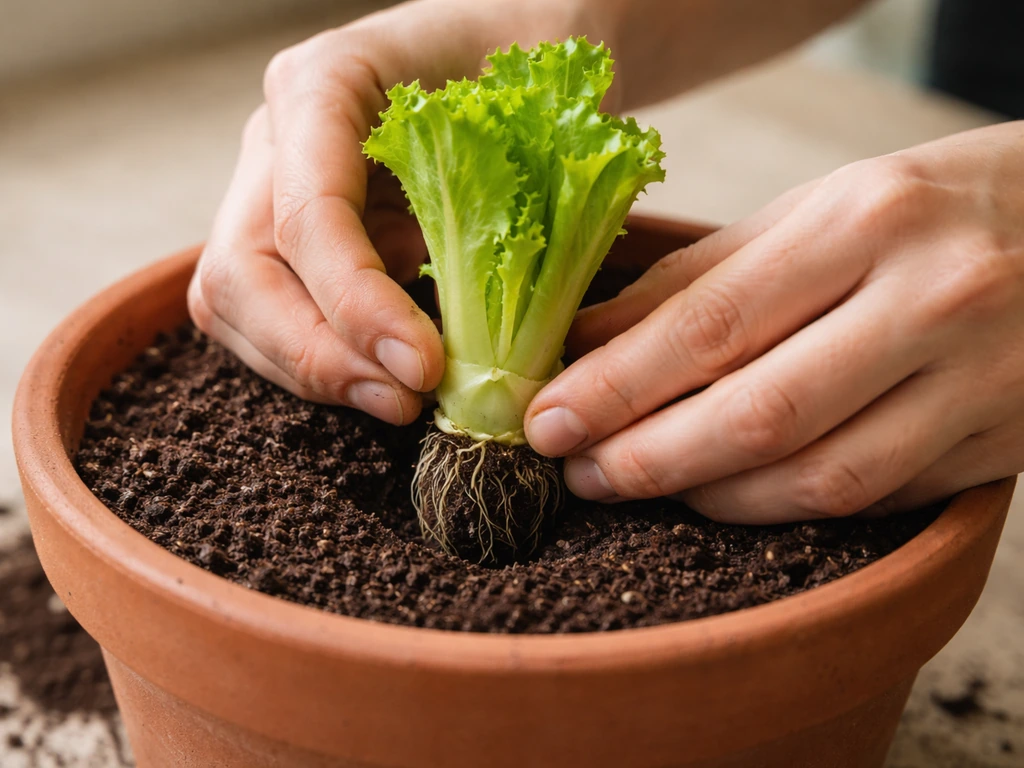
Once your roots are 3–4 cm long, you want to get that core into growing medium as quickly as possible. It transitions fast once it's in soil, and this is where most of the real growth happens.
Soil and container setup
Use a loose, well-draining potting mix. Lettuce roots hate sitting in waterlogged soil. If you're using an outdoor bed, work in some compost to improve drainage and fertility. A container needs at least 8–10 inches of depth for head lettuce to develop properly.
Planting depth and spacing
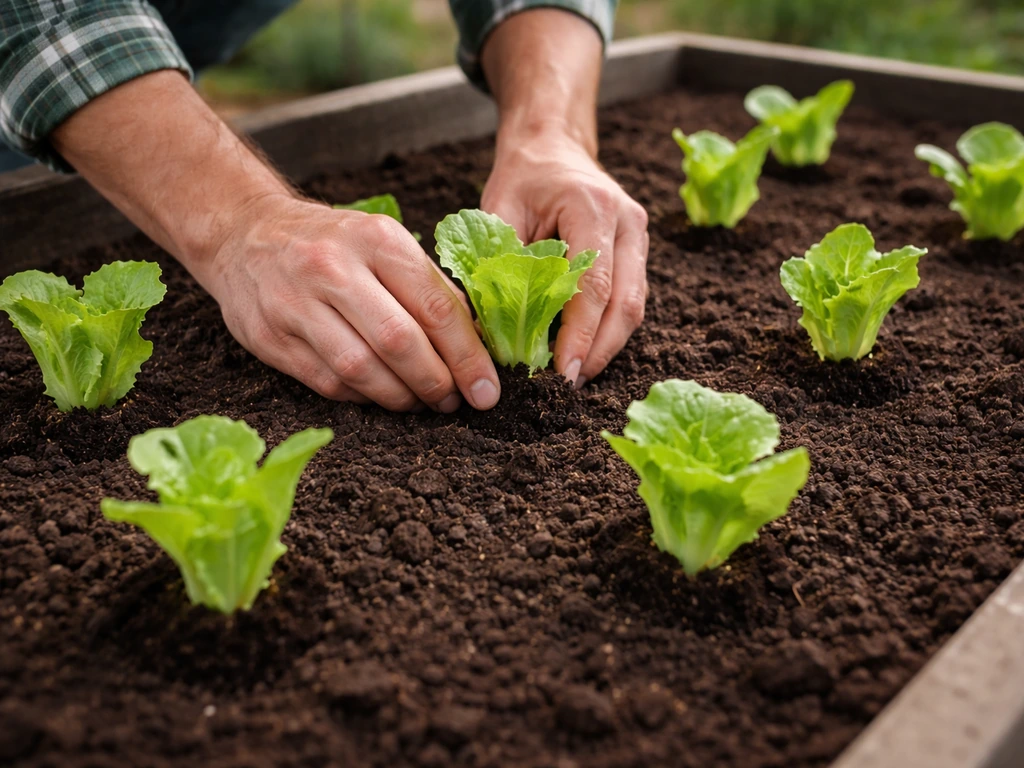
Plant the core so that the base sits just below the soil surface, with the new leaf growth pointing upward and clear of the soil. You're essentially burying it about 1/4 to 1/2 inch deep, just enough to anchor it and let the roots spread. Firm the soil gently around the base.
If you're transplanting multiple cores or planning to grow other lettuce alongside them, space iceberg plants about 12 inches apart in all directions. Head lettuces need that room to develop. Crowding them is one of the fastest ways to end up with loose, floppy heads instead of tight ones. In a row setup, leave about 18 inches between rows.
After transplanting
Water gently right after planting to settle the soil around the roots. Keep the soil consistently moist for the first few days while the plant adjusts. It may look a little sad for 48 hours post-transplant and that's normal. New leaf growth from the center is your sign it's establishing.
Light, temperature, and watering for tight heads
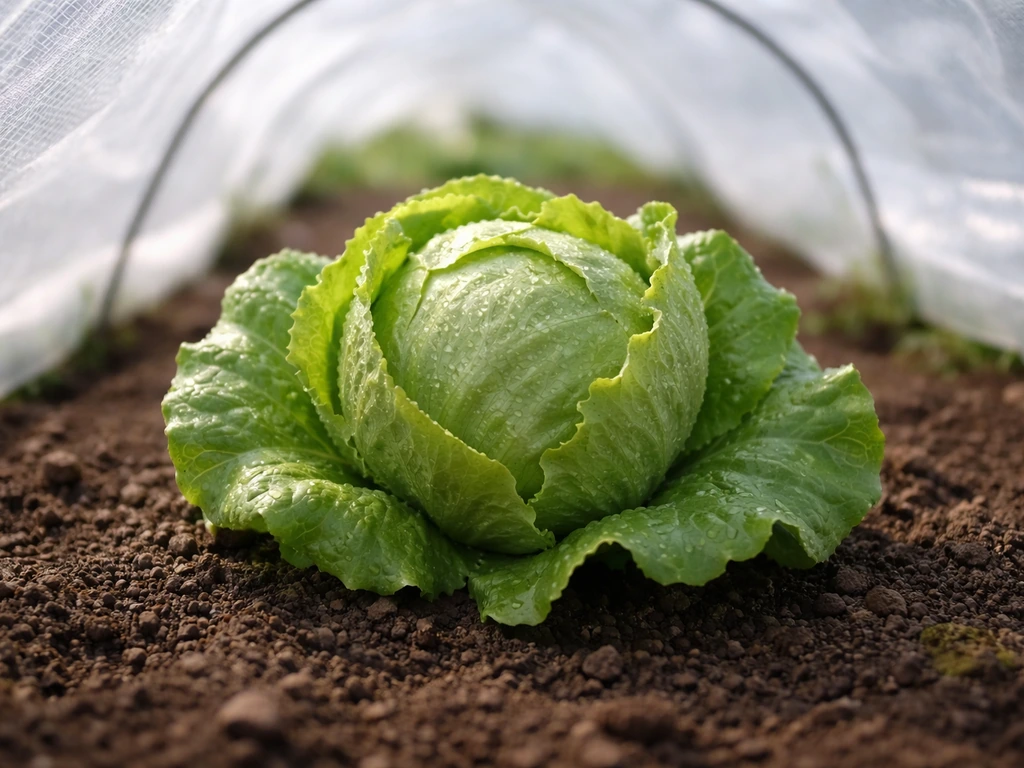
This section matters more for iceberg than for almost any other lettuce type. The tight, crunchy head iceberg is known for forms under a very specific set of conditions. Miss them and you get something looser and more bitter, but still edible.
Light
Iceberg lettuce needs about 6 hours of sunlight daily, though it tolerates partial shade better than many vegetables. Outdoors, a spot that gets morning sun and afternoon shade is actually ideal in warmer months because it keeps temperatures down. Indoors, a south- or west-facing window works, or a grow light set to 14–16 hours per day. Avoid giving it too many dark hours since insufficient light leads to leggy, stretched growth that never tightens into a head.
Temperature
Temperature is the single biggest factor in whether you get a tight iceberg head or a floppy mess. The ideal range is 60–70°F during the day with cooler nights around 45–55°F. Head formation specifically tightens up at 55–65°F. If your growing space is consistently above 70°F, especially at night, expect looser heads and a higher chance of bolting. Heat triggers the plant to send up a seed stalk, and once that happens, the leaves turn bitter fast.
Watering
Keep soil evenly moist but not wet. A good rule of thumb is to water when the top inch of soil feels dry. For outdoor beds, that might be every 2–3 days depending on your climate. For indoor containers, check more frequently since pots dry out faster. Water at the base of the plant rather than overhead to keep the forming head dry, which reduces rot risk. Inconsistent watering, alternating between bone dry and soaking wet, is a common reason for tip burn and loose heads.
Feeding, pests, diseases, and what to do when things go wrong
Fertilizing
Lettuce is a nitrogen-hungry crop because you're harvesting leaves. About 3–4 weeks after transplanting, side-dress with a nitrogen-focused fertilizer. A common recommendation is roughly 1/4 cup of a nitrogen fertilizer like 21-0-0 per 10 feet of row, worked into the soil around (not touching) the plants. Don't overdo it: too much nitrogen produces lush, soft leaves that are more susceptible to rot and pests. One moderate feeding mid-growth is usually enough for a scrap-grown plant.
Common pests
Aphids are the most frequent problem on lettuce scraps, especially on tender new growth. Check the undersides of leaves regularly. A strong blast of water or a diluted insecticidal soap spray handles most infestations. Slugs go after lettuce at night and after rain; diatomaceous earth around the base of plants or slug traps help. Cutworms can sever a young transplant at soil level overnight, so a simple collar made from a cardboard tube around the stem at planting is worth the effort.
Disease watch
Downy mildew (caused by Bremia lactucae) shows up as yellowish patches on top of leaves with a grayish fuzz underneath. It thrives in cool, wet conditions with poor airflow. Space plants properly and avoid overhead watering to reduce risk. Powdery mildew appears as a gray-white powdery coating on leaf surfaces. Both spread fast in crowded, damp conditions. Remove affected leaves immediately and improve airflow if you spot either.
Troubleshooting common scrap-regrowth problems
| Problem | Likely Cause | Fix |
|---|---|---|
| Mushy or slimy core in water | Water level too high, bacteria buildup | Change water daily, keep water only halfway up the base; trim to clean tissue and retry with a fresh core |
| No roots after 10 days | Core too old, damaged tissue, wrong temp | Discard and start with a fresher core; keep water temp around 65–70°F |
| Leggy, stretched leaves after transplanting | Insufficient light | Move to brighter location or increase grow light duration to 14–16 hours |
| Head stays loose, won't tighten | Temperatures too warm (above 70°F) | Move to cooler spot or grow during spring/fall; indoor growers: lower room temp at night |
| Bitter taste | Bolting triggered by heat or long days | Harvest before flower stalk appears; grow in cooler conditions |
| Yellowing leaves | Nitrogen deficiency or overwatering | Side-dress with nitrogen fertilizer; check drainage and reduce watering frequency |
| Aphids on new growth | Soft new tissue attracts them | Spray with water or diluted insecticidal soap; check undersides of leaves weekly |
How long until harvest and getting repeat cuttings
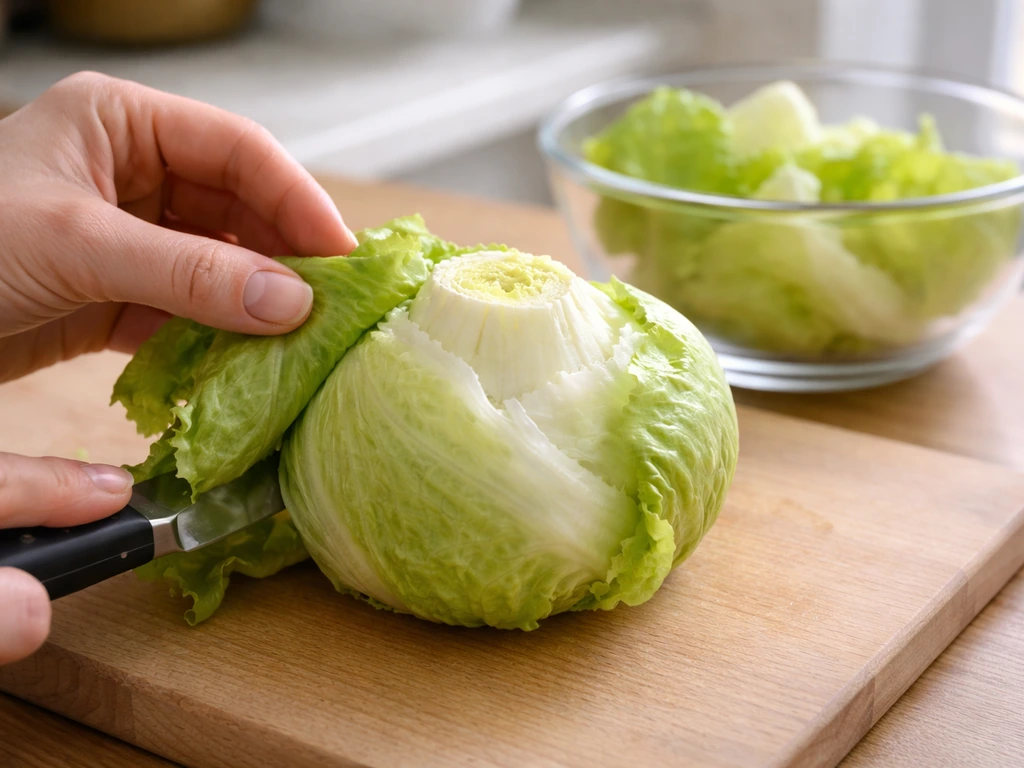
From the moment you drop your core in water, you can expect new edible leaves within about 12 days. The water-rooting phase takes 7–10 days, and new leaves are harvestable just a few days after that. If you transplant into soil and let the plant develop further, you're looking at a few more weeks before you have enough growth for a meaningful harvest or any semblance of a head forming.
For repeat harvests, use a cut-and-come-again approach: take outer leaves as they reach usable size, always leaving the inner growth point intact. This is more reliable than waiting for a full tight head to re-form. A scrap-grown plant can produce leaves for several weeks this way before it either bolts or exhausts itself. When you see a center stalk starting to push upward and elongate, that's the bolting signal. Harvest everything left at that point because bitterness follows quickly.
Growing a full second tight iceberg head from a scrap is possible but not guaranteed. I've had it happen in spring when temperatures stayed cool, and I've also had perfectly healthy plants that just produced loose leaves rather than forming a proper head. Both are worth eating. The cut-and-come-again approach is the more practical goal to plan for.
Indoor, outdoor, and hydroponic setup tips for scrap-grown iceberg
Outdoor gardens
Outdoor growing gives iceberg the natural temperature fluctuations it loves, especially if you're planting in spring (soil temps around 45–65°F) or fall. Once transplanted at 12 inches spacing, outdoor plants generally need less fussing. The main risk outdoors is a sudden heat spike, which can trigger bolting in days. If your forecast shows a stretch of days above 75°F, throw a shade cloth over the bed to extend your harvest window. Slugs are a bigger issue outdoors, so set traps or use barriers at planting.
Indoor containers
Indoors, temperature control is your advantage and your challenge. Most homes sit around 68–72°F, which is borderline warm for tight iceberg head formation. If you can put the container in a cooler room (a basement, an enclosed porch, or near an air conditioning vent in summer), you'll get much better results. Use a pot at least 10 inches deep and 12 inches wide per plant. A grow light set to 14–16 hours works well for leaf production; just keep it 4–6 inches above the plant to avoid leggy stretching. Water more frequently than you would outdoors since containers dry out faster.
Hydroponic systems
You can absolutely transition a water-rooted scrap core into a basic hydroponic setup like a Kratky or DWC system instead of soil. Once roots are 3–4 cm long, nest the core into a net pot with a small amount of clay pebbles or rockwool to hold it in place, then lower the pot into your reservoir. For nutrient solution, keep pH between 6. 0 and 7.
0 (lettuce is fairly forgiving in that range) and start with a diluted nutrient mix until the plant is fully established. Hydroponics actually helps with the temperature challenge: it's easier to manage a reservoir temperature around 65–68°F than to cool an entire room. Lettuce grown hydroponically from scraps tends to produce leaves faster than soil-grown equivalents, though tight head formation still depends on ambient air temperature staying in that 60–70°F sweet spot.
Whichever setup you use, the fundamentals are the same: cool temperatures, consistent moisture, adequate light, and good airflow. If you're also exploring growing iceberg from store-bought lettuce more generally, or curious whether other lettuce types like romaine can be grown from stems or cuttings, the same core principles apply across all those methods.
If you're wondering can lettuce grow from cuttings, the answer depends on having the right tissue and temperature, but it is often easier to start with the lettuce base or crown. If you want to try growing lettuce from stem instead of a core, use a similar focus on cool conditions and keeping the roots from drying out.
If you're starting with store-bought lettuce, this same approach can help you understand how to grow lettuce from store bought and get leaves you can harvest soon. If you are specifically asking can you grow lettuce from lettuce, this same approach to using the core applies.
The scrap approach is one of the most satisfying low-cost ways to start, especially if you want to see results within two weeks of standing in your kitchen holding a leftover lettuce base.
FAQ
Can I regrow iceberg lettuce from scraps if the core is already wilted or has been in the fridge for a long time?
Yes, but success drops sharply as the basal tissue dries out. If the core feels dry, very soft, or smells sour, it usually will not re-root. For best odds, use a fresh cut core, keep it cool, and avoid leaving it in water longer than needed once the roots start (water can go stale and rot the new roots).
Do I need to change the water while the core is rooting?
You should refresh it every 2 to 3 days. Stagnant water encourages bacterial rot, which is a common reason for a mushy core. Also keep the core upright and fully supported so only the bottom makes contact with water, not the entire crown.
What’s the best container to root iceberg scraps in (jar, bowl, shallow dish)?
Use something wide and shallow enough that the core stays upright, stable, and not submerged beyond the bottom 2 to 3 inches. A shallow dish or jar lid setup usually works well because it limits oxygen-poor water contact, which helps prevent slime and rot.
How do I know the roots are ready to transplant?
Wait until roots are visibly healthy (not translucent or brown) and around 3 to 4 cm long, as mentioned in the article. If you see lots of tiny root nubs but they are still short, give it a few more days so the plant can establish faster after potting.
Will iceberg regrowth always turn into a tight head?
No. Even with good rooting and care, iceberg often produces loose leaves or a loosely formed head unless temperatures stay in the cool window consistently. Plan to harvest cut-and-come-again leaves as your reliable outcome, then only treat tight-heading as a bonus.
My core turned mushy in the water, what should I do differently next time?
Usually it is either too much of the crown submerged, water not refreshed, or the core was already losing viability. Next attempt, reduce the water level so only the bottom touches it, change water every few days, and discard cores that feel soft or smell bad by day 5 to 7.
How much light is too much, can sun scorch the re-growing lettuce?
Direct midday sun can stress tender new growth, especially indoors near a hot window. If leaves start looking bleached or dry at the edges, move it to morning sun with afternoon shade outdoors, or keep the grow light at the recommended distance so it is bright but not heat-stressing.
Should I water overhead or at the base while the head is forming?
Water at the base rather than overhead. Overhead wetting keeps the forming center damp longer, increasing rot risk and mildew problems, especially with cooler temperatures and limited airflow.
What spacing should I use if I am regrowing more than one core in a single container or raised bed?
Use about 12 inches between plants for head lettuce, and avoid cramming multiple cores into one small pot. Crowding increases dampness around leaves and reduces airflow, which makes loose heads and fungal issues more likely. If you only have a small container, reduce to one core per pot.
Do I need fertilizer during the water-rooting stage?
Typically no. Let the roots form in plain water first, then switch to soil or a properly prepared nutrient-friendly potting mix. Once transplanted and actively growing, the side-dress nitrogen timing matters, because feeding too early can worsen rot and promote soft growth.
Why are my lettuce leaves bitter or turning fast after they start to bolt?
Bolting triggers bitterness because the plant is shifting energy to flowering. As soon as you see the center stalk elongate, harvest remaining leaves promptly rather than waiting, since bitterness ramps up quickly after the plant commits to seed growth.
How can I prevent aphids on scrap-grown lettuce?
Start with prevention, check undersides frequently, and rinse plants gently with a strong jet at the first sign of aphids. If they keep returning, insecticidal soap is most effective when applied to the undersides, but avoid spraying during peak heat or bright sun to prevent leaf burn.
My lettuce has mildew or gray fuzz, what’s the quickest fix?
Remove the affected leaves immediately, improve airflow, and stop overhead watering. If you can, increase distance between plants next cycle, and keep the growing area cooler and less humid. For ongoing prevention, watering at the base is one of the biggest practical changes.
Can I regrow lettuce in a Kratky or DWC system, and what’s the most common mistake?
You can, and the key is keeping reservoir temperature near the cool target and ensuring the core is stable in the net pot so only the right section sits in the nutrient solution. The most common mistake is running too warm or letting the roots sit in overly concentrated or poorly maintained solution, which can stress roots and slow leaf production.