Yes, lettuce can regrow from cuttings, but there's one important catch: it only works if you keep the crown intact. That basal plate at the bottom of the plant, where all the leaves meet, contains the growing point (meristem) that drives new leaf production. Cut anywhere above that and you're just holding a handful of leaves with no future. Cut below or just above it and keep that crown alive, and you can get a second flush of edible leaves, usually within 10 to 14 days. If you’re wondering how to grow lettuce from stem, the key is keeping the crown intact and cutting in the right spot.
Can Lettuce Grow From Cuttings? Easy Regrow Guide

Marcus Holloway
25 Jun 2026
What 'regrowing from cuttings' actually means for lettuce
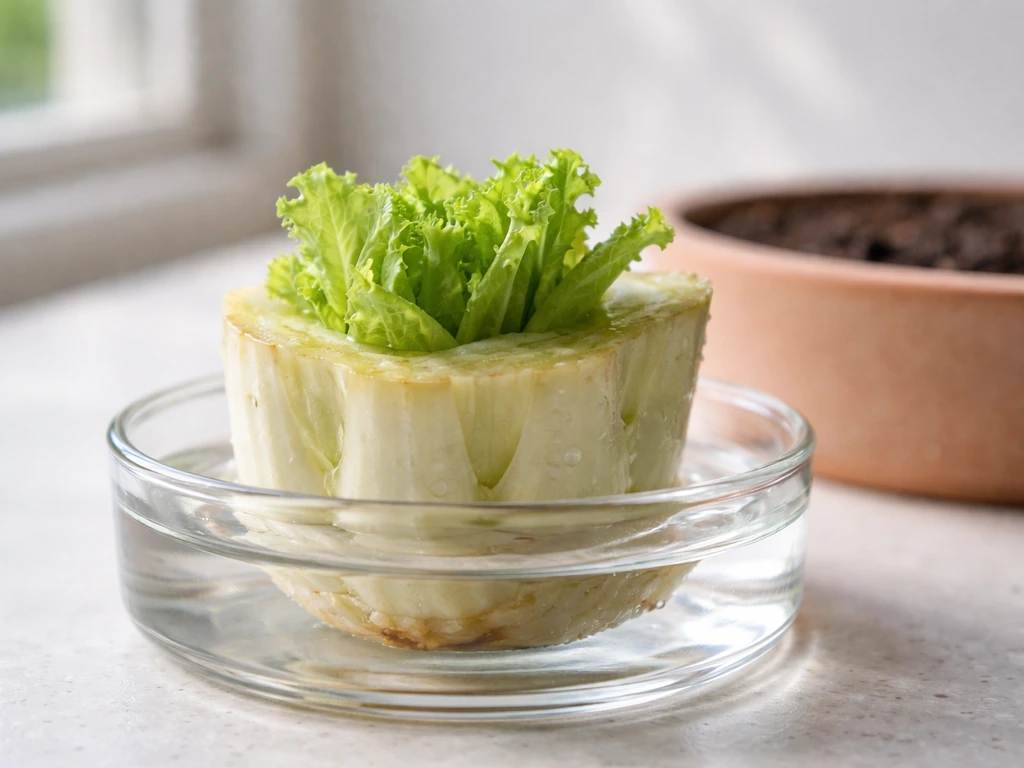
Lettuce doesn't propagate the way some herbs do, where you stick a stem in water and it roots and becomes a new plant. There are no true stem cuttings here. What you're really doing is regrowing from a trimmed base stub, essentially giving the crown another chance after the main head or leaves have been harvested. Think of it less like propagation and more like a second harvest from the same plant. That distinction matters because it sets realistic expectations: you won't multiply your lettuce plants this way, but you can extend what you get from one plant.
This is closely related to growing lettuce from store-bought heads or regrowing lettuce from scraps, which follow the same core principle. The crown tissue is everything. If it's mushy, dried out, or completely removed during harvest, regrowth won't happen regardless of the method you use.
Which lettuce types and cuts give you the best shot
Romaine is the easiest and most reliable variety to regrow from a base cutting. Its upright structure and dense crown make it forgiving. Looseleaf and butterhead varieties also work reasonably well because their crowns tend to stay intact when you harvest. Iceberg is possible but more hit-or-miss since the tightly packed head makes it harder to cut cleanly above the crown without damaging it.
For the cut itself, you want to leave roughly 2 to 3 inches of the base. This gives you enough crown and basal tissue to work with without exposing too much raw cut surface to moisture and rot. If the plant still has roots attached (like from a store-bought head with the root end), that's a bonus. If not, don't worry. The crown alone is enough to restart growth if the conditions are right.
| Variety | Regrowth Ease | Best Method | Notes |
|---|---|---|---|
| Romaine | Easiest | Water base or soil | Dense crown, upright growth, most forgiving |
| Looseleaf | Good | Water base or soil | Cut-and-come-again naturally; crown usually intact |
| Butterhead | Good | Soil or containers | Tender crown; keep water level low to avoid rot |
| Iceberg | Trickier | Water base | Tightly packed head can obscure crown; cut carefully |
Method 1: Regrow the base in water
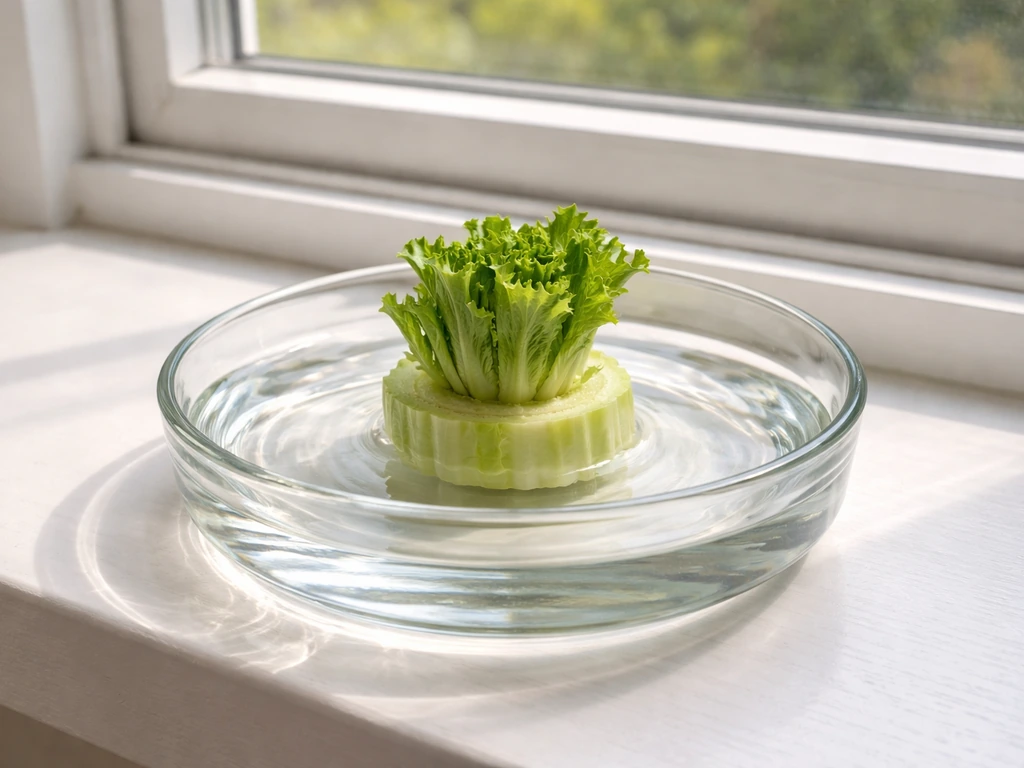
This is the most beginner-friendly approach and the one most people try first. It requires nothing more than a shallow dish, some water, and a windowsill with decent light.
- Cut your lettuce about 2 to 3 inches from the bottom, making sure the crown (that dense, flat base where the leaves attach) is intact and unbruised.
- Place the base cut-side down in a shallow dish or bowl. You only want about a half inch to one inch of water covering the very bottom of the stub. Do not submerge the crown itself.
- Set the dish near a bright window. Indirect light or a grow light works well. Avoid direct harsh sun, which can heat the water and speed up rot.
- Change the water every one to two days. Stagnant water is the number one cause of rot in this method.
- Watch for small pale leaves emerging from the center of the crown. This usually starts within 3 to 5 days and reaches roughly 2 to 4 inches of harvestable size in 10 to 14 days.
- Once you see good leaf growth and ideally some small root nubs forming, you can either harvest what's there or transplant to soil for more sustained production.
The water method is great for seeing fast results, but it's not a long-term setup. Water alone doesn't have the nutrients lettuce needs to keep producing well beyond that first flush. If you want more than one round of new leaves, move it to soil or a hydroponic setup once the initial regrowth is established.
Method 2: Pot the cutting into soil or a container
Planting the base directly into soil (or transitioning it from water) gives the crown access to nutrients and a more stable environment. This is the method most likely to give you a sustained harvest rather than just one quick flush.
- Choose a container with drainage holes. Soggy soil is just as deadly as stagnant water, so drainage isn't optional.
- Fill with a well-draining potting mix. Aim for a slightly acidic to neutral pH, ideally between 6.0 and 6.8, though lettuce tolerates a range of roughly 5.8 to 7.2, so most standard potting mixes will work.
- Make a small depression in the soil and nestle the base stub in, burying it just slightly deeper than it would naturally sit so the crown is at or just below soil level. This helps stabilize it and keeps the growing point in contact with moisture.
- Water gently and thoroughly, then let the soil drain. You want consistent moisture but never waterlogged conditions.
- Place in bright indirect light or under a grow light. Indoors, 12 to 14 hours of light per day is ideal.
- Keep the temperature between 60 and 65°F for best vegetative growth. Avoid spots near heat vents or sunny south-facing windows that can push temps above 75°F.
New leaves should emerge from the crown within a week. Once the plant looks established and is putting out steady growth, you can begin harvesting outer leaves using a cut-and-come-again approach. Taking only the outer leaves and leaving the crown untouched can keep a single container plant producing for up to 12 weeks in the right conditions.
Method 3: Regrowing in a simple hydroponic setup
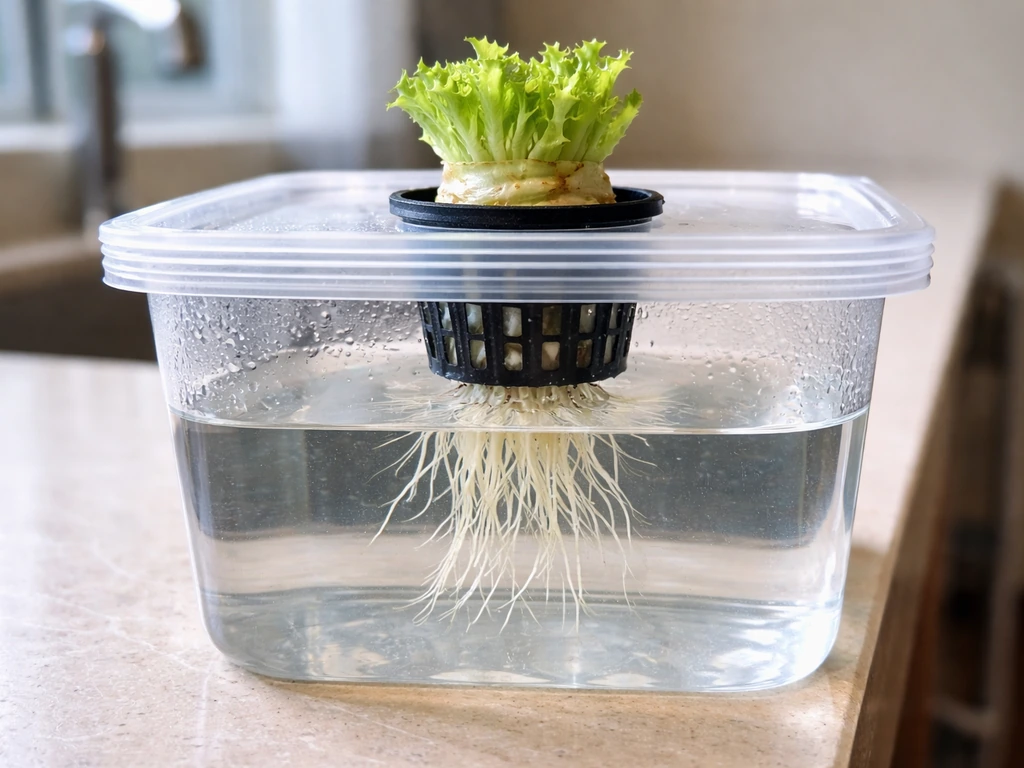
If you already have a small hydroponic system or want to try one, lettuce is one of the best crops for it and regrown base cuttings transition into hydroponics surprisingly well. Floating raft and NFT (nutrient film technique) systems are both commonly used for lettuce, and a basic DIY raft setup is easy enough for home use.
- Let your lettuce base cutting develop in water for 3 to 5 days first, until you see small root nubs forming. This gives it a head start before it goes into your hydroponic setup.
- Transfer the cutting into a net pot or small foam holder that suspends it so only the roots and the base of the crown touch the nutrient solution.
- Use a properly mixed hydroponic nutrient solution. Target a pH between 6.0 and 7.0 and an electrical conductivity (EC) between 1.2 and 1.8 mS/cm. These are the ranges lettuce performs best in.
- Keep the solution aerated if using a reservoir setup. Stagnant nutrient solution leads to root rot and low oxygen at the root zone.
- Maintain water temperature between 65 and 72°F. Warmer water holds less oxygen and encourages root rot.
- Provide 14 to 16 hours of light daily. LED grow lights work well for indoor hydroponic lettuce.
Hydroponics tends to produce faster, larger regrowth than soil because the roots have constant access to water and nutrients without any competition or drainage variability. If you're growing lettuce indoors regularly, this is the method worth investing a little time to set up properly.
Light, temperature, water, and timing at a glance
blank" rel="noopener noreferrer">Getting these basics right makes the difference between a cutting that rots in four days and one that's giving you fresh leaves in two weeks. Here's what to target across any of the three methods above.
| Condition | Target Range | What Happens If Wrong |
|---|---|---|
| Light | 12–16 hours indirect or grow light daily | Too little: leggy, pale, slow growth. Too much direct heat: bolting. |
| Temperature | 60–65°F optimal; keep below 75°F | Above 75°F triggers bolting; below 50°F slows growth significantly. |
| Water/moisture | Bottom half-inch only (water method); moist but draining (soil) | Too much: crown rot. Too little: wilting, failed regrowth. |
| Time to first leaves | 3–5 days for emergence | No growth by day 7: crown likely damaged or conditions off. |
| Time to harvestable size | 10–14 days under good conditions | Longer timelines usually mean insufficient light or cool temps. |
When things go wrong: troubleshooting common problems
The base is turning slimy or rotting
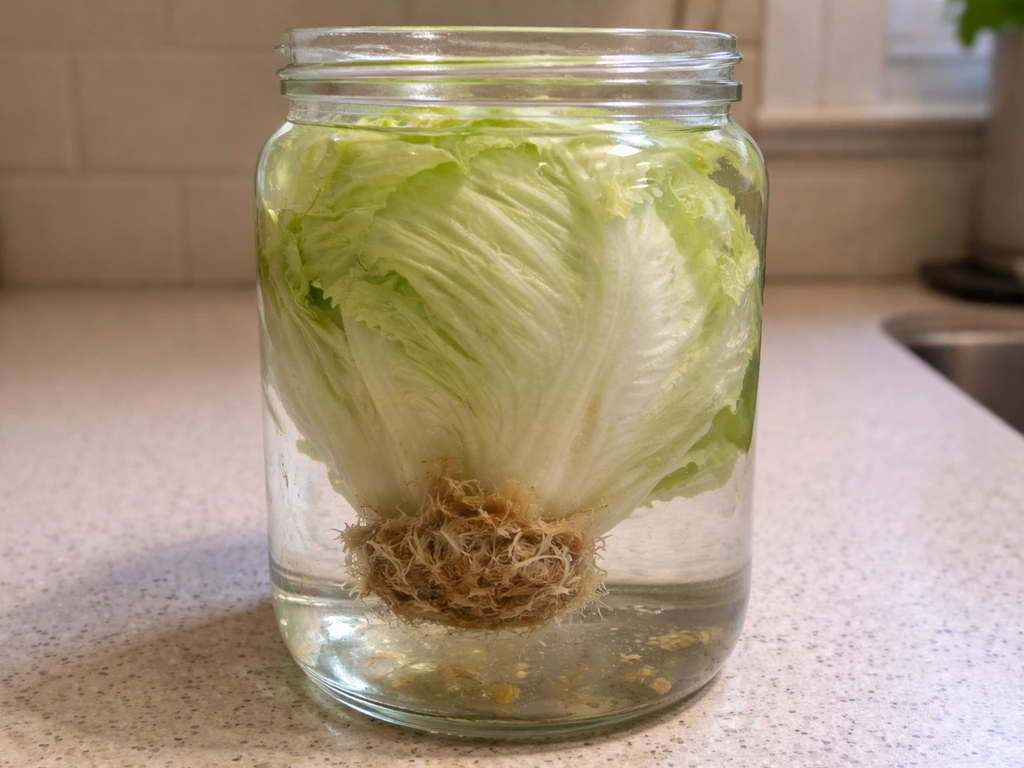
This is the most common failure, especially in the water method. It almost always means too much of the crown is submerged, the water hasn't been changed often enough, or the room is too warm. Fix it by trimming off any soft, mushy tissue with a clean knife, dropping the water level so only the very bottom of the stub is wet, and committing to daily water changes. If the crown itself is mushy and brown, it's gone and you'll need to start with a fresh cutting.
No new growth after a week
If nothing is happening after seven days, first check whether the crown tissue is actually there and intact. A common mistake is cutting too high on the head and leaving behind only leaf stem material with no actual growing point. If the crown looks fine but growth is stalled, the most likely culprit is insufficient light. Move it somewhere brighter or put it under a grow light for 12 to 14 hours a day and reassess in another four to five days.
New leaves are thin, pale, and leggy
Leggy, stretched growth with pale leaves is a light problem. The plant is reaching for more light than it's getting. Move it to a brighter spot or lower your grow light to within 4 to 6 inches of the plant if using LEDs. Don't be tempted to turn up heat to compensate; more warmth just speeds up bolting.
The plant bolts before you get a harvest
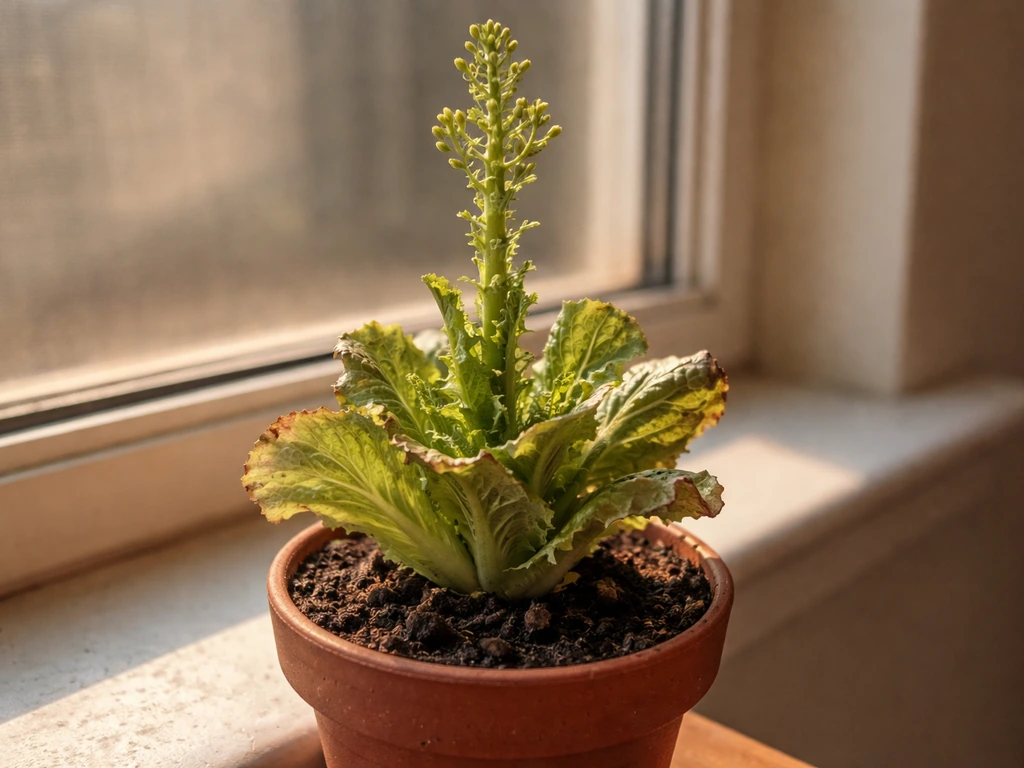
Bolting (when lettuce sends up a flower stalk and leaves turn bitter) is triggered by heat and long day lengths. If your regrown lettuce bolts fast, the location is almost certainly too warm, above 75°F consistently. Move it somewhere cooler, away from south-facing windows in summer or heat vents. If you're growing in late spring or summer outdoors, managing temperature is the real challenge, and you may get only one quick harvest before bolting wins. Indoors with controlled temps, you have much more control.
Transplanting from water to soil goes badly
If a cutting that was doing fine in water wilts and struggles after moving to soil, the transition was likely too abrupt or the soil is staying too wet. When transplanting, bury the base just slightly deeper than it sat in water to give it stability and keep the crown in contact with moisture. Water in well but then let the soil drain fully before the next watering. The first two or three days after transplant are the most vulnerable, so keep the plant out of direct sun and in a cooler spot while it adjusts.
Hydroponic roots are browning or look unhealthy
Brown, slimy roots in a hydroponic setup point to root rot, usually caused by warm water temperature, low oxygen in the solution, or poor sanitation in the reservoir. Check that your water temperature is below 72°F, add an air stone to oxygenate the solution if you aren't already, and clean the reservoir thoroughly. Also double-check your pH and EC: pH outside the 6.0 to 7. Oklahoma State University guidance for hydroponics recommends a lettuce target solution pH of about 6.0 to 7.0 pH outside the 6.. 0 range locks out nutrients even when they're present, and an EC above 1.8 can stress lettuce roots.
Realistic expectations before you start
Regrowing lettuce from cuttings works, but it's worth being honest about what you'll get. The regrowth is usually smaller and less dense than the original plant. You're not producing a full head of lettuce from a stub; you're getting a second flush of tender young leaves, which is genuinely useful for salads and sandwiches but won't replace buying or growing a fresh plant from seed.
If you’re wondering can you grow lettuce from lettuce, focus on keeping the crown intact and following the same regrowth principles regrowing from cuttings. Treat it as a bonus harvest rather than a full replacement strategy, and you'll find it's a satisfying and practical thing to do with lettuce you'd otherwise compost.
If you want to go deeper on related approaches, growing lettuce from a store-bought head, regrowing from a stem, or even regrowing iceberg from scraps all follow the same crown-first principle covered here.
FAQ
How many times can I regrow lettuce from the same crown cut?
Yes, you can regrow lettuce multiple times from the same crown as long as it keeps producing new outer leaves and the center stays intact. Realistically, yields drop with each flush, so expect shorter regrowth and smaller leaves after the first one or two cycles.
What’s the safest way to cut so I don’t remove the growing point?
To avoid damaging the growing point, cut straight across above the crown so you leave the basal plate and meristem tissue in place. If you’re unsure, err on the side of leaving more base (within the 2 to 3 inch range) rather than cutting too high on the leaf stems.
Can I let the cutting dry out before regrowing, or will it fail?
You can, but it’s riskier for regrowth. Lettuce crowns need moisture and oxygen, if the cut surface dries out quickly it often won’t restart. If you must dry briefly, keep the crown cool and lightly mistable, not exposed to wind or full sun.
Can I move regrown lettuce outdoors, and how do I acclimate it?
Start outdoors only if temperatures are mild, since lettuce regrows best without heat stress. Gradually harden it over 3 to 5 days (increasing sun exposure and outdoor time), and protect it during the hottest afternoon hours to reduce early bolting.
What should I do if my regrown lettuce starts turning bitter?
If your lettuce is already getting bitter or is sending up a flower stalk, it’s entering bolting and the leaf quality will drop. Harvest outer leaves quickly if any are still tender, but expect that the remaining crown’s productivity will be limited.
How do I harvest regrown lettuce to keep it producing longer?
For a continuous harvest, use cut-and-come-again harvesting (remove only outer leaves) instead of cutting the whole plant down. Don’t repeatedly harvest the center, keep the crown’s meristem untouched so regrowth stays active.
Which method gives the longest regrowth, water or soil?
If you want the most consistent second flush, soil is often more forgiving than water because nutrients are available immediately. Use water mainly as a visual starter stage, then transition once you see active new leaf growth.
What are common hygiene mistakes that cause crown rot?
Cleanliness matters more than most people think. For water setups, change water daily and rinse the container to prevent biofilm buildup around the crown. For soil, use a fresh potting mix and avoid overwatering, standing water increases rot risk.
My cutting started growing, then it stalled. What’s the most likely cause?
If regrowth starts but then stops, check two things first: light intensity and crown moisture. Too little light leads to weak growth that stalls, and overly wet conditions can slow the crown by promoting decay. Adjust light and let the medium drain properly.
Do attached roots improve the chance of regrowing lettuce from a cut?
Yes. Leaving roots attached (for example, from a store-bought head with root end) improves the odds because the plant already has established root tissue. Still, you must keep the crown intact, roots help but they do not replace the meristem.
If growth is slow, is it better to add more heat?
Avoid heating lettuce to “fix” slow growth. Warmer temperatures push bolting, so if you see slow regrowth, increase light and ensure proper moisture instead. Keep it cool enough to delay flowering, especially above 75°F consistently.
How can I tell if I cut too high and removed the crown?
If you cut too high and lose the crown, nothing will happen because there’s no meristem left. The practical check is whether the bottom has a visible crown/basal plate region still present. If it’s gone or mushy, you’ll need a fresh cutting.
What hydroponic adjustments matter most to prevent root rot?
For hydroponics, root health is very sensitive to oxygen and temperature. Keep reservoir water cool, add aeration if you don’t already, and clean on a schedule, even healthy crowns can decline quickly if the system gets stale.