Sea lettuce (Ulva lactuca) is a fast-growing green alga, not a land plant, and growing it successfully at home means recreating a slice of the ocean: stable saltwater, strong light, steady water movement, and clean conditions. Organic lettuce needs a different approach, but the same mindset for soil health, gentle feeding, and consistent care can help you get reliable results how to grow organic lettuce. Get those four things right and you can go from a small starter piece to a harvestable batch in as little as two to three weeks. Get them wrong and you end up with yellowed slime or a rotting mat within days. This guide walks you through every step, from sourcing your first culture to pulling off a second harvest.
How to Grow Sea Lettuce at Home: Step-by-Step Guide
Marcus Holloway
28 Jun 2026
What sea lettuce actually is
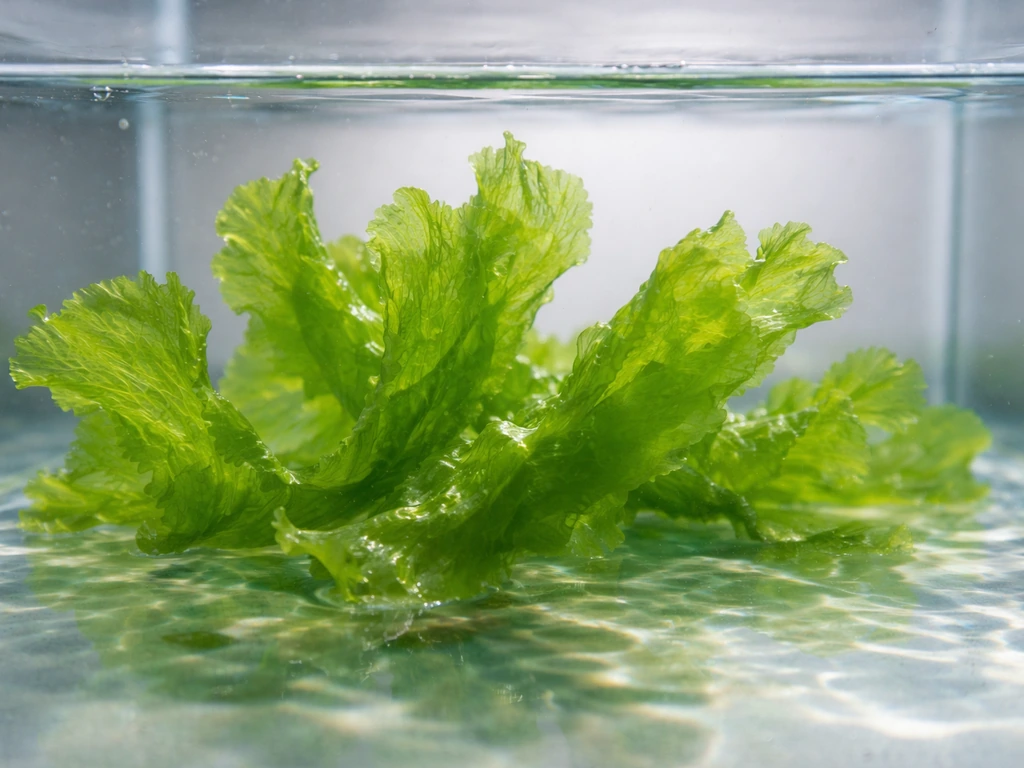
Sea lettuce is the common name for Ulva lactuca, a bright green marine alga in the family Ulvaceae. It grows as thin, translucent, sheet-like fronds that look almost like wet green tissue paper. You'll find it clinging to rocks in the lower intertidal zone, in rock pools, and in shallow subtidal areas across the northeast Atlantic and north Pacific. It's one of the most widely distributed seaweeds on the planet, which tells you something useful: it's tough and adaptable, but it still needs real seawater chemistry to do well.
Ulva has an interesting life cycle called alternation of generations, cycling between a spore-producing form (sporophyte) and a gamete-producing form (gametophyte). For home growers, the practical takeaway is that spores can develop into a new thallus and be ready to produce spores again in roughly two to three weeks under good conditions. That's what makes it one of the fastest-growing seaweeds you can cultivate. It's also widely used in marine aquariums as a refugium plant and in small-scale integrated systems to absorb excess nutrients from fish waste.
Picking the right setup for your situation
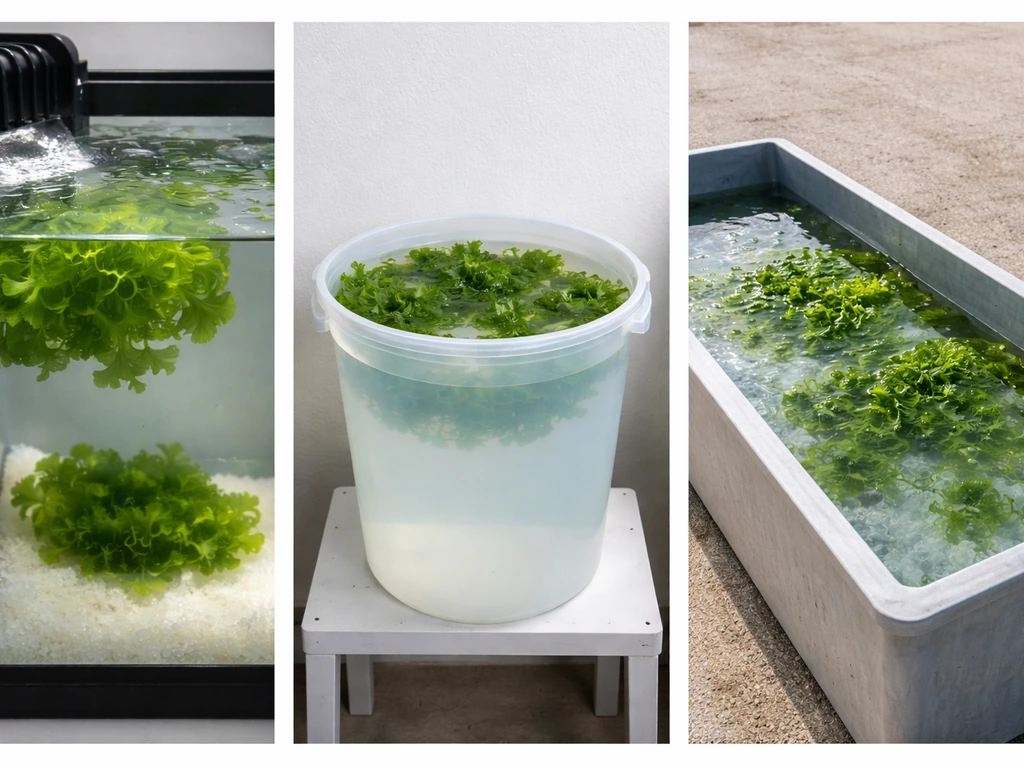
Your setup choice comes down to whether you're growing sea lettuce as part of a marine aquarium refugium, in a dedicated container system, or outdoors in a controlled saltwater pool. Each works, but they come with different trade-offs.
Marine aquarium or refugium
This is the most accessible entry point for most home growers. A saltwater aquarium or a separate refugium chamber already handles salinity and, in many cases, provides nutrients from fish waste and a return pump that creates water movement. If you already have a reef or FOWLR (fish-only with live rock) tank, you can add Ulva directly to a lit refugium section and it will start growing almost immediately. The fish waste supplies nitrogen, which is exactly what Ulva needs as its primary nutrient driver.
Dedicated container or tank
For a standalone setup, you can use any non-reactive container, from a 5-liter bucket to a 175-liter plastic stock tank. Research cultures have successfully grown Ulva in tanks as small as 5 liters. You'll need to mix artificial seawater (available at aquarium stores or online), add a small air pump for aeration to keep the fronds in suspension, and supply a grow light. This approach gives you full control over nutrients and water chemistry, which is especially valuable if you're growing for food.
Outdoor saltwater pool or trough
If you live near the coast and have access to real seawater, a shallow outdoor trough or lined pond fed with fresh seawater is the most natural option. Solar light handles the photoperiod for you, though you'll need to watch for temperature swings and competing algae. This setup takes more management during hot or cold spells but costs much less to run.
| Setup type | Best for | Key challenge | Cost level |
|---|---|---|---|
| Aquarium refugium | Hobbyists with existing marine tanks | Limited light control | Low (uses existing system) |
| Dedicated container/tank | Food growers, full control | Maintaining water chemistry manually | Medium |
| Outdoor saltwater trough | Coastal growers with seawater access | Temperature swings, competing algae | Low to medium |
My recommendation for most beginners: start with a dedicated 20- to 40-liter container using artificial seawater. If your goal is how to grow great lakes lettuce, use the same controlled-container approach and closely match temperature, salinity, and nitrogen so the plants stay stable. It's easier to dial in the parameters, costs very little to set up, and lets you make mistakes without crashing a whole aquarium.
The four conditions that make or break sea lettuce growth
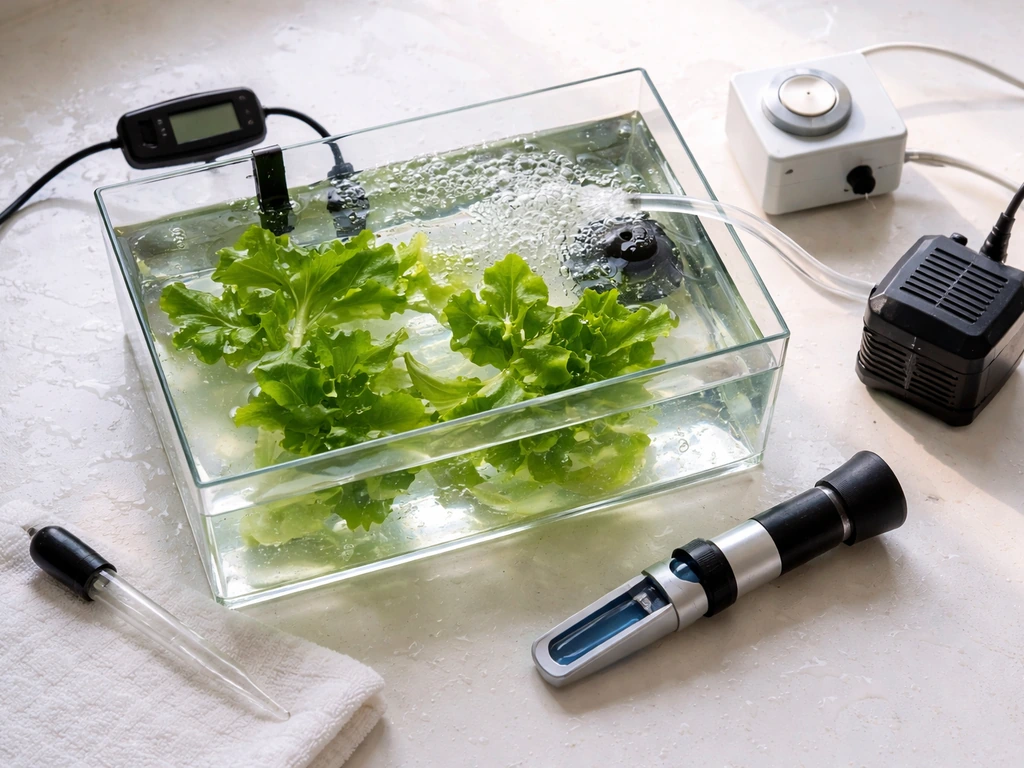
Ulva is forgiving up to a point, but four parameters genuinely matter. Drift too far from the right ranges and growth stalls or reverses fast.
Temperature
The sweet spot for Ulva lactuca is around 20°C (68°F). Research cultivation has tested it at 8°C, 20°C, and 30°C, and 20°C consistently produces the best growth rates. At 8°C growth slows significantly. At 30°C you risk stress and cellular damage, though the alga can survive short warm spells. Aim for a stable 18 to 22°C (64 to 72°F) range. IMTA research cultures running operational tanks kept temperatures between 14 and 15.9°C with good results too, so cooler is workable if you're patient. What matters most is stability: rapid temperature swings are more damaging than a slightly suboptimal steady temperature.
Salinity
Natural seawater is approximately 35 ppt (3.5% w/v), and that's the standard target. Tested culture ranges typically run 33 to 35 ppt. Ulva can tolerate lower salinity, with research showing measurable growth at 25 ppt and even lower for some strains, but biomass quality and growth rate both drop as you move away from full seawater. Brackish setups (below 20 ppt) are risky for Ulva lactuca specifically, though related species like Ulva intestinalis handle lower salinity better. If you meant a land-based leafy variety instead, use the same general salad-gardening mindset but follow a specific guide for how to grow chinese lettuce. Stick to 33 to 35 ppt for Ulva lactuca and keep the pH between 7.95 and 8.2. Rapid salinity swings cause osmotic stress, so if you need to change salinity, do it gradually over several hours.
Light
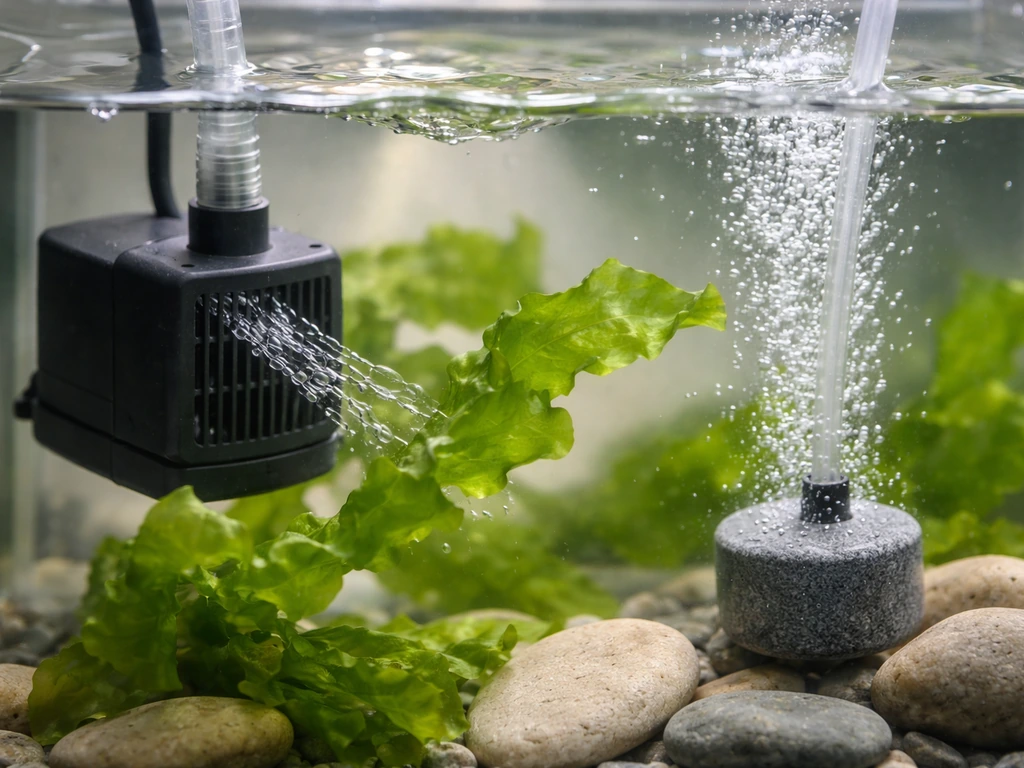
A 12-hour light, 12-hour dark cycle (12:12) is the standard across nearly every cultivation study and works well in home setups. A study on Ulva cultivation reports defined irradiance and photoperiod (for example, 12/12 h) along with controlled pH around 8.2 in artificial seawater for growth tests 12/12 h photoperiod and pH around 8.2. For intensity, around 50 µmol photons per square meter per second is enough to induce gametogenesis and maintain healthy growth. More light isn't always better: Ulva can suffer photoinhibition under intense light, which slows photosynthesis and can cause bleaching. If you're using LED grow lights, choose a full-spectrum aquatic or horticultural light and keep it about 20 to 30 cm above the surface. A basic timer outlet handles the photoperiod automatically.
Water movement and aeration
Sea lettuce needs water movement for two reasons: it keeps the fronds in suspension so all surfaces get light and nutrients, and it prevents the dense matting that leads to rot in the interior layers. A simple aquarium air pump with an airstone works well in a container setup. In a refugium, the return pump flow usually provides enough turbulence. The goal is gentle but constant circulation: enough to keep fronds tumbling slowly, not so violent that you physically shred them. If fronds are clumping into a dense ball and sitting still at the bottom, your flow is too low.
How to get started: sourcing, propagating, and transplanting
Where to get your starter culture
Your first task is finding live Ulva. Options for home growers include online aquarium and reef supply stores (search for live Ulva lactuca or chaeto alternatives), local fish stores with marine sections, reef-keeping hobbyist groups and forums where growers often sell or trade cuttings, and if you're on the coast, careful ethical collection from rock pools where Ulva grows abundantly. Never source from polluted shorelines or areas with sewage runoff if you plan to eat the harvest.
Starting from fragments and cuttings
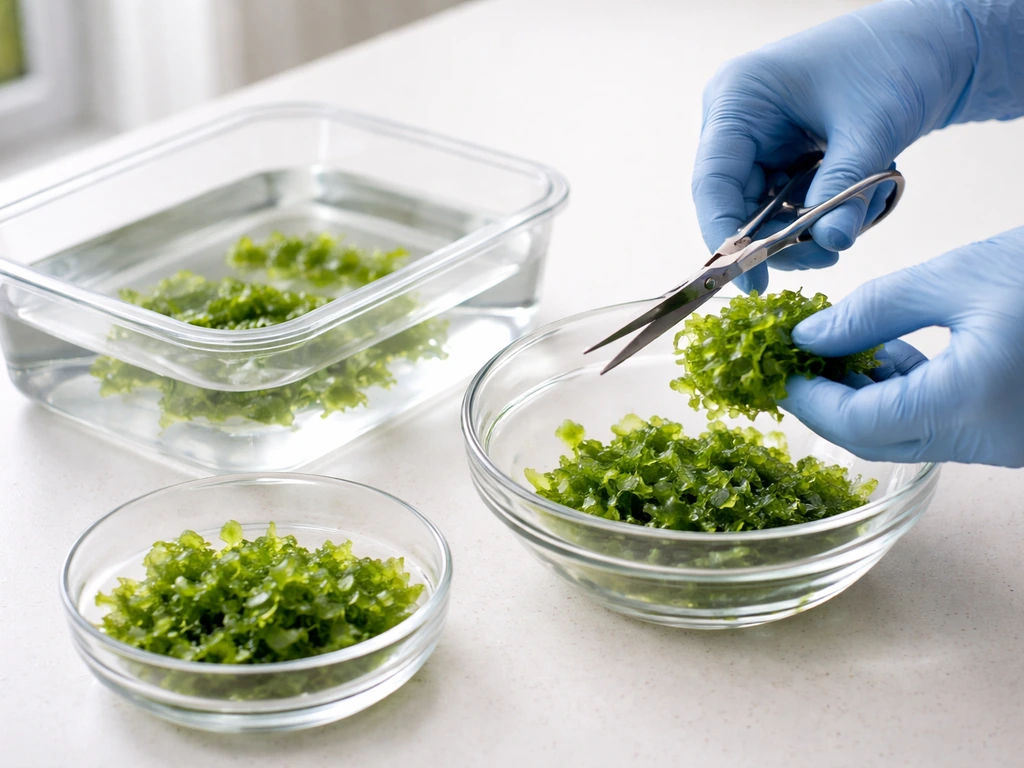
You don't need spores or seeds to get started. Fragmentation is the most practical propagation method for home growers and it's backed by research: cutting thalli into small single-layer pieces and transferring them to fresh culture medium can trigger reproductive and growth transitions within about 48 hours under optimal conditions. In practice, this means taking a small handful of live Ulva, rinsing it in clean saltwater, and placing the pieces into your prepared tank. The fragments will begin to grow new tissue from their edges almost immediately if conditions are right.
Setting up your tank before introduction
Before adding any Ulva, get your water parameters stable for at least 24 hours. Mix artificial seawater to 35 ppt, confirm temperature is at 20°C, verify pH is between 8.0 and 8.2, and have your air pump and light on a timer running. Add a small amount of nitrogen source: if you're not using a fish-stocked system, a dilute seaweed fertilizer or a small amount of aquarium nitrate supplement will do. Research cultures have used nutrient concentrations as low as 0.5 ppm nitrogen and still achieved good growth. Don't over-fertilize; excess nutrients invite nuisance algae, not faster Ulva growth.
Day-to-day care and your growing timeline
Spacing and density
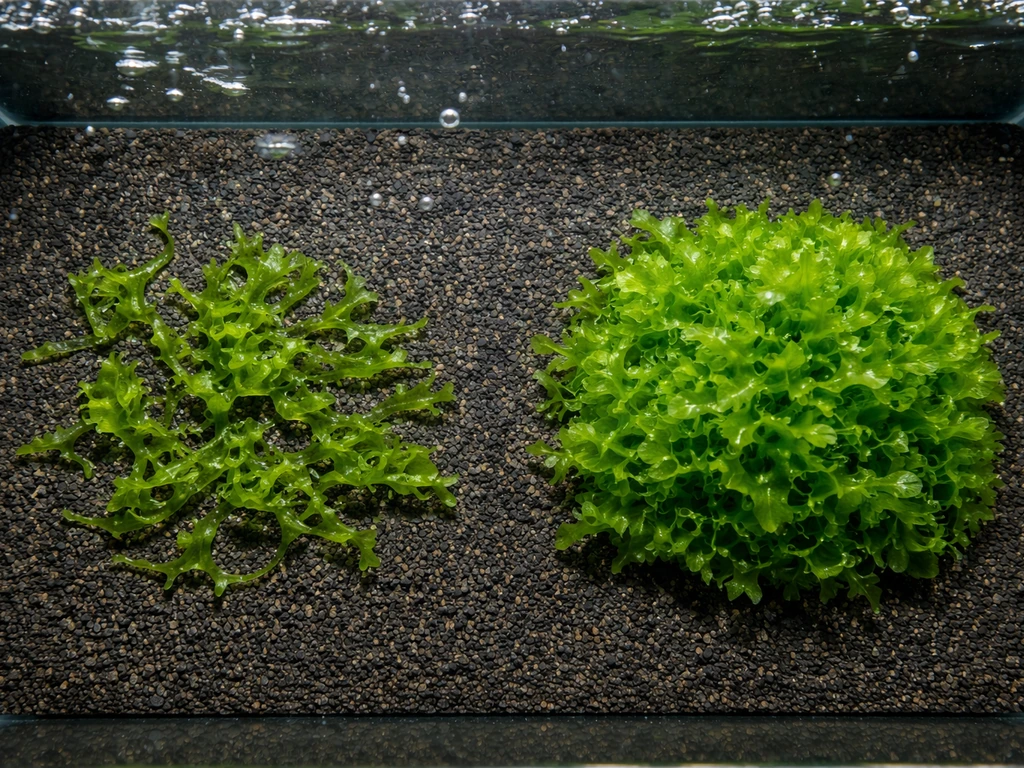
In a container, don't overcrowd. A thin, spread-out culture grows faster than a dense clump because every frond gets light. Start with a loose layer that covers roughly half the bottom surface area when submerged and in gentle circulation. As it grows, thin regularly (which also counts as an early harvest). Crowded, matted Ulva in the middle of a dense clump will rot before it can contribute to growth.
Feeding and nutrients
In a refugium with fish, the fish waste handles most of your nitrogen needs and you often don't need to add anything. In a standalone container, you'll need to supplement. Nitrogen and light are the two co-regulators of Ulva growth performance, so keeping both in the right range is more important than adding lots of supplements. A small weekly addition of a marine macro-algae fertilizer or a measured dose of potassium nitrate solution works well. Change 20 to 30 percent of the water weekly in standalone tanks to prevent nutrient lockout and salt creep.
Your realistic growing timeline
- Days 1 to 3: Introduce fragments into a stable, pre-conditioned tank. Fronds may look pale or slightly stressed initially as they adjust.
- Days 4 to 7: New growth becomes visible as frond edges expand and the tissue brightens to vivid green. This is your confirmation that conditions are right.
- Days 7 to 14: Fronds expand noticeably. Begin thinning if density is increasing and pieces are clumping.
- Days 14 to 21: First harvest is possible. Spore-capable thalli can regenerate through a new cycle in roughly 2 to 3 weeks from establishment.
- Ongoing: With good management, you can harvest a portion every one to two weeks and maintain a continuous culture.
Harvesting
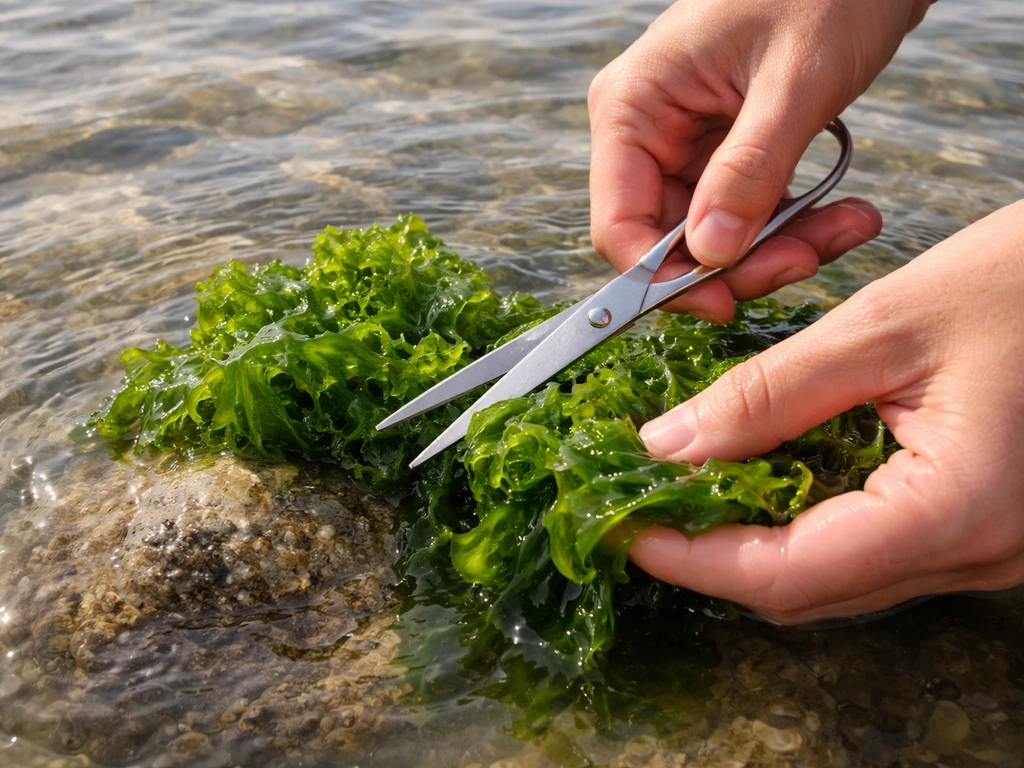
Harvest by removing roughly one-third to one-half of the total biomass at a time. Use clean scissors or just tear gently with clean hands. Always leave a healthy base culture in the tank. Harvesting too aggressively stresses the remaining culture and slows regrowth. The best time to harvest is just before your light cycle begins, when the fronds are fully oxygenated from the previous light period. Rinse harvested fronds in clean saltwater immediately after removal.
Troubleshooting: when things go wrong
Yellowing fronds
Yellow Ulva almost always means a nitrogen deficiency or too much light. Check your nitrogen levels first: if you're in a standalone tank without fish, add a small measured dose of nitrogen supplement. If you're already supplementing and the yellowing persists, reduce light intensity or move the light slightly further from the surface. Photoinhibition from excess light can bleach the tissue just as effectively as a nutrient deficiency.
Slow or no growth
If fronds look alive but aren't growing, run through this checklist in order: temperature (is it actually at 18 to 22°C?), salinity (measure with a refractometer, not a cheap swing-arm hydrometer), pH (should be 7.95 to 8.2), nitrogen availability, and light duration. Nine times out of ten, slow growth in a home system comes down to temperature being too cool or nitrogen being too low.
Rotting and browning
Brown, slimy, or disintegrating fronds mean the Ulva is dying in place, usually from one of three causes: too much density with insufficient water movement, water temperature too high (above 28°C), or a salinity or pH crash. If you see browning, remove the affected tissue immediately. Rotting Ulva releases organic matter that depletes oxygen and makes conditions worse for the remaining healthy fronds in a self-reinforcing cycle. After removing the rotten material, do a 30 to 40 percent water change, check all parameters, and increase aeration.
Nuisance algae taking over
If brown diatoms, filamentous hair algae, or cyanobacteria (slimy blue-green sheets) start appearing alongside your Ulva, it usually means you have too many nutrients relative to the Ulva's ability to absorb them, or your light isn't strong enough for Ulva to outcompete slower-growing organisms. Reduce nutrient additions, increase water-change frequency, and consider increasing light duration slightly. Manually remove competing algae whenever you spot it: don't let it get established.
Fronds detaching and floating loose
Ulva in a tank setup will naturally float freely rather than attach to surfaces, and that's fine as long as circulation keeps it in suspension. If fronds are sinking and clumping at the bottom, your water flow is too low. Increase the airstone output or reposition it to create better circulation patterns. Persistent sinking in otherwise healthy fronds can also signal low pH, so check that too.
Storing your harvest and getting a second crop
Short-term storage after harvest
Sea lettuce is highly perishable after harvest, more so than land-grown greens because it contains a high water content and starts degrading quickly at room temperature. Rinse harvested fronds thoroughly in clean saltwater or fresh water depending on your intended use. Shake off excess water gently, wrap loosely in a damp cloth or paper towel, and refrigerate immediately. Storage temperature strongly affects freshness: keep it as close to 0 to 2°C as your refrigerator allows. At around 32°F (0°C) with high humidity (98 to 100%), leafy greens hold quality the longest, and sea lettuce responds similarly. Use refrigerated sea lettuce within two to four days for best quality.
Longer-term preservation
For longer storage, dry or freeze. Drying sea lettuce at low heat (below 40°C) preserves nutritional content better than high-heat drying. Store dried Ulva in an airtight container away from light and moisture, where it can keep for several months. Freezing works too: blanch briefly, drain, and freeze in portions. Shelf life for any seaweed product depends heavily on packaging, storage humidity, temperature, and light exposure, so an airtight, dark, cool environment is the consistent principle regardless of method.
Encouraging a second harvest
The best thing you can do to set up a second harvest is not over-harvest the first one. Leave at least half the biomass in the tank after each cutting session. The remaining fronds will re-establish quickly if conditions are right. After harvesting, do a partial water change to refresh nutrients and reduce any accumulated organic matter, check that all parameters are stable, and let the light cycle continue undisturbed. Under good conditions, you should see visible regrowth within three to five days and be ready for another harvest cycle within one to two weeks. Think of it as running a continuous culture rather than a single crop: harvest a little often rather than a lot at once, and the system stays productive indefinitely.
If you enjoy growing unusual greens and have already been working through varieties like Chinese lettuce or artisan lettuce types, sea lettuce adds a genuinely different dimension: it's an aquatic crop rather than a soil or substrate crop, which means the management skills are different but equally learnable. If you are interested in growing artisan lettuce, you will find that the best approach is to match the method to your environment, whether it is soil or a controlled water system. The fastest growers I've seen get hooked on it immediately once they nail the water chemistry, because watching a marine alga thrive in a home setup feels more dramatic than watching a lettuce head form in a pot.
FAQ
Can I grow sea lettuce without a light timer or exactly 12 hours on, 12 hours off?
You can, but consistency matters. If you cannot run 12:12 reliably, use a timer for at least “light on” stability, and avoid sudden day-to-day changes. Also prevent full dark for multiple days, since Ulva can slow and become more prone to nuisance growth when the light cycle is irregular.
What’s the safest way to measure salinity, pH, and nutrients at home?
Use a refractometer for salinity, not a swing-arm hydrometer, and choose a pH meter you can calibrate before each session. For nitrogen, test for nitrate or ammonium depending on your supplement source, then dose small increments. The goal is to confirm you are not drifting low, not to “chase” numbers to very high levels.
How do I prevent the Ulva from turning into a dense mat that rots in the middle?
Start with a loose culture (about half the bottom covered at first) and keep gentle but constant circulation so fronds tumble slowly. If you notice a ball forming, increase air or adjust return flow and thin immediately by removing the densest sections, then let the remaining culture spread back out.
Is it okay if my Ulva floats or drifts to the surface?
Yes, floating is normal. If it forms a thick floating layer that blocks light, gently stir or redirect flow so the fronds circulate through the water column. Stagnant surface mats commonly lead to bleaching on top and decay underneath.
My sea lettuce looks bright green but growth is slow. What’s the most likely cause?
After temperature and salinity stability, the usual bottleneck is nitrogen availability or light delivery. Confirm your nitrogen supplement is actually in a usable form for the tank (some sources feed nitrate slowly, others increase ammonium quickly), and verify light intensity at the water surface distance, not just the bulb rating.
How can I tell nutrient deficiency from too much light quickly?
N deficiency typically shows slower expansion and gradual paling, while excess light more often causes faster bleaching and tissue that looks washed out even though fronds remain thin. Try one change at a time: slightly reduce light intensity or raise the light by a few centimeters, then recheck color and regrowth over several days.
Can I grow Ulva lactuca in freshwater or very low-salinity water?
It’s not recommended for Ulva lactuca. While some strains tolerate lower salinity, growth and biomass quality drop and the culture becomes less predictable. If you accidentally moved it to brackish or freshwater, bring salinity back gradually over hours to avoid osmotic shock.
Do I need to rinse harvested sea lettuce before eating it?
Yes. Rinse in clean saltwater or fresh water based on your intended use to remove loose detritus and any competing microalgae. If you’re growing in a system with fish waste, treat the harvest like “ready-to-eat produce” and keep handling hygienic, since organic buildup can stick to the fronds.
How do I handle temperature spikes during heat waves or cold snaps in an outdoor trough?
Use shade cloth for heat and consider partial cover at midday to buffer intense solar heating. For cold, insulate the sides and keep depth shallow but not too shallow, since it swings faster. Even short warm spells can stress Ulva above about 28°C, so monitor daily when weather is extreme.
Why do brown algae or slime-forming organisms show up even when my Ulva is alive?
That usually means nutrient or light balance favors slower competitors. Reduce extra nutrient dosing, increase water movement, and adjust light so Ulva gets enough photons to outgrow competitors. Also remove visible nuisance algae early, because established filaments and biofilms can keep Ulva from getting uniform light.
Can I reuse the culture medium after a water change, or will it contaminate the system?
For standalone containers, replace water rather than “top off” repeatedly. Nutrient and organic waste can accumulate and shift pH and oxygen demand. If you must top off, add premixed saltwater with matching salinity and temperature, and still do periodic partial changes to remove dissolved organics.
What should I do if my Ulva culture crashes suddenly (all turns brown or starts disintegrating)?
Remove affected tissue immediately, then do a 30 to 40 percent water change. Check temperature, salinity, and pH right after the change, and increase aeration to restore oxygenation. If parameters are unstable, restart from a small healthy fragment rather than trying to salvage a fully matted section.
How should I store sea lettuce after harvest if I can’t refrigerate right away?
Sea lettuce degrades quickly at room temperature, so shorten exposure as much as possible. If you cannot refrigerate immediately, keep it cool (shade, insulated cooler) and mist it lightly with clean water to reduce drying, then transfer to refrigeration as soon as possible. For best quality, refrigerate near 0 to 2°C with high humidity and use within two to four days.