The best plants to grow with lettuce are radishes, carrots, chives, garlic, marigolds, nasturtiums, strawberries, spinach, and tall flowering herbs like dill or cilantro. They either share lettuce's preference for cool, moist conditions, help confuse or deter common pests, or provide gentle shade that actually extends your lettuce harvest in warmer weather. Avoid growing lettuce near brassicas like cabbage or broccoli, fennel, celery, or large sprawling crops that will crowd or heavily shade it. Get those pairings right, and you'll deal with fewer aphids, less bolting, and better use of your growing space, whether you're working with a garden bed, a container on a balcony, or an indoor setup.
What to Grow With Lettuce: Best Companions and Avoided Plants
Marcus Holloway
29 Apr 2026
Why companion planting actually matters for lettuce
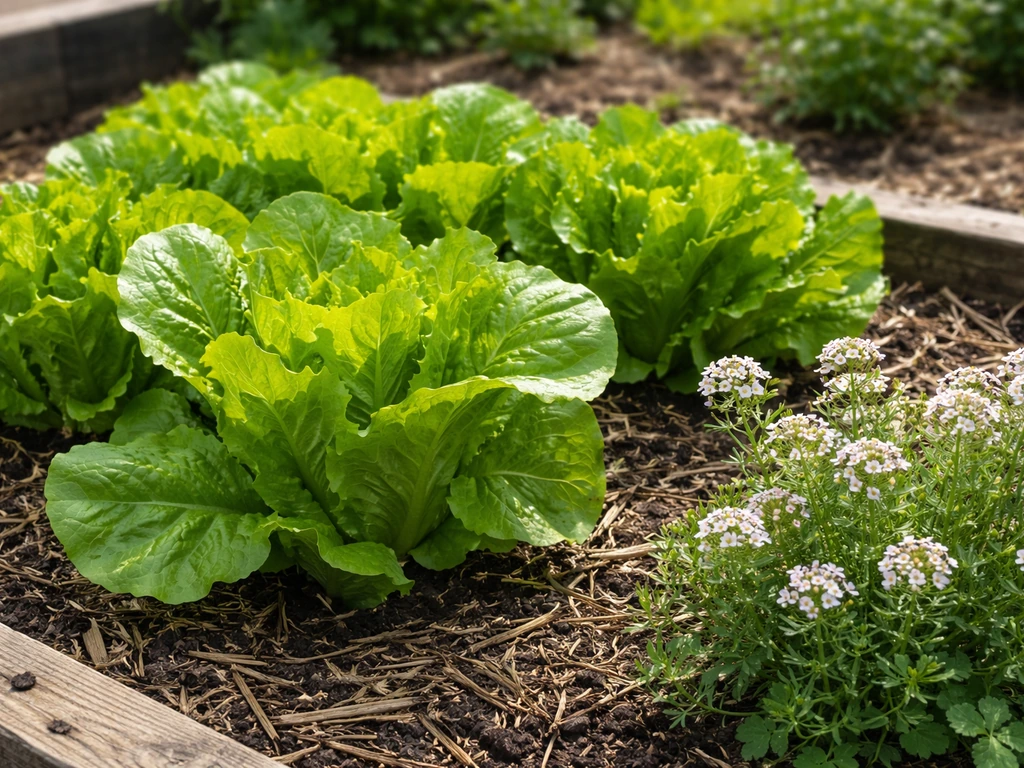
Lettuce is one of the most pest-prone crops in the garden. Aphids absolutely love it. Slugs, flea beetles, and root aphids can wreck a planting fast. Companion planting is one of the most practical, low-cost tools for managing those pressures, but it helps to understand what it actually does and doesn't do, so you're not planting marigolds and expecting a force field.
The real mechanisms at play are: attracting beneficial insects (predators and parasitoids that eat your pests) by planting flowers and herbs nearby; using aromatic or volatile-chemical effects from strongly scented plants to confuse or repel pests; using certain plants as traps to draw pests away from lettuce; and simply breaking up monocultures so pests can't easily spread from plant to plant. Some of these are well-supported by research. Others, like the commonly repeated idea that marigolds or green onions repel flea beetles, have little solid evidence behind them and are even contradicted by some studies. I'll flag where the evidence is genuinely strong versus where you're mostly just taking a reasonable bet.
Beyond pest management, companion planting with lettuce is also a smart space strategy. Lettuce is a cool-season crop that finishes quickly, so pairing it with slower-maturing plants lets you use the same square footage twice. You plant lettuce in the gaps of a bed that will eventually be taken over by tomatoes or squash, harvest it before those crops spread, and never waste space. That temporal approach is just as valuable as any pest-repellent pairing.
Best plants to grow with lettuce
Here are the companion plants I actually recommend, with a clear reason for each. Prioritize the ones that match your specific pest pressure or space situation.
| Companion Plant | Main Benefit | Notes |
|---|---|---|
| Radishes | Trap crop for flea beetles; fast-maturing space filler | Plant at bed edges; harvest in 25–30 days before they compete |
| Chives / Garlic | Strong scent may deter aphids and some beetles | Low-growing, won't shade lettuce; easy in containers too |
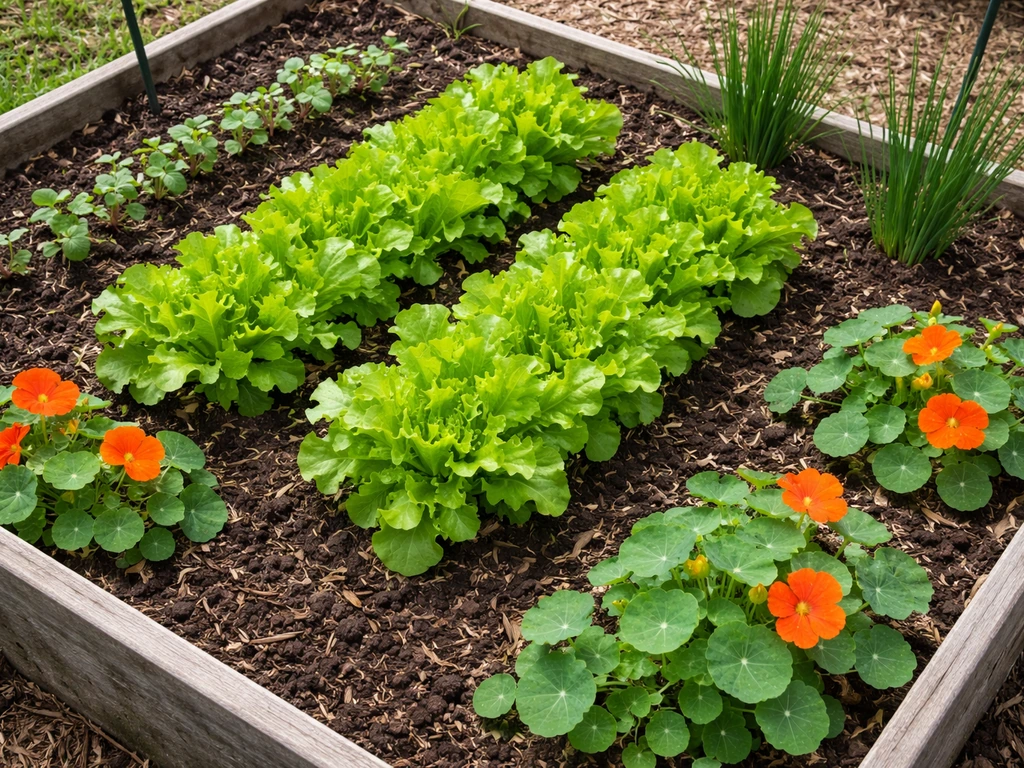
| Nasturtiums | Trap crop for aphids; attracts beneficial insects | Let them sprawl at bed edges, not directly over lettuce |
| Marigolds (French) | Attract predatory insects; add visual diversity | Evidence on direct pest repellency is mixed; still worth planting for beneficials |
| Dill / Cilantro (flowering) | Attract parasitic wasps and hoverflies that eat aphids | Allow some to flower; don't let mature dill crowd lettuce |
| Spinach / Arugula | Share identical water and light needs; efficient spacing | Great row companions; both prefer cool temps |
| Carrots | Deep roots don't compete with shallow lettuce roots | Interplant rows; carrots slow to establish so lettuce finishes first |
| Strawberries | Low-growing ground cover; shared moisture needs | Works well in container combinations; don't let runners smother lettuce |
| Tall flowers (Borage, Cosmos) | Attract beneficial insects; provide light dappled shade | Plant on the south side so they shade lettuce in afternoon heat |
The companions I rely on most
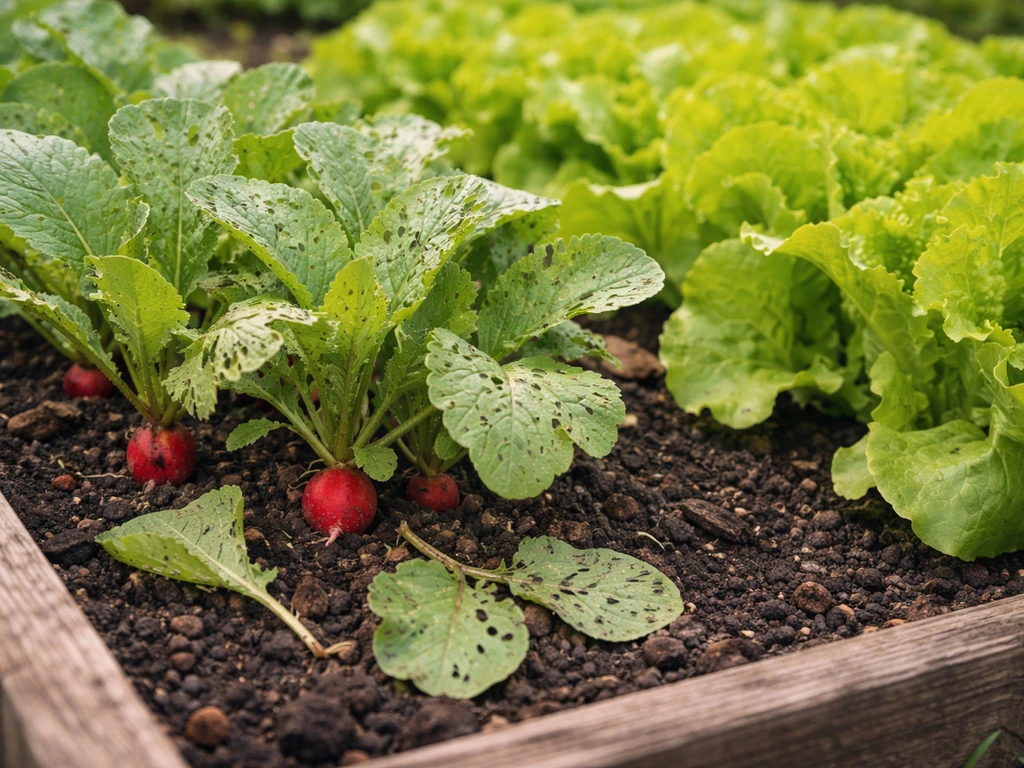
If I had to pick just three, I'd go with radishes, chives, and nasturtiums. Radishes are a genuinely effective trap crop for flea beetles, those tiny jumping beetles that pepper holes in lettuce leaves. In a Reddit permaculture thread, people also discuss flea beetle damage on mustards and suggest radish as a trap crop to pull flea beetles toward radishes instead of more valuable crops radishes are a genuinely effective trap crop for flea beetles. Plant a row of radishes at the edge of your lettuce bed, and the flea beetles will often go there first. Once the radish leaves are chewed up, pull those plants and the population drops. Chives are easy to tuck between lettuce plants in any setting, even a small pot, and their scent does seem to reduce aphid pressure in my experience. Nasturtiums are the best aphid trap I've found: aphids colonize them heavily, which then draws in ladybugs and other predators. Just keep nasturtiums to the edges so they don't sprawl over your lettuce.
Plants to avoid growing with lettuce
Avoiding bad pairings matters just as much as choosing good ones. These are the plants that consistently cause problems with lettuce, either through competition, pest sharing, or incompatible growing conditions.
- Fennel: Allelopathic—it releases chemicals that inhibit the growth of most vegetables, including lettuce. Keep fennel in its own container or far corner of the garden.
- Brassicas (cabbage, broccoli, kale, Brussels sprouts): They attract many of the same pests as lettuce, especially aphids and caterpillars, so planting them together amplifies your pest problems rather than reducing them.
- Celery: Competes aggressively for nutrients and moisture at the same shallow root depth as lettuce. In a tight bed or container, this leads to stunted lettuce.
- Large squash or cucumbers: Their sprawling leaves create excessive, uneven shade and root competition. Lettuce near a mature squash plant will be completely blocked from light and water.
- Tall indeterminate tomatoes (without planning): Not inherently harmful, but if you don't account for their eventual height and shadow, they'll shade out lettuce completely by midsummer.
- Parsley: Slow to establish and can harbor the same aphid species that attack lettuce when both are young. Not the worst pairing, but not worth the risk when better options exist.
The core rule is this: avoid anything that shares lettuce's exact pest vulnerabilities (especially aphid-prone plants in the same family), anything with strongly competitive shallow roots, and anything that will cast deep shade as it matures. It's also worth remembering that even beneficial companions still compete for nutrients to some degree. No companion plant eliminates that competition entirely, so spacing always matters.
How to plan spacing, light, and watering when you add companions
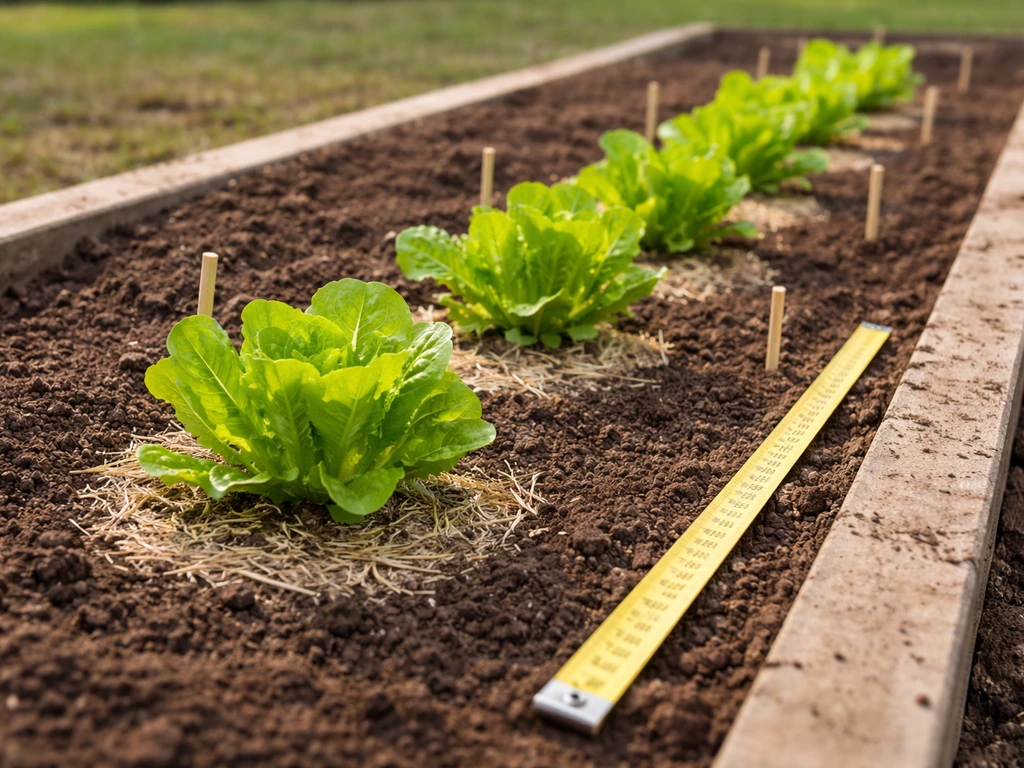
The biggest mistake I see with companion planting is treating it like a magic trick where you just scatter plants together and hope for the best. You still have to plan for each plant's actual size, light needs, and water requirements. Here's how I think about it for lettuce specifically.
Spacing
Lettuce is a shallow-rooted plant, with most roots in the top 6 to 12 inches of soil. That means it competes intensely with anything else planted in that same zone. Keep companion plants at a spacing that gives lettuce at least 6 to 8 inches of clear soil around each head (for loose-leaf types, 4 to 6 inches is workable). For taller companions like dill or borage, plant them on the north side of your bed in the northern hemisphere so their shadow falls away from the lettuce during peak sun hours. Trap crops like radishes and nasturtiums should be at the perimeter, not intermixed directly with lettuce.
Light
Lettuce needs 6 hours of sun minimum for healthy growth, but it actually benefits from afternoon shade in warm weather (above 70°F / 21°C) because shade delays bolting. So if you're planting in late spring or early summer, a taller companion on the south or west side of your lettuce can be genuinely helpful. In spring or fall when temperatures are cool, you want full sun, so keep companions low-growing or to the north side. Plan before you plant: know how tall each companion will get and where its shadow will fall at midday.
Watering
Lettuce is consistent in its water needs: it wants evenly moist soil, never waterlogged, never bone dry. Most of its good companion plants (spinach, radishes, chives, arugula) share this preference, which is one reason they work well together. Herbs like rosemary or lavender that want dry, well-drained soil are poor companions for lettuce because you'll either overwater the herbs or underwater the lettuce. Water deeply at the base, not overhead, to avoid the fungal issues that wet lettuce leaves can develop, especially important when you have dense plantings. The Mississippi State University Extension advises reducing how long leaves stay wet by adjusting watering, because free moisture on plant tissues helps disease develop avoid the fungal issues that wet lettuce leaves can develop.
Making it work in different growing setups
Outdoor garden beds
In a garden bed, you have the most flexibility. Use lettuce as a gap-filler between slower-growing crops: tuck rows of loose-leaf lettuce between young tomato transplants in spring. UNH Extension’s intensive vegetable gardening guidance also describes using fast-growing crops like radishes, leaf lettuce, or spinach in the space between slower crops such as cabbage or broccoli schedules blank" rel="noopener noreferrer">Use lettuce as a gap-filler between slower-growing crops. By the time the tomatoes need that space (6 to 8 weeks later), you'll have already harvested the lettuce. Border the bed with nasturtiums and marigolds, and interplant chives between lettuce heads. In a 4x4 raised bed, a practical layout is: lettuce in the center blocks, radishes along two edges, and chives or garlic tucked in the corners.
Containers and pots
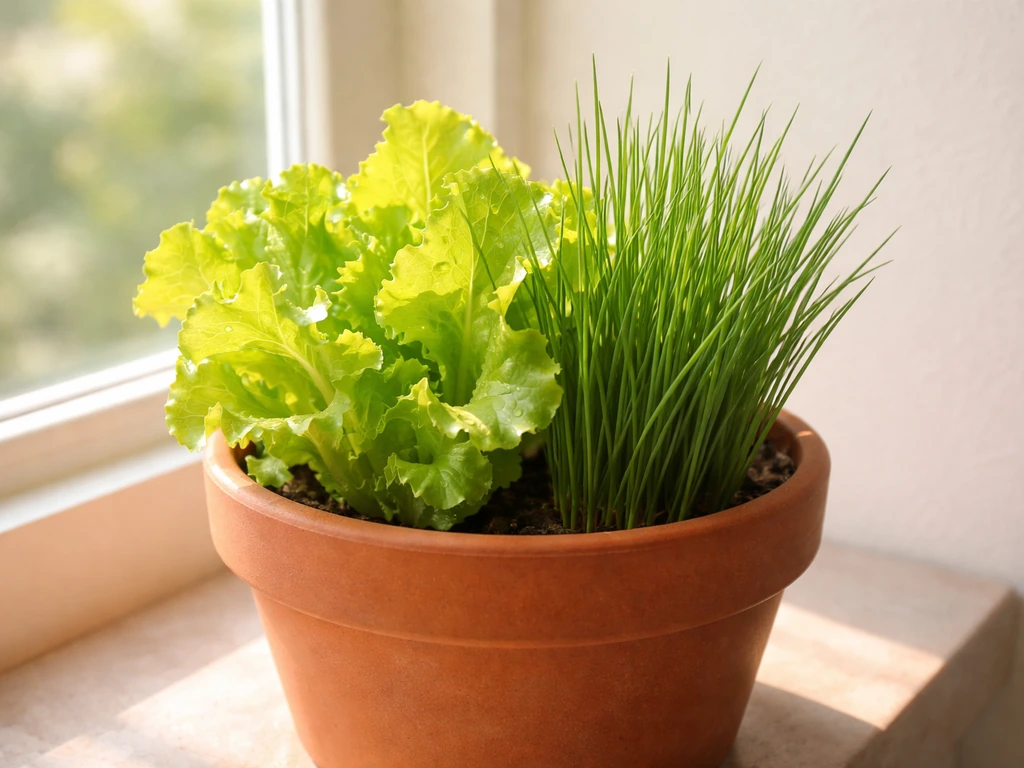
In containers, space is limited so stick to one or two low-impact companions. My go-to combination is loose-leaf lettuce with chives in a 12-inch pot: the chives stay compact, share the same watering schedule, and their scent helps with aphids on a balcony or patio. You can also pair lettuce with a single nasturtium trailing over the pot's edge as both a pest trap and a visual accent. Avoid any companion that will outgrow the pot and crowd roots, so no dill, no tall borage, and definitely no squash.
Indoor and hydroponic setups
Indoors, the traditional pest-pressure reasons for companion planting largely don't apply, you're not dealing with flea beetles or slugs. What does apply is smart use of light and spacing. In a hydroponic system or indoor grow setup, you can pair lettuce with spinach or arugula because they share the same nutrient solution preferences, light spectrum needs (cooler blue-spectrum LED at 14 to 16 hours), and temperature range (60–70°F / 15–21°C). Avoid pairing lettuce with basil indoors: basil wants warmer temperatures (above 70°F), brighter light, and a drier root zone than lettuce, so they'll consistently pull each other out of their ideal conditions. Herbs like chives work fine indoors as a pot companion next to lettuce under the same grow light, even if they're in a separate container.
What to do when a pairing isn't working
Sometimes you plant companions and things go sideways anyway. Here's how to diagnose and fix the most common problems quickly. If you're also deciding on the best leaf lettuce to grow, focus on varieties that do well in cool, moist conditions and produce reliable loose leaves how to diagnose and fix the most common problems quickly.
- Lettuce is pale, slow-growing, and stunted: The companion is likely competing for nutrients. Check root density—if roots are tangled and dense, you're overcrowded. Remove the companion or increase spacing immediately. Add a half-dose of balanced liquid fertilizer to help the lettuce recover.
- Aphids are still bad despite companion plants: Trap crops take a week or two to draw aphids away, and they only work if you then remove the colonized trap plants. If nasturtiums are covered in aphids, don't leave them—either spray them off with water or pull the nasturtium plant entirely to remove the aphid colony. Also check whether your beneficial insects have had time to show up; they usually arrive within 1–2 weeks of aphid populations building.
- Lettuce is bolting fast even though you planted shade companions: The companion isn't providing shade at the right time of day. Check whether it's actually blocking afternoon sun (usually from the west). If not, move a container companion or add a physical shade cloth (30–40% density) as a faster fix.
- Lettuce leaves have chew damage and you suspect flea beetles got worse: Your trap crop (usually radishes) may be past prime and no longer attracting pests. Pull the damaged radish plants entirely and monitor. If flea beetle pressure is very high, row cover fabric over the lettuce is a more reliable fix than any companion plant alone.
- Companion plant is taking over and crowding lettuce: This usually happens with nasturtiums or sprawling herbs. Trim them back hard, or reposition them to the outer edge of the bed. Don't be sentimental about it—lettuce only has 45–75 days to reach harvest, so a few weeks of crowding can ruin an entire planting.
One honest note: companion planting reduces pest pressure and improves space efficiency, but it doesn't eliminate problems entirely. If you have a severe aphid outbreak or flea beetle infestation, physical controls like row covers or targeted insecticidal soap will work faster than any plant pairing. Think of companion planting as a first line of defense and a way to make your garden more resilient over time, not a substitute for active management when things get bad.
The good news is that lettuce is forgiving to work with if you catch problems early. It's a fast-growing crop, and even a rough start can recover into a decent harvest with quick adjustments. If you’re wondering whether is lettuce hard to grow, the main answer is that it gets much easier once you dial in cool weather, consistent moisture, and the right timing. Whether you're figuring out which lettuce variety to grow in the first place or troubleshooting why yours isn't thriving, the best approach is always the same: observe early, adjust fast, and don't overthink it. If you're still choosing what to plant, start by looking at the best lettuce to grow for your climate and season.
FAQ
Can I grow lettuce with all the recommended companions at once, or should I limit them?
You usually need to limit it. Even “compatible” plants share water and nutrients, and lettuce has shallow roots, so too many companions in the same top soil zone increases competition. Pick 1 to 3 partners per planting, and keep radish or nasturtium as perimeter trap crops rather than mixing them throughout the bed.
Will marigolds or chives actually repel aphids and flea beetles on their own?
They can help, but not reliably as a standalone fix. Aphid control depends more on pulling in beneficial insects, creating disruption near lettuce, and keeping lettuce spaced so pests do not spread easily. If aphids are already established, use physical removal or an insecticidal soap rather than waiting for companions to “solve it.”
What’s the best spacing rule if I’m using loose-leaf lettuce versus head lettuce?
Loose-leaf tolerates slightly tighter spacing, about 4 to 6 inches of clear soil around each plant, while head lettuce typically needs closer to 6 to 8 inches. In dense plantings, pests like aphids move faster between plants, so thinning or spacing adjustments often matter as much as companion choice.
How do I position companions if my bed gets afternoon sun but I still want to prevent bolting?
Aim for afternoon shade on the lettuce side during warm spells. Place taller companions like dill on the side that casts shade away from lettuce in spring, but shift them to the south or west side when temperatures rise above about 70°F (21°C), so their shadow arrives during peak heat instead of the morning.
Is it okay to plant radishes directly mixed into the lettuce row, or should they be separate?
Keep trap crops at the perimeter, not fully intermixed. Radishes do their job best when they’re easiest for flea beetles to choose first, then you remove them after leaf chewing. If you mix them throughout, you may simply spread feeding points and delay the “trap” effect.
Can I grow lettuce with strawberries if both are in the same container or raised bed?
Yes, but treat strawberries as a long-term, larger plant. For beds, place strawberries at the edge with enough space for runners, and use lettuce only as a short-season filler in the open areas. In containers, strawberries often outgrow the pot and can shade lettuce later, so they work better in larger planters and only if the strawberry stays pruned and well spaced.
Why do my lettuce and herb pairings keep failing, even when the companions are “on the list”?
Most failures come from mismatched soil moisture needs and uneven light. Lettuce wants consistently moist, not soggy soil, while some herbs prefer drier, well-drained conditions. If the herb is drying out too much between waterings, lettuce will bolt or turn bitter, and if the soil stays wet for the herb, you can end up with root and leaf issues.
What should I do if my lettuce and spinach pair is competing for light indoors?
Rebalance the canopy. Indoors, spinach and lettuce both like cool conditions, but spinach can grow taller and shade lettuce under the same light. Use spacing that keeps lettuce leaves fully exposed, or separate them by height (spinach slightly behind) and keep the light at a distance that supports lettuce’s lower leaves.
Are brassicas always a no, even for a short gap-filling planting?
Avoid them when they share pest pressure or grow in the same period. Even if you plant lettuce first, brassicas can still host pests that move onto lettuce later, and they also compete for nutrients in the same shallow zones when young. If you rotate quickly, at least wait long enough between families and keep spacing so lettuce is not surrounded by brassicas.
How can I tell whether poor results are from competition versus pests?
Competition usually shows as uniform stunting across lettuce or consistently smaller heads near companion roots, while pests show localized damage patterns like holes (flea beetles) or clusters of insects and sticky leaves (aphids). Check the undersides of leaves early, and look for the first signs at the same time each day so you can intervene before spread.
Do companion plants change how often I should water lettuce?
They can. More plant roots in the same top layer increase water uptake, so lettuce dries faster between waterings, especially in containers. If you add companions like chives or radishes, monitor soil moisture at the 2 to 3 inch depth and adjust watering so lettuce stays evenly moist, not merely “watered more often.”
What’s the fastest, safest first step if I get a sudden aphid outbreak on lettuce?
Start with targeted action before replanting. Spray aphids off with a strong stream of water, then inspect daily for regrowth. If needed, use insecticidal soap according to label directions, and keep the lettuce spaced so you reduce the number of infested heads in the next cycle of pests.