In a well-dialed hydroponic setup, lettuce typically takes 30 to 45 days from transplant to harvest, or about 45 to 60 days from seed, answering how long does lettuce take to grow for most growers. That is the honest practical range for most growers. Loose-leaf varieties can be ready to pick in as little as 3 to 4 weeks after transplant, while a dense romaine head can push 80 to 85 days from seed. The number you land on depends on a handful of things you can actually control, and this guide walks through all of them. how long does lettuce take to grow dreamlight valley
How Long Does Lettuce Take to Grow in Hydroponics

Marcus Holloway
24 Mar 2026
The Typical Hydroponic Lettuce Timeline
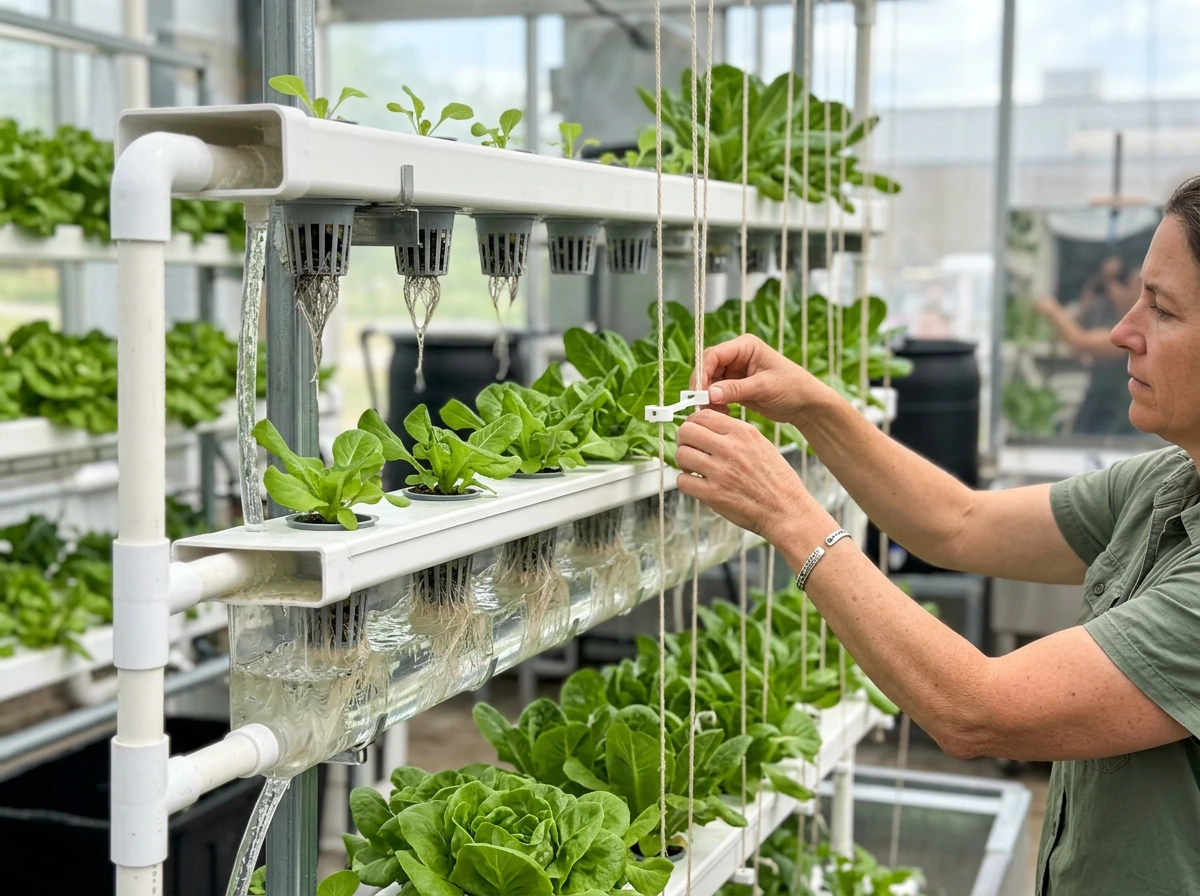
Most commercial and home growers break the grow into two phases: germination and seedling development, then the main growing phase in the system. If you start from seed, germination takes 3 to 7 days. Seedlings then spend about 10 to 15 days in a propagation tray or rockwool cube before they are ready to transplant into your NFT channel, DWC bucket, or other system. From transplant, the to-harvest phase runs about 30 to 40 days according to University of Kentucky crop diversification research, which lines up closely with real-world grower reports of 4-week harvests in NFT systems.
A butterhead like the popular Rise Gardens variety can be ready to harvest at day 27 or so if you are cutting outer leaves. A romaine grown to full head maturity can take 80 to 85 days from seed. Most loose-leaf and butterhead types fall somewhere in the 45 to 55 day window from seed, which makes them the default choice for anyone who wants fast, reliable turnover.
| Lettuce Type | Seed to Harvest | Transplant to Harvest | Notes |
|---|---|---|---|
| Loose-leaf (e.g., red oak, green leaf) | 30–45 days | 18–30 days | Fastest; great for cut-and-come-again |
| Butterhead / Bibb | 45–55 days | 27–40 days | Popular for hydroponics; tender leaves |
| Romaine (full head) | 70–85 days | 55–70 days | Longer but high yield; needs more space |
| Baby lettuce / microgreens | 10–20 days | N/A | Harvest at cotyledon or first true leaf stage |
What 'Harvest-Ready' Actually Means
This is where a lot of beginners get confused, because 'ready to harvest' means something different depending on whether you are growing heads or using the cut-and-come-again method. Both approaches work in hydroponics, and your choice directly affects how you measure time.
Cut-and-Come-Again (Loose-Leaf Style)
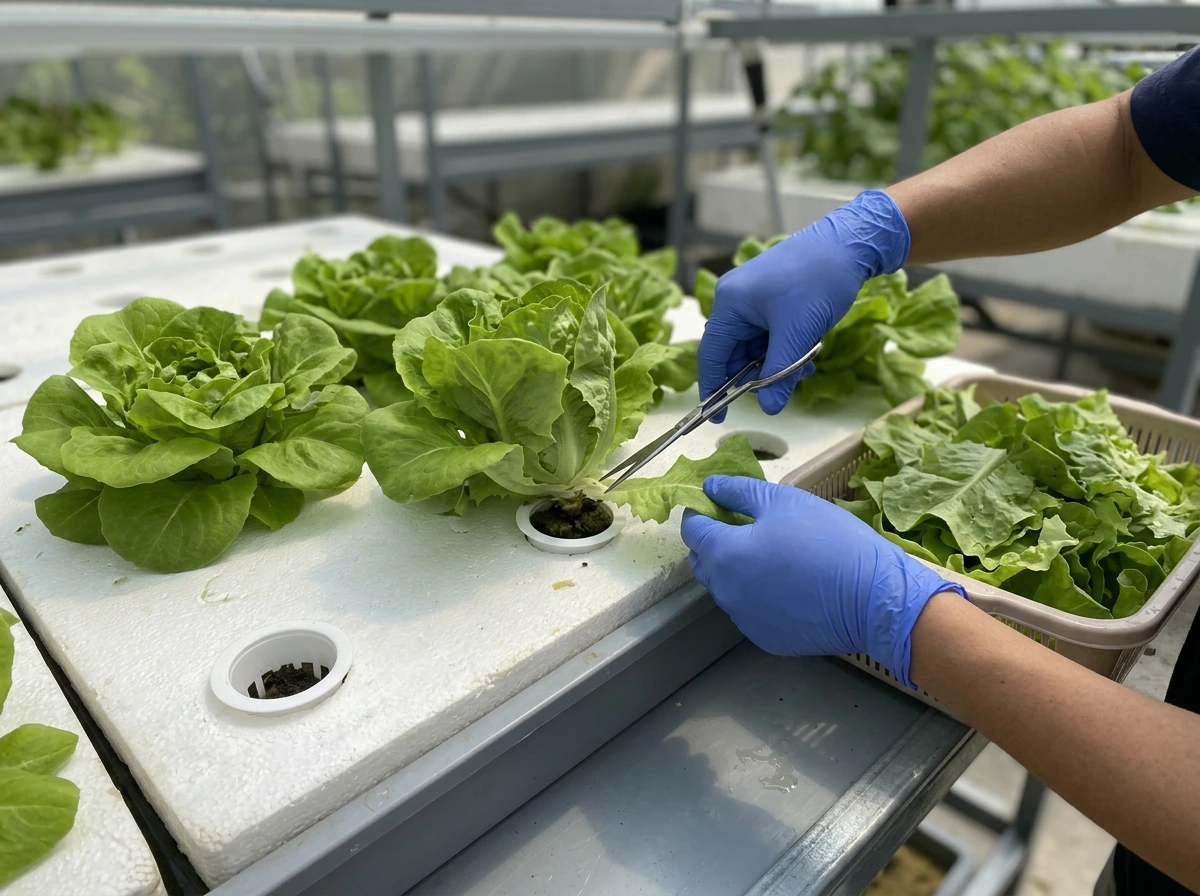
With loose-leaf and Bibb-style varieties, you start harvesting outer leaves once the plant is 3 to 4 weeks past transplant. You take the outer, larger leaves first and leave the growing center intact. UMass Amherst’s Greenhouse Greens Resources fact sheet describes cut-and-come-again leafy production as harvesting outer leaves at intervals (or cutting back to allow regrowth) while keeping the growing center intact [cut-and-come-again harvesting outer leaves at intervals](https://www. umass.
edu/agriculture-food-environment/greenhouse-floriculture/fact-sheets/greenhouse-greens-resources). The plant keeps producing new leaves, so you can come back every few days for additional harvests. The run ends when the plant starts bolting (sending up a flower stalk) or when leaf production slows noticeably, which typically signals stress from heat or photoperiod changes. This method maximizes the value of each plant and is the most practical approach for home growers who want a continuous supply.
Full Head Harvest
For full heads, you harvest the entire plant at once when it reaches maturity. A practical readiness check for romaine: the head should be 6 to 8 inches tall, leaves dark green and firm, with the head sitting open and loose rather than tightly compressed. Butterhead is ready when the center leaves cup inward and feel dense to the touch. Do not wait for the plant to look perfect on a chart date. Physical signs are more reliable than a calendar.
Why Your Timeline Might Be Shorter or Longer
Hydroponic lettuce does not grow at a fixed speed. A few variables move the needle significantly, and understanding them lets you make smart adjustments rather than just waiting and hoping.
Lettuce Variety and Starting Method
Variety is the single biggest factor in raw timeline. A loose-leaf variety will always be faster than a full romaine, regardless of how well you dial in your system. Starting from seedlings or clones rather than seed saves you 15 to 20 days right away. If speed is your priority, buy seedlings or start seeds in a fast-draining propagation medium like rockwool or rapid rooters and transplant as soon as the roots poke through the cube, usually around day 10 to 14.
Temperature
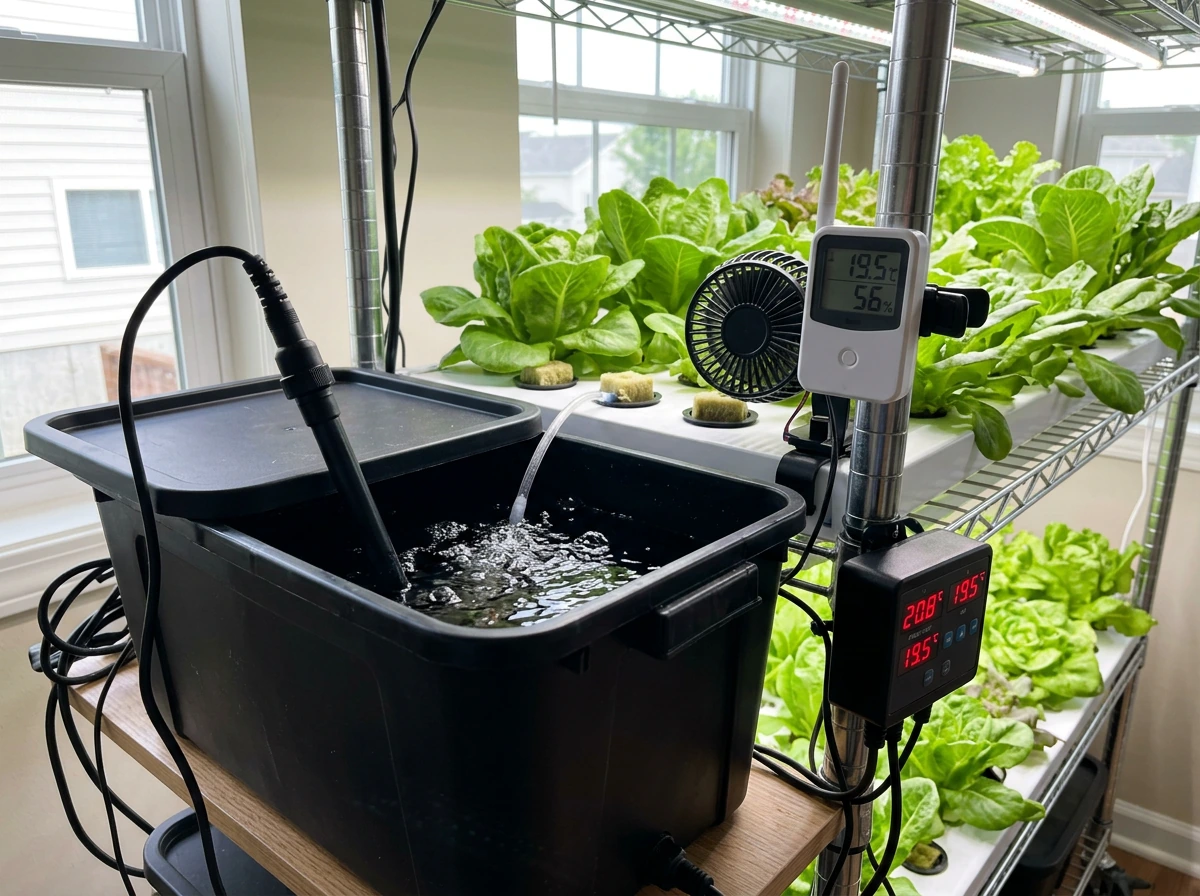
Lettuce is a cool-season crop. The sweet spot for water and air temperature is 65 to 70 degrees Fahrenheit. Below 60 degrees, growth slows noticeably. Above 75 degrees, the plant starts to stress, and above 80 degrees you risk tip burn and early bolting. If your system runs warm, adding a water chiller or moving to a cooler space is one of the most effective ways to get growth back on track without changing anything else.
System Type
Deep Water Culture (DWC) and Nutrient Film Technique (NFT) both deliver fast results for lettuce because roots have constant or near-constant access to nutrient solution and oxygen. DWC in particular tends to produce some of the fastest growth because roots are submerged in well-oxygenated water continuously. Ebb-and-flow and wick systems are slower because nutrient delivery is intermittent. If you are comparing timelines from other growers, make sure you are comparing the same system type.
Lighting and Nutrients: The Fastest Legal Shortcuts
If you want to shave days off your timeline, light and nutrients are where to focus. These are the two most controllable variables in an indoor or greenhouse setup.
Light Intensity and Photoperiod
Lettuce grows best with 14 to 16 hours of light per day. A 16-hour photoperiod with around 250 to 375 micromoles per square meter per second (µmol·m⁻²·s⁻¹) covers the range cited in commercial leafy green production research. A target intensity of around 250 µmol·m⁻²·s⁻¹ on a 24-hour cycle or roughly 375 µmol·m⁻²·s⁻¹ on a 16-hour cycle are benchmark conditions used in research settings. Going beyond 350 µmol·m⁻²·s⁻¹ with a standard 16-hour day provides diminishing returns and wastes energy.
The practical takeaway: set your timer for 16 hours on and 8 hours off, and make sure your grow light is close enough to deliver at least 150 to 250 µmol·m⁻²·s⁻¹ at canopy level. A cheap PAR meter is worth the investment if you are serious about speed.
Nutrients: EC, pH, and Nitrogen
Keep your nutrient solution EC between 1.0 and 1.6 mS/cm for lettuce. Lower than 1.0 and growth slows from nutrient deficiency. Higher than 1.6 and you risk salt stress, which causes tip burn and stunted roots. pH should sit between 5.5 and 6.5, with 6.0 being a reliable center target. Nitrogen is the primary driver of leafy growth. Aim for 150 to 200 ppm of total nitrogen in your solution. Most complete hydroponic nutrient formulas designed for leafy greens will hit these numbers when mixed at the recommended rate, so follow label directions and verify with an EC meter rather than guessing.
One tip that gets overlooked: oxygenation matters as much as the nutrient formula itself. In DWC, run an air stone at all times and make sure your air pump delivers enough volume for the tank size. Oxygen-deprived roots absorb nutrients slowly no matter how perfect your EC and pH are.
Tracking Progress Day by Day
You do not need a complicated tracking system. A simple notebook or notes app works fine. Here is a practical day-by-day framework for a typical DWC or NFT grow from transplant.
- Days 1 to 5 after transplant: Expect little visible growth above the net cup. Roots are establishing. Check that pH is 5.8 to 6.2 and EC is around 1.0 to 1.2. Water temperature should be 65 to 70°F.
- Days 6 to 14: First real leaf expansion. New leaves should appear every 2 to 3 days. If leaves look pale or yellowing, bump EC slightly (up to 1.4) and recheck pH.
- Days 15 to 21: Canopy fills out. Outer leaves should be 3 to 4 inches long on loose-leaf types. This is the window to start cut-and-come-again harvesting if desired.
- Days 22 to 30: Most loose-leaf varieties reach full harvestable size. Butterhead should be forming a soft center cup. Check for any tip burn, which signals EC or temperature creeping too high.
- Days 30 to 40: Prime harvest window for most varieties. For romaine grown to full head, extend monitoring through days 55 to 70. Watch for bolting signs: elongated center stem, leaves turning slightly bitter.
The single most useful physical check you can do daily is look at the growing tip (the center crown of the plant). Healthy growth shows tight, bright green new leaves unfurling consistently. If the growing tip looks stalled or the new leaves are small and pale, something in your environment is off and it is worth investigating before another day passes.
When Your Lettuce Is Growing Too Slowly
Slow growth almost always traces back to one of five causes. Work through this list before making big changes.
- pH out of range: Even a half-point drift above 6.5 locks out key nutrients and stalls growth fast. Test daily until your system stabilizes, then every other day. Adjust with pH up or down solutions in small increments.
- EC too low: If EC is below 1.0, the plant is nutrient-deficient. Mix a fresh batch of solution at the correct concentration rather than just topping off with more nutrient solution, which can cause uneven ratios.
- Not enough light: If plants are stretching (etiolation, long thin stems reaching toward the light), your intensity is too low or your photoperiod too short. Move the light closer or add a second fixture. Target 14 to 16 hours on the timer.
- Temperature too high: Warm water (above 72°F) reduces dissolved oxygen and slows root activity. Add ice bottles as a short-term fix, or invest in a small aquarium chiller if this is a recurring problem.
- Root problems (root rot or crowding): Brown, slimy roots mean a pathogen is present. Add beneficial bacteria (like Hydroguard) and increase aeration immediately. If plants are too close together, leaves compete for light and air circulation drops, inviting disease.
One more thing worth checking: if you started from seed and the seedlings seem to be taking forever, make sure you transplanted at the right time. Seedlings sitting too long in propagation trays without nutrient solution become root-bound and stunted. As soon as roots are 1 to 2 inches long and poking out of the cube, it is time to move them into the main system. Waiting longer does not make them stronger, it just delays your harvest.
If you want to compare hydroponic timelines with soil growing or understand how growth timing changes from seed specifically, If you want to compare hydroponic timelines with soil growing or understand how growth timing changes from seed specifically, those topics are covered in related guides on growing lettuce from seed and growing lettuce in aquaponics, which shares many of the same timing principles covered here. how long to grow lettuce in aquaponics
FAQ
Does the “days to harvest” count start from seed or transplant in hydroponics?
If you measure from transplant, most lettuce will be harvestable in about 30 to 40 days, but the plant can be “market-ready” earlier or later depending on whether you cut outer leaves or wait for a full head. For consistent results, base your schedule on physical readiness checks (tip growth and leaf firmness) instead of transplant day alone.
Why is my lettuce taking longer than the typical 30 to 45 days after transplant?
A common reason harvest feels slower is that seedlings sat too long in propagation trays after they should be moved. When roots are roughly 1 to 2 inches long and poking out of the cube, transplant soon, because leaving them longer often leads to stalling, not stronger growth.
Can lettuce grow faster in hydroponics if I keep the solution warmer?
Temperature swings can trigger faster bolting, which makes “harvest time” shorter but quality worse. Keep the system in the 65 to 70 F range, and if your space runs warm, a water chiller or relocation to a cooler area is usually more effective than trying to compensate with higher nutrients.
What’s the fastest path to edible lettuce in hydroponics, starting from nothing?
If you want to cut days, start with seedlings, not seed. The guide’s typical timeline includes several non-grow days (germination plus seedling tray time), so moving straight to transplantable seedlings can save around 15 to 20 days compared with starting from seed.
How does harvest timing change if I’m doing cut-and-come-again versus full heads?
Yes, but you need to manage timing by method. With cut-and-come-again (outer leaf harvest), you may get earlier picking at around 3 to 4 weeks post-transplant and then multiple harvests, while full-head crops require waiting until the head meets maturity signs.
What physical signs should I trust most for harvest readiness?
Don’t rely on a “chart date” for full heads. Instead, use readiness indicators like head height and firmness for romaine, and density and cupping for butterhead, because plants can look different even when your calendar says they should be ready.
Which lettuce types are reliably fastest in hydroponics, and which tend to be slowest?
Head lettuce generally has longer grow-out time because it needs more structured leaf growth before the head firms. If you want quicker turnover, loose-leaf or butterhead types are usually the best fit because they mature sooner under the same hydroponic conditions.
How much do aeration and oxygenation affect how long lettuce takes to grow?
In DWC, oxygenation is a direct speed lever. Run a continuous air stone, and ensure the pump output matches the tank size, because oxygen-deprived roots will absorb nutrients slowly even if your EC and pH are correct.
Why do other growers report very different timelines for the same lettuce variety?
If you compare grow times across setups, match system type first. NFT and DWC tend to produce fast growth, while ebb-and-flow and wick systems often run slower because nutrient delivery is intermittent, which changes the effective growth rate.
What should I check first when my lettuce growth stalls mid-cycle?
Your schedule should include “inspection checkpoints.” If the growing tip looks stalled or new leaves become small and pale, investigate immediately (light, EC/pH, and water temperature) before you keep waiting for the calendar to catch up.
Will increasing light hours or nutrient strength always shorten the harvest time?
Light and nutrients can speed things up, but only within a safe range. Too little light delays growth, while pushing intensity too high with a long photoperiod can waste energy and increase stress, so tune toward about 14 to 16 hours of light and target the recommended canopy intensity rather than maxing brightness.
How should I plan harvest dates if I want a realistic timeline instead of a single number?
For planning, use a range, then refine with your actual conditions. If you start from seed, treat germination plus seedling development as a fixed early block, then plan the main transplant phase in the 30 to 40 day window, adjusting based on canopy growth and tip development.