Yes, you can absolutely grow romaine lettuce indoors, and it works better than most people expect. With a decent grow light, a container at least 6 inches deep, and temperatures kept between 60 and 70°F, you can go from seed to harvestable leaves in as little as 30 days, or a full head in 60 to 80 days. If you want to grow romaine outdoors in Texas, you will need to time planting around the hottest months and use varieties suited to heat and mild cool spells. It's one of the most beginner-friendly crops to grow inside, whether you're working with a sunny windowsill, a spare corner with a grow light, or a small hydroponic setup. If you are in the Philippines and want to grow romaine successfully, use the same indoor approach but select timings and varieties that handle your local heat and season patterns how to grow romaine lettuce in the philippines.
How to Grow Romaine Lettuce Indoors: Full Guide
Can you grow romaine indoors (and is it right for you)?
Romaine is a cool-season crop, which means it actually prefers the stable, mild temperatures most homes naturally provide. That's a real advantage over trying to grow it outside where heat or frost can wreck a crop. Indoor growing removes the seasonal limitation entirely, so you can have fresh romaine in January just as easily as in May.
It works especially well for apartment dwellers, anyone without outdoor space, or people who want year-round greens without worrying about the weather. The one honest caveat: romaine does form tighter, crunchier heads outdoors with more natural light. Indoors, your heads may be a little looser and slightly more tender, which most people actually prefer. If you're growing for leaves rather than tight full heads, indoor conditions are nearly ideal.
Where indoor romaine struggles is when light is genuinely insufficient. A north-facing windowsill with a few hours of weak light will produce spindly, pale plants. That's the main factor to get right. Everything else, soil, water, temperature, is easy to control once you understand the basics.
Picking the right variety and starting from seed
Not all romaine varieties behave the same indoors. For containers and indoor setups, compact or mini romaine types are the most reliable choice. Mini romaine lettuce is a great choice for tight spaces, so follow the mini-specific tips below to fine-tune your setup. Varieties like 'Little Gem,' 'Flashy Trout's Back,' and 'Parris Island Cos' all perform well in limited space. Little Gem in particular is compact, matures quickly, and holds up nicely even when light isn't perfect. If you want to explore mini options specifically designed for small containers, that's a whole rabbit hole worth diving into.
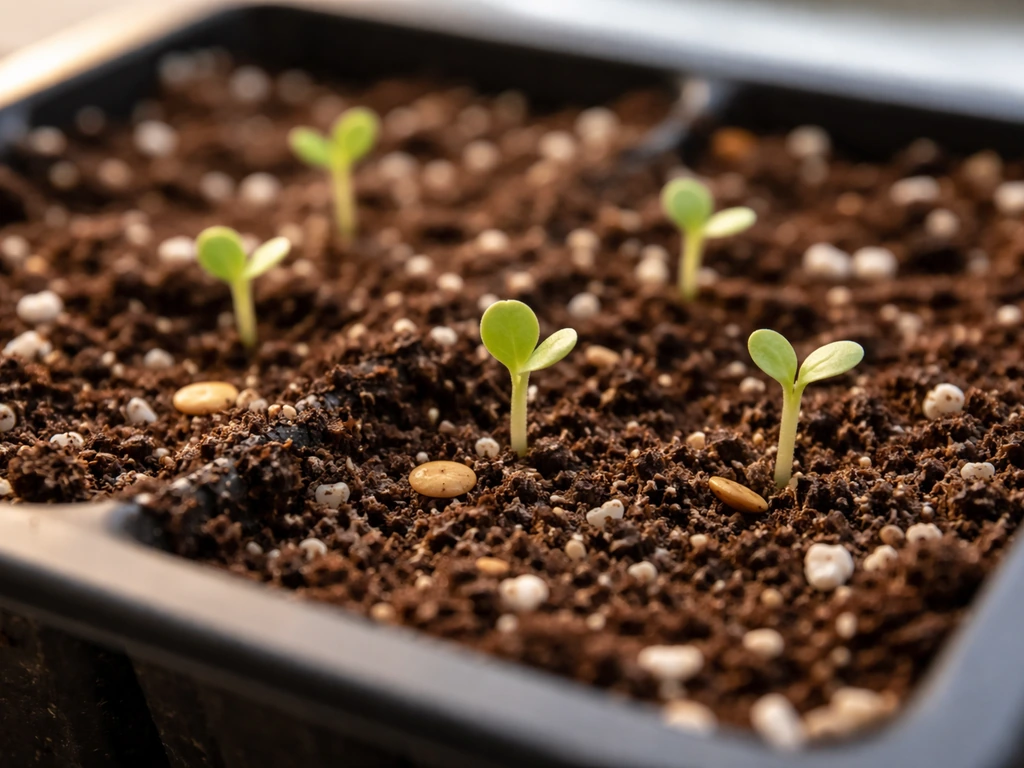
Starting from seed is straightforward. Sow seeds about 1/8 to 1/4 inch deep, just barely covered with soil or vermiculite. Romaine seeds need light to germinate well, so don't bury them. Keep the surface moist and at room temperature (around 65 to 70°F) and you'll see sprouts in 7 to 10 days. I usually sow 2 to 3 seeds per cell or per spot and thin to the strongest seedling once they're about an inch tall. You can also start seeds in a small tray and transplant once seedlings have 2 to 3 true leaves, usually at about 3 weeks.
Setting up your indoor growing space
Containers and sizing
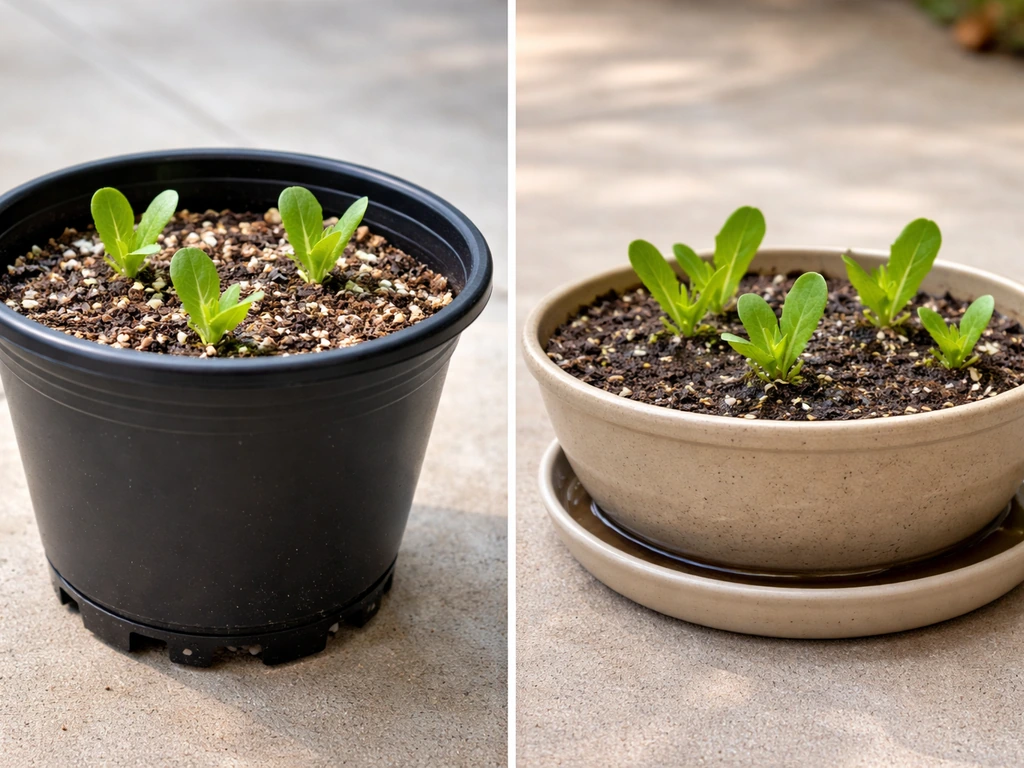
Romaine has a deeper taproot than loose-leaf varieties, so container depth matters. Go with at least 6 inches deep, and 8 to 12 inches is better if you want full heads. Width depends on how many plants you're growing: allow roughly 6 to 8 inches of space per plant for standard romaine, or 4 to 6 inches for compact mini types. A 12-inch wide pot can comfortably hold 2 to 3 mini romaine plants. Window boxes, fabric grow bags, and standard plastic nursery pots all work well.
Soil-based growing
For soil growing, use a lightweight potting mix rather than garden soil, which compacts too easily in containers. A mix with perlite or vermiculite added (roughly 20 to 30% by volume) improves drainage and prevents the soggy-root issues that are a common cause of failure indoors. Romaine likes a slightly acidic to neutral pH, around 6.0 to 7.0. Most quality potting mixes fall right in that range.
Hydroponic growing
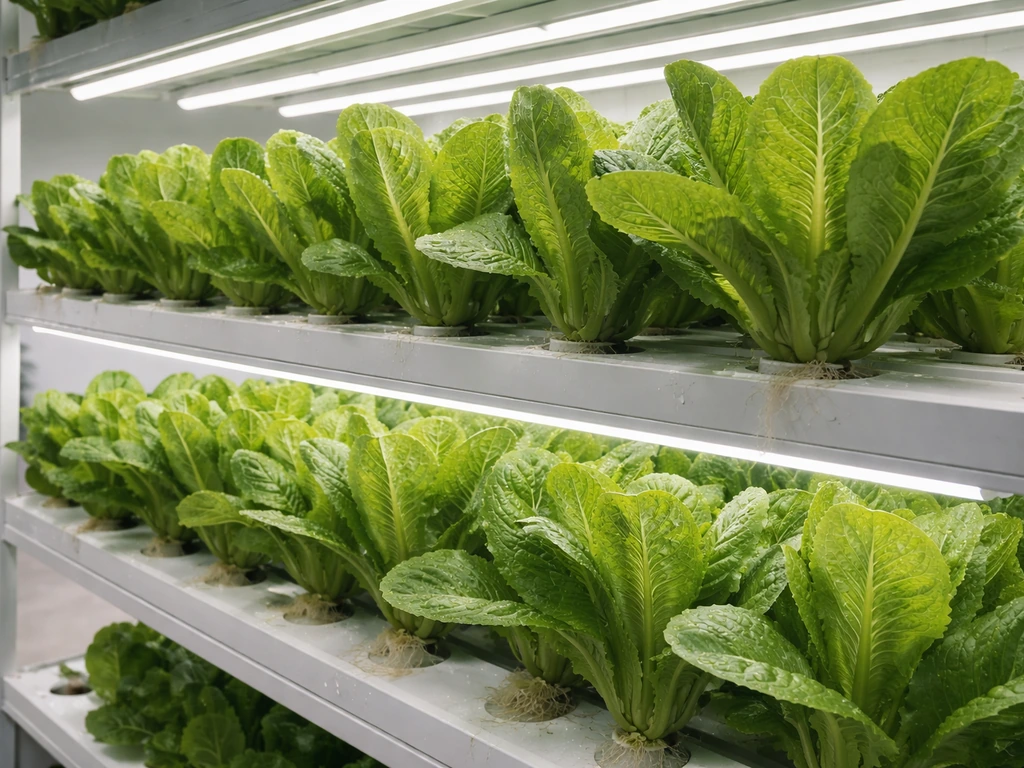
If you want the fastest results and the cleanest setup, hydroponics is hard to beat for indoor romaine. In a hydroponic system, romaine can be ready in as little as 30 to 45 days. Deep water culture (DWC) and kratky (passive hydro) systems are the most beginner-friendly options. You skip soil entirely, the roots sit in nutrient-rich water, and growth rates are noticeably faster than soil. The tradeoff is a small upfront investment in equipment and nutrients. Growing romaine in water is genuinely one of the most efficient ways to get continuous harvests indoors. If you want the step-by-step details, this guide on how to grow romaine in water walks through the best hydroponic approach and setup.
Drainage is non-negotiable
Whatever container you use for soil growing, it must have drainage holes. Romaine sitting in waterlogged soil will rot at the root and collapse within days. If your chosen container doesn't have holes, drill them or use it as a decorative outer sleeve with a draining inner pot. Place a saucer or tray underneath and empty it after each watering so water doesn't sit.
Getting the light right (this is the big one)
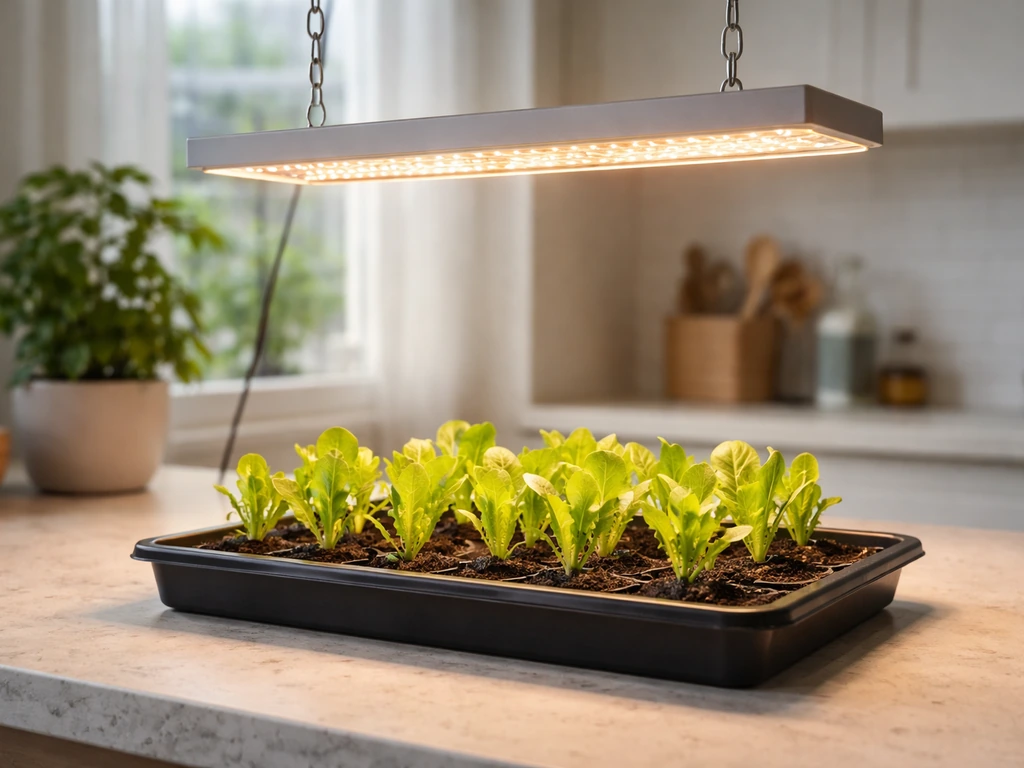
Light is where most indoor romaine attempts fail. A south-facing window can work during summer, but for consistent results year-round, a dedicated grow light is the most reliable approach. Romaine needs about 14 to 16 hours of light per day indoors to grow at a reasonable pace. A controlled study on indoor cultivation of lettuce and basil under red and blue LEDs evaluated a 16-hour photoperiod and PPFD levels including 250 µmol m⁻² s⁻¹ in growth-chamber conditions 14 to 16 hours of light per day indoors. In terms of intensity, aim for a PPFD (photosynthetic photon flux density) of around 150 to 250 µmol m⁻² s⁻¹ at the plant canopy. That's a mid-range light level, not high-intensity, which means even modestly priced LED grow lights can do the job.
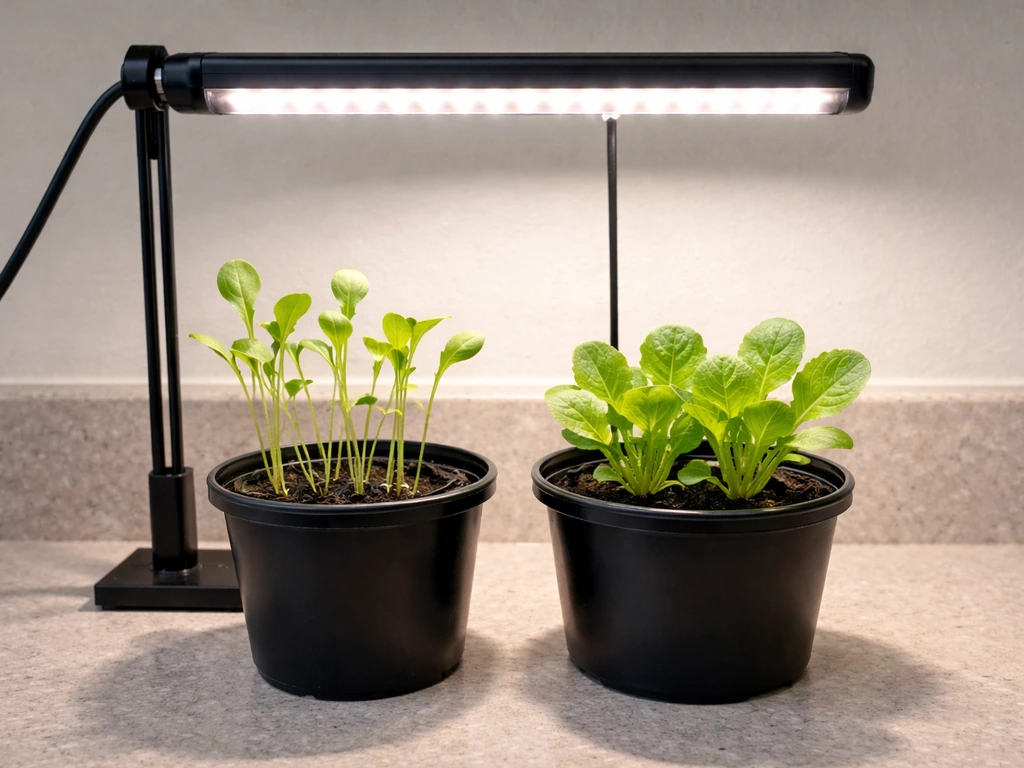
Full-spectrum LED panels are the best practical choice for most home growers. They run cool, are energy-efficient, and give you control over placement. Hang or position the light 6 to 12 inches above the seedlings, or 12 to 18 inches above mature plants. If you notice stretching or legginess (long gaps between leaves), the light is too far away or not intense enough. Move it closer by 2 to 3 inches and reassess over a few days.
Set your light on a timer for 16 hours on, 8 hours off. That photoperiod mimics long-day summer conditions that romaine loves, promotes compact growth, and delays bolting. If you notice your plants starting to bolt (sending up a tall central stalk and turning bitter), one of the first things to check is whether the light cycle has drifted or whether heat from the light is raising ambient temperature.
Watering, temperature, and humidity
Watering
The most common watering mistake with indoor romaine is overwatering. Water when the top 1 inch of soil feels dry to the touch. In most indoor conditions, that means watering every 2 to 3 days for seedlings and every 1 to 2 days for larger plants under grow lights (which dry out soil faster). Water thoroughly until it drains from the bottom, then wait. Consistently soggy soil is the fastest way to lose a crop to root rot. Underwatering shows up as wilting and dry, papery leaf edges. If you see that, water immediately and the plant usually recovers within hours.
Temperature
Romaine's ideal indoor temperature range is 60 to 70°F (15 to 21°C). It can tolerate brief dips down to 45°F without damage, and can handle up to about 75°F short-term. Above 75°F consistently, romaine starts to bolt and turn bitter faster than you can harvest it. Keep plants away from heating vents, sunny windows in summer that create hot microclimates, and appliances that radiate heat. A small fan nearby also helps circulate air and prevents fungal issues, which is especially useful in warm rooms.
Humidity
Romaine isn't fussy about humidity in the way some tropical plants are, but it does best in the 40 to 70% relative humidity range. Most homes fall right in that window without any intervention. If your space is very dry (under 30%), leaves can get crispy tips. If it's consistently above 80%, you're more likely to see fungal problems like downy mildew. In either case, improving air circulation usually solves the issue before it becomes serious.
Spacing, thinning, and feeding your plants
Thinning and spacing
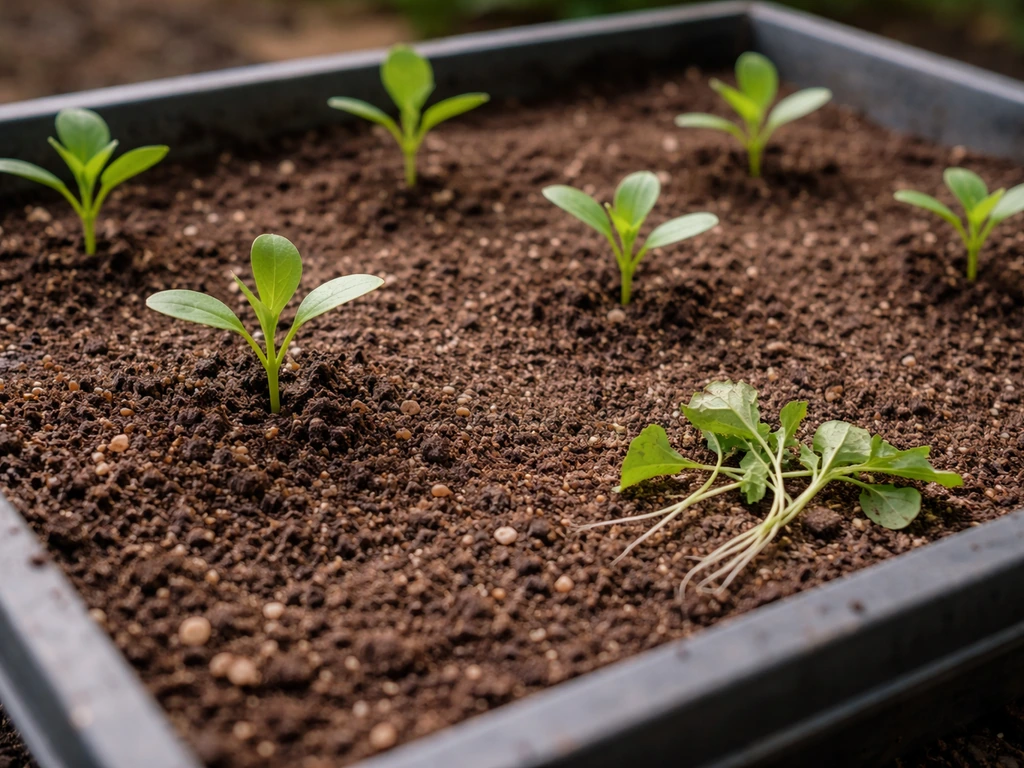
Once seedlings are about 1 inch tall and have their first set of true leaves, thin them so each plant has at least 4 to 6 inches of space for compact varieties, or 6 to 8 inches for standard romaine. Crowded plants compete for light and nutrients, grow slowly, and are more prone to disease. I know it's hard to pull out perfectly good seedlings, but thinning is not optional if you want healthy heads. Snip extras at the soil line rather than pulling, to avoid disturbing neighboring roots.
Transplanting
If you started seeds in a tray or small cells, transplant to your final container when seedlings have 2 to 3 true leaves, usually around 3 weeks after germination. Handle seedlings by their leaves, not their stems, to avoid damage. Water well immediately after transplanting, and keep the light slightly higher for the first 2 days to reduce transplant stress.
Fertilizing
Romaine is a leafy green, which means it responds well to nitrogen. In soil, start feeding with a balanced liquid fertilizer (something like a 5-5-5 or 10-10-10) at half strength once seedlings are 2 to 3 weeks old. From there, switch to a nitrogen-forward fertilizer (higher first number, like 5-1-1 fish emulsion or a leafy greens formula) every 1 to 2 weeks through the main growing period. Don't overdo it: too much nitrogen late in growth pushes lush but weak leaves that are more susceptible to pests. For hydroponics, use a complete hydroponic nutrient solution formulated for leafy greens and follow the manufacturer's EC and pH targets, generally aiming for an EC of 0.8 to 1.6 and a pH of 5.5 to 6.5.
Harvesting, succession planting, and fixing common problems
When and how to harvest
For outer-leaf harvesting (the cut-and-come-again method), you can start picking individual outer leaves once plants are about 3 to 4 inches tall, usually 30 days after germination. Take 2 to 3 outer leaves per plant and leave the center growing. The plant will keep producing new leaves for several more weeks. For full head harvest, wait until the head is firm and 6 to 8 inches tall, typically 60 to 80 days from seed. Cut the whole head at the base, just above the soil line. A small stub of leaves at the base will sometimes resprout and give you a second, smaller harvest.
Succession planting for continuous harvests
The easiest way to have romaine available year-round is staggered sowing: start a new batch of seeds every 2 to 3 weeks. By the time you're harvesting your first tray, your second is ready to thin, and your third is just germinating. Three staggered containers or trays is usually enough to keep one person in steady salad greens without gaps.
Troubleshooting common indoor problems
| Problem | Likely Cause | Fix |
|---|---|---|
| Leggy, stretched seedlings | Insufficient light or light too far away | Lower grow light to 6–8 inches above seedlings; increase photoperiod to 16 hours |
| Bolting (tall central stalk, bitter taste) | Temperature above 75°F or long light exposure combined with heat | Reduce ambient temperature; check light isn't generating heat at canopy level; harvest immediately |
| Yellowing lower leaves | Nitrogen deficiency or overwatering/root rot | Check drainage first; if soil is fine, apply a nitrogen-rich liquid fertilizer at half strength |
| Brown or crispy leaf tips | Low humidity, salt buildup in soil, or inconsistent watering | Flush soil with plain water every 4–6 weeks; increase humidity slightly; water more consistently |
| Wilting despite moist soil | Root rot from waterlogged conditions | Improve drainage immediately; remove plant and inspect roots; trim brown/mushy roots and repot in fresh mix |
| Aphids or fungus gnats | Overwatering (gnats) or brought in on new plants (aphids) | Let soil dry more between waterings for gnats; use neem oil spray for aphids; keep grow area clean |
| Slow, pale growth | Low light intensity or cold temperatures | Move light closer or upgrade to higher-output LED; ensure temperatures stay above 60°F |
The single most important thing to fix first when something goes wrong is always light. It's the root cause of more indoor lettuce failures than anything else. Before you adjust watering, fertilizing, or anything else, make sure your grow light is close enough, on long enough, and strong enough. Get that right, and most other issues either don't appear or are easy to correct.
One last thing worth knowing: if you get the indoor setup dialed in for romaine, the same environment works well for other lettuce types too. And if you're curious about even more compact options designed specifically for small containers, mini romaine varieties are a natural next step once you've got your first crop under your belt.
FAQ
My romaine looks leggy and weak indoors, what should I check first?
If your lettuce grows tall and pale, it is usually light related, even if you think you are using a grow light. Check that the timer is running for 14 to 16 hours, then measure how far the light is from the canopy, and lower it by 2 to 3 inches. Also avoid planting more densely than the spacing targets, because crowded plants raise the effective light requirement.
Will my shallow window box be enough to grow romaine into full heads?
Taproot depth is the limiting factor for heads, not just leaf growth. For full heads, use at least 8 to 12 inches of container depth. If you only have a shallow window planter, focus on cut-and-come-again leaf harvesting instead of waiting for tight heads.
How do I tell if I’m overwatering or underwatering indoor romaine?
Romaine is at its best with moderate, consistent moisture. Water thoroughly until drainage starts, then empty any runoff. If the soil is staying wet more than a couple of days, reduce watering frequency and confirm you have real drainage holes plus a fast-draining mix (with perlite or vermiculite).
Can I mix a sunny window with a grow light and still get good results?
Yes, romaine can work in a mix of direct sun and a grow light. The goal is the daily light total, so a sunny window might cover part of the 14 to 16 hours, but you may still need the grow light during dark months. If you see stretching, supplement more hours or move the plants slightly closer to the brightest window area.
What humidity problems should I watch for, and how do I fix them?
Humidity issues usually show up as disease rather than slow growth. If tips go crispy, raise humidity slightly, but do not trap moisture. If you see leaf spots or fuzzy growth under leaves, improve airflow with a small fan and avoid watering late in the day so leaves do not stay damp.
When and how should I fertilize indoor romaine so it does not get bitter or pest-prone?
For soil, nitrogen should be moderate and timed. Start feeding when seedlings are 2 to 3 weeks old, then switch to a nitrogen-forward fertilizer during the main growth period. Stop or ease off as you approach harvest, because heavy late nitrogen can delay head firmness and increase pest pressure.
Can I switch from soil to hydroponics mid-grow?
Yes, but treat it as a different setup. Hydroponics typically uses different nutrient strength (EC) and targets (pH), and lettuce often grows faster than soil. If you switch from soil to water, rinse off soil thoroughly and monitor roots, then start with lower nutrient strength for the first week to prevent shock.
Why is my indoor romaine bolting and turning bitter?
Romaine usually bolts indoors when it gets too much heat, too much stress, or the light cycle drifts. Keep temperatures under about 75°F consistently, maintain the timer (around 16 hours on, 8 hours off), and avoid letting plants dry out. Once bolting starts, flavor can turn bitter quickly, so harvest sooner.
I started multiple seeds per pot, how do I thin without harming the seedlings?
Thin based on your variety and your container width, not just what looks crowded. Thin by snipping extras at the soil line to avoid disturbing neighboring taproots. A good rule is to end with roughly 6 to 8 inches between standard romaine plants, and 4 to 6 inches for mini types.
What should I do if growth suddenly stalls indoors?
If the plants stall, first confirm light delivery at canopy height, then check watering and nutrition. Soil that never dries indicates overwatering, while very dry soil can stop growth. For hydroponics, confirm pH and EC, and inspect roots for brown or slimy areas.
How many leaves can I harvest from one plant without ruining my next flush?
For cut-and-come-again, you generally get the best balance by removing only outer leaves once plants are a few inches tall. Take 2 to 3 outer leaves per plant, leaving the center growing point intact. If the plant forms a loose head, avoid cutting too aggressively because it can reduce head tightness.
What’s the best way to store harvested indoor romaine so it stays crisp?
Storing is easier if you harvest early in the day and keep leaves cool. Keep unwashed leaves in a breathable container, then rinse right before eating. For longer freshness, lightly paper-dry after washing, because trapped moisture accelerates spoilage.