Yes, you can absolutely grow butterhead lettuce, and it's one of the most rewarding things to grow at home. It takes roughly 55 to 75 days from seed to a full head, tolerates containers and indoor setups well, and gives you tender, buttery leaves that taste nothing like what you find in a plastic clamshell at the grocery store. The key is timing it around cool weather, because once temperatures push past 75°F for several days in a row, butterhead bolts fast and turns bitter.
How to Grow Butterhead Lettuce From Seed and Harvest
Marcus Holloway
6 May 2026
What to expect when you grow butterhead lettuce
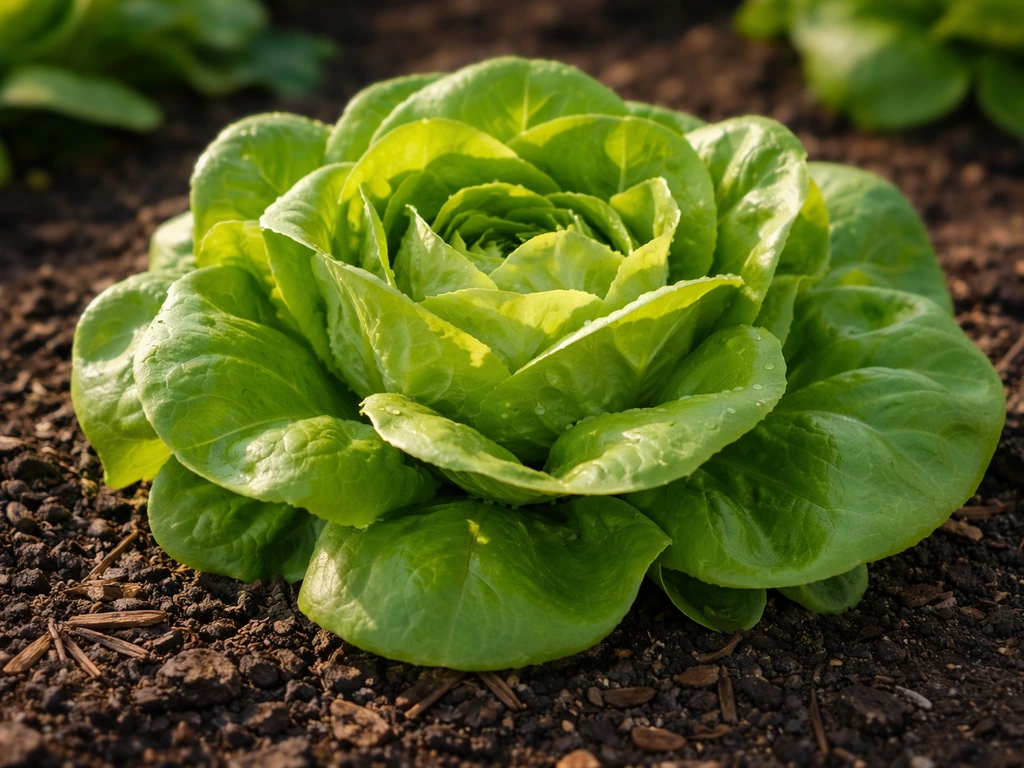
Butterhead is a head-forming lettuce, which means it grows into a loose, rounded head with soft, slightly cupped leaves before you harvest it whole. It sits somewhere between a loose-leaf and a crisphead type in terms of structure. The outer leaves are a deeper green, and the inner leaves blanch themselves to a pale yellow-green as the head forms around them. That center is where the sweetest, most tender flavor is.
Varieties like Boston and Bibb are the classic butterheads. Buttercrunch is another extremely popular option that handles heat slightly better than other butterheads and is a good pick if your springs warm up fast. Days to maturity across the butterhead family generally run 55 to 75 days from transplant, though you can start harvesting outer leaves earlier than that. If you are growing from direct-sown seed, add about a week to those numbers.
The realistic expectation for a beginner: your first head probably won't be perfect, and that is completely fine. You might get slightly loose heads, or a plant that starts to bolt before it fully fills out if a warm spell hits. UC IPM notes that bolting can be a response to environmental conditions that trigger rapid flower stalk growth, so planning planting timing can help reduce bolting risk starts to bolt before it fully fills out if a warm spell hits. Both are normal. The learning curve with butterhead is mostly about nailing the timing, not about any particularly fussy growing requirements.
Choosing the right variety and when to plant
Start by picking a variety that fits your timeline and climate. Here are the ones worth knowing:
- Buttercrunch: The most heat-tolerant butterhead you can grow. It holds longer before bolting and is an ideal choice if your spring-to-summer transition is quick. A great first variety.
- Boston (also called Limestone): Classic butterhead with large, loose heads and very tender leaves. Prefers consistently cool conditions.
- Bibb: Smaller, tighter heads with exceptional flavor. A little more sensitive to heat than Buttercrunch but beloved for its taste.
- Tom Thumb: A miniature butterhead that's ideal for containers and small spaces. Full heads at about 4 inches across.
- Deer Tongue (Matchless): A heritage butterhead variety with pointed leaves and excellent heat tolerance.
For timing, butterhead is a cool-season crop. In spring, you want to sow seeds or transplant seedlings as early as the soil can be worked, typically 4 to 6 weeks before your last frost date. In most of the US, that means February through April depending on your zone. The University of Maryland Extension specifically recommends sowing as soon as the soil can be worked in spring, and again in late summer for a fall crop. That fall window is often overlooked but it produces some of the best butterhead you'll ever taste because cooling temperatures actually improve flavor and slow bolting.
If you're in a warmer climate (Zone 8 and above), you can grow butterhead through winter. If you're in a cold climate like Minnesota, starting seeds indoors in early April for transplanting in late April or early May is a reliable strategy that gets you ahead of the compressed cool season.
How to grow butterhead lettuce from seed, step by step
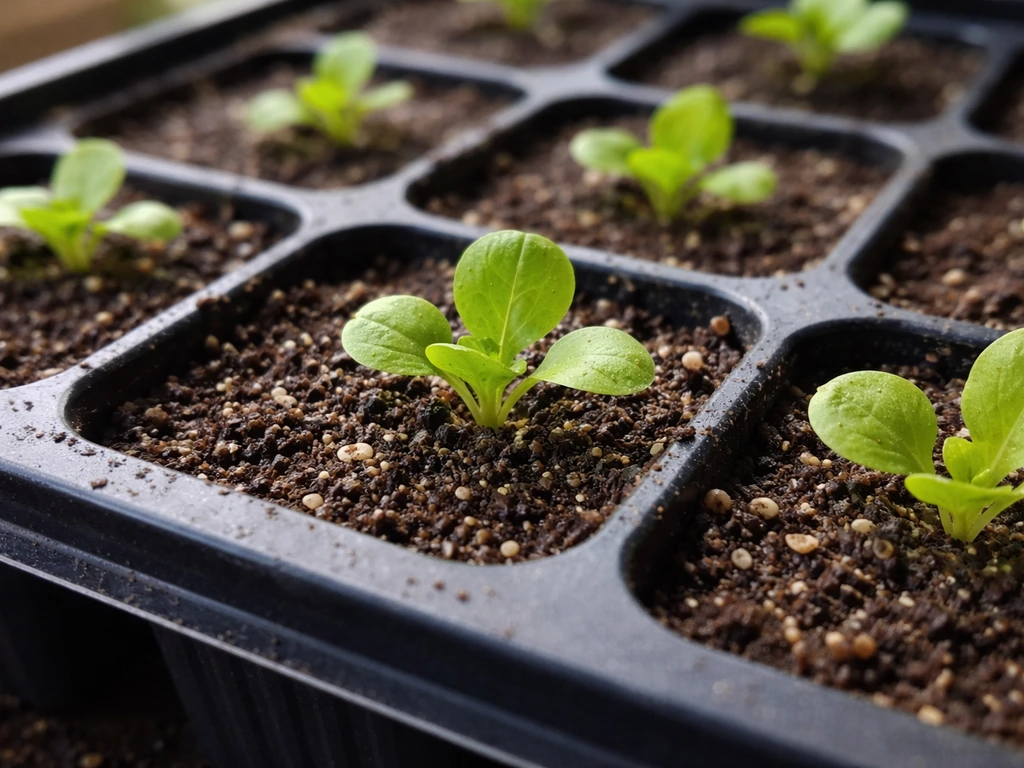
Growing from seed gives you the widest variety selection and the most control. Here's how to do it reliably:
- Start seeds indoors 4 to 6 weeks before your transplant date. Use a shallow tray or cell pack filled with a fine-textured seed-starting mix. Sow seeds about 1/4 inch deep, two or three seeds per cell.
- Keep the soil consistently moist but not soaked. Butterhead seeds germinate best at soil temperatures between 60°F and 68°F. At those temps, you'll see sprouts in 7 to 10 days. If your soil is too warm (above 75°F), germination drops significantly.
- Give seedlings bright light immediately after germination. A south-facing window works, but a grow light set 2 to 4 inches above the seedlings for 14 to 16 hours per day gives you the most consistent results indoors.
- Thin to the strongest seedling per cell once they have their first true leaves. Crowded seedlings get leggy and weak.
- Harden off seedlings before transplanting outdoors. Over 7 to 10 days, gradually expose them to outdoor conditions: start with an hour of indirect light per day and work up to a full day in their eventual planting spot.
- Transplant outside 2 to 4 weeks before your last frost date. Butterhead tolerates light frost and actually tastes better when it matures in cool weather.
- For direct sowing outdoors, scatter seeds thinly in rows 12 to 18 inches apart and cover lightly with 1/8 to 1/4 inch of soil. Thin seedlings to 8 to 10 inches apart once they reach 2 inches tall.
- Water in transplants well and keep soil evenly moist throughout the growing period.
One mistake I see beginners make: planting too late and then wondering why the heads bolt before they form properly. If you're starting seeds today in May 2026 and you live somewhere with hot summers, you're better off sowing now for a container or indoor setup where you can control temperature, or shifting your focus to a late-summer sowing for a fall harvest.
Growing butterhead in containers, indoors, and in hydroponic systems
Containers and indoor pots
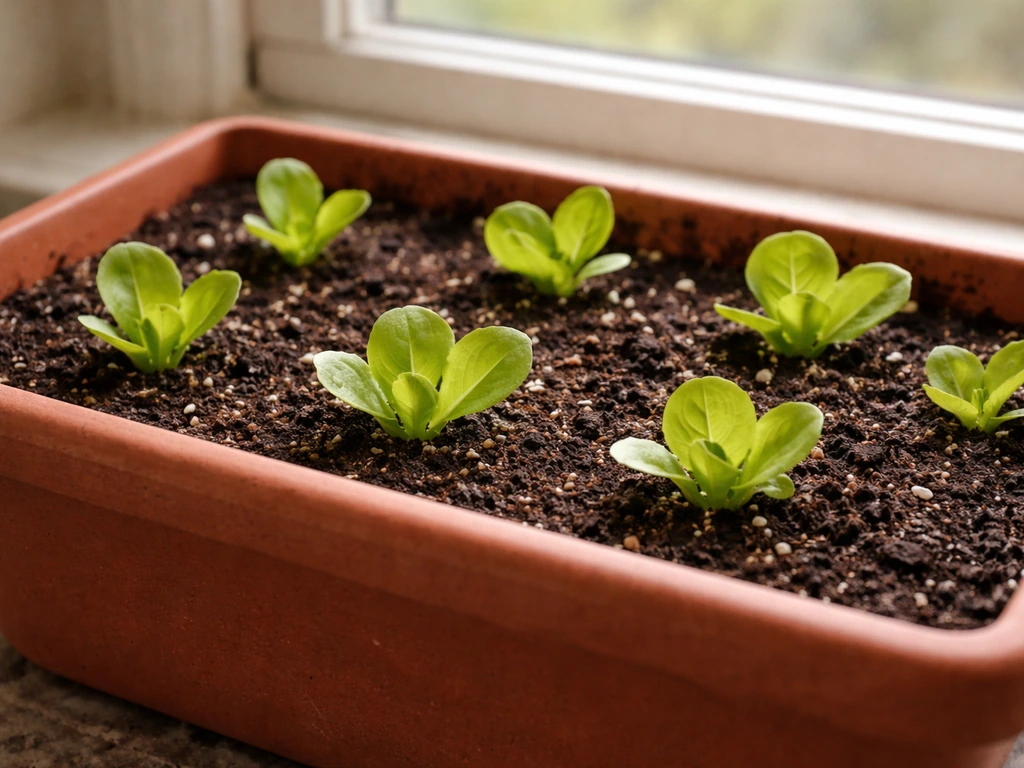
Butterhead grows well in containers as long as the pot is deep enough. Aim for at least 8 to 10 inches of depth. A 12-inch-wide pot can support one full butterhead plant comfortably. Tom Thumb and Bibb are the best varieties for containers because they stay compact. Use a good quality potting mix, not garden soil, because garden soil compacts in pots and restricts drainage.
Indoors, the biggest challenge is light. Butterhead needs at least 12 hours of bright light per day to form proper heads. A sunny south-facing window in late winter or early spring can work, but if you're growing in summer, a full-spectrum LED grow light is a more reliable option. Keep the light 4 to 6 inches above the plant canopy and run it 14 to 16 hours per day. Indoors also helps you control temperature, which is the main advantage over outdoor growing in warmer months.
Hydroponic growing
Butterhead is one of the best lettuces for hydroponic systems. It thrives in kratky (passive hydroponic) setups, DWC (deep water culture), and NFT (nutrient film technique) systems. The ideal nutrient solution EC (electrical conductivity) for lettuce is 0.8 to 1.6 mS/cm, and pH should be kept between 6.0 and 7.0. Water temperature matters too: aim for 65°F to 72°F to prevent root rot and keep growth consistent. Hydroponic butterhead typically matures a bit faster than soil-grown plants and tends to produce very clean, tender leaves.
Light, temperature, spacing, soil, and watering
| Growing Factor | What Butterhead Needs | Notes |
|---|---|---|
| Light | 6+ hours direct sun outdoors; 12-16 hrs grow light indoors | More light = tighter, better-formed heads |
| Temperature | 45°F to 70°F ideal; below 75°F critical | Bolts and turns bitter above 75°F for multiple days |
| Spacing (outdoor beds) | 8 to 10 inches between plants | 12-18 inches between rows |
| Spacing (containers) | One plant per 12-inch pot | Tom Thumb can be planted closer at 6 inches |
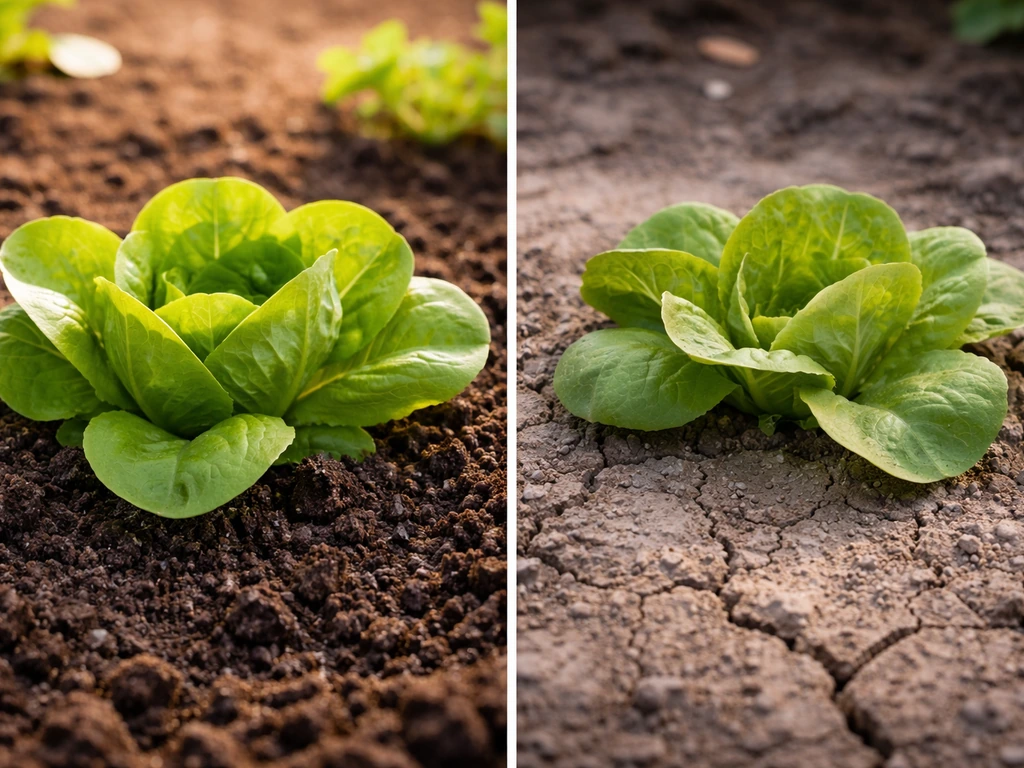
| Soil | Loose, well-draining, rich in organic matter | pH 6.0 to 7.0; add compost at planting |
| Watering | Consistently moist, never waterlogged | About 1 inch per week; more in heat |
| Fertilizing | Nitrogen-focused; balanced liquid feed every 2 weeks | Too much nitrogen late in growth causes loose heads |
Temperature is the factor that trips up most first-time butterhead growers. According to University of Minnesota Extension research, multiple consecutive days above 75°F trigger bolting, where the plant sends up a flower stalk and leaf quality rapidly declines. If a heat wave hits, you can buy a little time by providing afternoon shade with a cloth cover or moving containers to a shadier spot. But once bolting starts in earnest, harvest immediately and enjoy what you have.
For soil, work in a 2 to 3 inch layer of compost before planting. Butterhead is a light feeder compared to many vegetables, but it does benefit from a steady nitrogen supply for leaf development. A balanced liquid fertilizer (such as a 5-5-5 or 10-10-10 formulation) applied every two weeks keeps things moving. If leaves are pale and growth is slow, nitrogen is usually the issue. Back off on nitrogen once the head starts to form, or you risk loose, floppy heads.
Pests, diseases, and quick troubleshooting
Butterhead is fairly easy to grow, but a few problems come up regularly. Here's how to handle them:
- Aphids: Check the undersides of leaves. If you see clusters of small green or black insects, blast them off with a strong stream of water or apply an insecticidal soap spray. Aphids multiply fast, so catch them early.
- Slugs and snails: These do most of their damage at night, leaving ragged holes in leaves. Use diatomaceous earth around the base of plants or set out shallow traps filled with beer.
- Tip burn: Brown, crispy leaf edges indicate calcium deficiency or inconsistent watering, not a pest. Keep watering consistent and improve air circulation around the plants.
- Bolting: If your plant sends up a tall center stalk, it's bolting. Harvest immediately. You can slow future bolting by choosing heat-tolerant varieties like Buttercrunch and timing plantings to avoid peak summer heat.
- Downy mildew: Yellow patches on upper leaves with grey-purple fuzz underneath. Improve air circulation, avoid overhead watering, and remove affected leaves. Plant in raised beds or containers with good drainage.
- Leggy seedlings: Usually caused by insufficient light. Move closer to a grow light or a brighter window as soon as you notice stretching.
Harvesting butterhead lettuce: when, how, and getting a second round
Butterhead is ready to harvest when the head feels slightly firm when you gently squeeze it, the center leaves have started to cup inward, and the head has a loose but formed shape, typically 6 to 8 inches across for full-sized varieties. This usually happens 55 to 75 days from transplant. If you’re wondering how long butter lettuce takes to grow, this maturity window is the key guideline to plan your sowing and harvest dates 55 to 75 days. Don't wait too long: an overripe butterhead starts to open up, go bitter, or bolt.
Harvesting the whole head
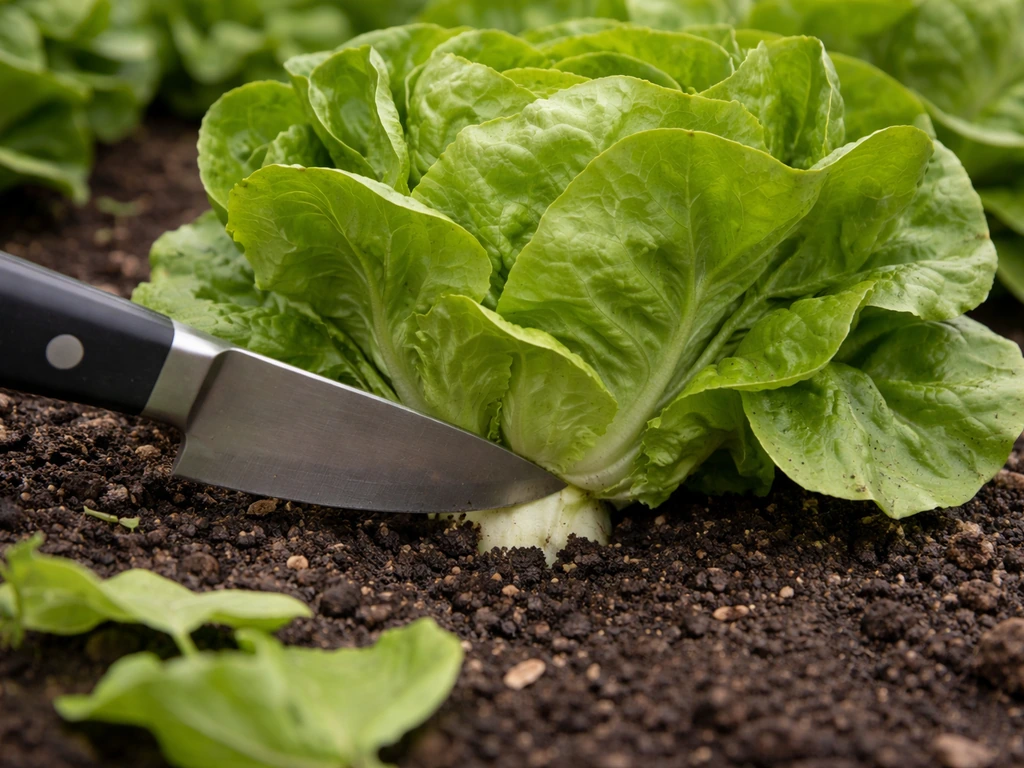
To harvest the whole head, use a sharp knife or scissors to cut the stem at the base, just above the soil line. This is the cleanest method and works best if you're ready to eat the whole thing. After you cut, the root system is done, but you can sometimes get small regrowth leaves from the stump over the next week or two, though they won't form a second full head.
Cut-and-come-again (outer leaf harvesting)
The better strategy for extending your harvest is to remove only the outer leaves, starting when the plant has at least 8 to 10 leaves total. Use scissors or pinch off individual outer leaves at the base, leaving the inner leaves and growing center intact. The plant will continue producing new leaves from the center for several weeks. I typically get 3 to 4 rounds of outer leaves from a single butterhead plant before it starts to bolt or decline.
For a continuous supply of butterhead, practice succession planting: sow a new batch of seeds every 2 to 3 weeks through the cool season. That way you always have plants at different stages and you're never waiting a full growing cycle between harvests.
Growing butterhead from a store-bought 'living' butter lettuce
You've probably seen those "living" butter lettuce heads sold at grocery stores with the roots still attached. The good news: yes, you can regrow them. The results are real but limited, and it's worth understanding what you're actually getting.
When you buy a living butter lettuce head (roots intact), the plant is already near or at harvest maturity. It's been grown hydroponically under controlled conditions, often with the nutrient solution cut off just before sale. If you pot it up immediately in fresh potting mix or drop the root ball into a hydroponic system, you can extend its life by several weeks and harvest outer leaves as it slowly regrows from the center.
- Trim any damaged or yellowing outer leaves and inspect the root ball. It should be white or cream-colored. Brown, slimy roots mean the plant is already declining.
- If potting in soil: choose a pot that's slightly larger than the root ball, fill with moistened potting mix, and plant at the same depth it was growing before. Water gently and place in bright light.
- If using hydroponics: transfer the root ball directly into your system. Living lettuce adapts easily to DWC or kratky setups.
- Harvest outer leaves starting within a few days. The plant won't form a brand new full head from scratch, but it will push new leaves from the center for 2 to 4 weeks.
- Once the plant bolts or stops producing, compost it and start fresh with seeds if you want to keep growing.
One thing to set realistic expectations about: you're not going to regrow a full butterhead head from a grocery store head that was sold without roots (just the cut base). Placing a cut head in water might produce a few small leaves from the stump, but the plant can't regenerate a proper root system from a cut stem. The living lettuce with intact roots is a completely different scenario and genuinely works for short-term extended harvests.
Your next steps based on what you have right now
If you have seeds and outdoor space: check your local forecast. If you're heading into summer heat, start seeds indoors now in a cool room and plan to transplant in late summer for a fall crop. If you're in a mild climate or a northern zone with cool weather still ahead, direct sow or transplant outdoors now.
If you have containers or indoor space: this is your best option in May if summer is coming. Set up a 10-inch or deeper pot with quality potting mix, pick a compact variety like Tom Thumb or Bibb, and use a grow light to control conditions. You can grow butterhead year-round indoors with the right light setup.
If you have a store-bought living lettuce head: pot it up today in fresh potting mix or transfer it to a hydroponic setup, give it plenty of light, and start harvesting outer leaves within a few days while you order seeds for your next proper grow.
Butterhead lettuce is genuinely one of the easiest crops to grow once you understand the temperature piece. Nail your timing, keep the soil moist, give it enough light, and you'll have fresh heads ready to harvest in under two months. If you want more specifics, review our guide on butter lettuce how to grow for timing, light, and temperature tips. The first time you pull a head you grew yourself, you'll understand why it's worth the effort.
FAQ
How do I prevent butterhead from bolting during a sudden heat wave?
Use quick, temporary cooling, afternoon shade can slow bolting, but the real fix is to lower the time the plant spends above 75°F (for example, move containers to a cooler north-facing spot or into an unheated garage, then harvest outer leaves immediately if you see the center starting to loosen). Once a flower stalk starts forming, prioritize harvesting rather than trying to “save” leaf quality.
Should I harden off seedlings before transplanting butterhead?
Yes. Even in cool weather, seedlings grown indoors or under protection can stall if transplanted straight into wind and sun. Hardening off for 5 to 7 days reduces transplant shock, keep the first day shaded, and only increase sun exposure gradually.
What’s the best way to water butterhead without causing bitter leaves or disease?
Keep the soil consistently moist, but avoid waterlogging. In-ground, water at the base early in the day. In containers, water until it drains, then let the top inch of mix dry slightly before the next watering. This helps prevent root stress, which can worsen bitterness and slow head formation.
My butterhead leaves look pale and growth is slow, what should I adjust?
First check light (indoors, under 12 hours of bright light often causes pale, leggy growth). If light is adequate, then increase nitrogen slightly using a balanced liquid feed, because butterhead is a light feeder but still benefits from steady nitrogen early. Once the head starts to form, stop increasing nitrogen to avoid loose, floppy heads.
How can I tell if it’s ready to harvest, without squeezing too hard?
Instead of heavy squeezing, look for a formed loose head with center leaves cupping inward and outer leaves that feel crisp but not rigid. A good sign is that the head measures about the expected size range for your variety, then harvest promptly if it starts to open or elongate.
Can I harvest outer leaves and still get a full head later?
Sometimes, but not always. If you remove outer leaves aggressively, the plant may stay in “leaf mode” and never fully lock into a tight head before bolting risk increases. For the best chance at a full head, only do light outer-leaf picking (after you have at least 8 to 10 leaves) and avoid repeated heavy trimming.
How do I succession plant butterhead so the harvest dates don’t all land at once?
Stagger both sowing and timing based on your growth conditions. If you transplant, sow or transplant every 2 to 3 weeks, then adjust the next batch if your local temps are trending hotter or colder than usual, because maturity can shift by several days. Keep varieties with similar days to maturity in the same succession group.
What container size and drainage do butterhead seedlings need?
Aim for at least 8 to 10 inches of pot depth, deeper is safer in hot weather because roots stay cooler. Use containers with real drainage holes, and use potting mix designed for containers rather than garden soil, which compacts and reduces oxygen around the roots.
Can I grow butterhead in partial shade outdoors?
You can, but head formation will be slower and more variable. For reliable loose heads, target several hours of direct sun in cool seasons, then use afternoon shade in warm spells. If the location gets only morning sun and summers stay hot, consider switching to a fall crop or a heat-tolerant variety like Buttercrunch.
Is hydroponic butterhead really faster, and how do I avoid root rot?
It often matures slightly faster, but success depends on stable water temperature and oxygen. Keep water in the mid-60s to low-70s, maintain the recommended EC and pH range, and ensure adequate aeration for DWC systems. If you see slimy roots or smell sour, check temperature first, then check system sanitation and oxygenation.
What should I do with the stump after harvesting a full butterhead head?
Expect small regrowth leaves at most, the plant usually cannot rebuild a full second head. If you want more production, use the outer-leaf harvest method on future plants instead, because that maintains the growing center for multiple rounds.
Will seeds sprout reliably in cool weather, or do I need to start them warmer?
Butterhead germinates in cool conditions, but very cold soil can slow or reduce emergence. If you direct sow in early spring, keep the bed evenly moist and avoid letting it dry out between waterings. If your schedule allows, starting indoors can give more consistent germination, then transplant after seedlings are hardy and you can harden them off.