Yes, you can absolutely grow butter lettuce indoors, and it's one of the better vegetables to attempt inside. Butterhead and buttercrunch varieties are compact, cool-loving, and don't need a huge amount of light to produce tender, flavorful leaves. With a decent container, a good potting mix, and either a sunny window or a basic grow light, you can go from seed to harvest in about 60 to 70 days.
How to Grow Butter Lettuce Indoors: Step by Step Guide
Marcus Holloway
19 May 2026
Which variety should you actually grow?
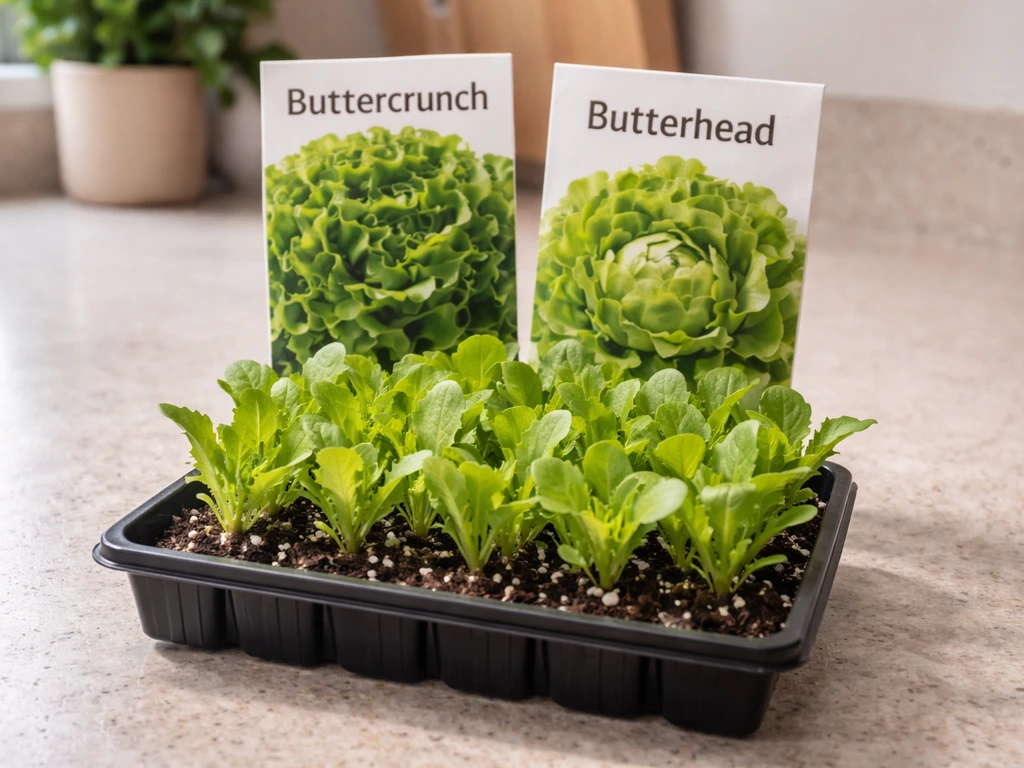
The terms butter lettuce, butterhead, and buttercrunch are often used interchangeably, but there are some real differences worth knowing before you buy seeds. Butterhead is the broad category: it covers loosely-heading varieties with soft, buttery leaves and a mild flavor. Buttercrunch is a specific butterhead variety, and for indoor growing, it's the one I'd recommend first.
Here's why buttercrunch stands out for indoor growers: it's notably more tolerant of heat than typical butterhead types, and it's slower to bolt. The leaves rarely turn bitter even if temperatures creep a bit higher than ideal. That matters indoors, where you can't always control conditions as precisely as you'd like. If you're a beginner, start with buttercrunch. It's also explicitly recommended for container culture by horticulture extensions, which fits perfectly with an indoor setup.
That said, any butterhead variety works indoors. Bibb types (like Tom Thumb, another compact butterhead) are also well-suited if you want something even smaller. If you want the best results with Tom Thumb lettuce, use its compact size to fine-tune spacing and keep temperatures cool to prevent bolting. The core rule: look for varieties labeled 'slow to bolt' or 'heat tolerant' on the seed packet. Those two descriptors will save you a lot of frustration indoors where temperatures aren't as stable as in a climate-controlled greenhouse.
| Variety Type | Days to Maturity | Bolt Resistance | Best For Indoors? |
|---|---|---|---|
| Buttercrunch | ~65 days | High | Yes, top choice |
| Standard Butterhead/Bibb | 60–70 days | Moderate | Yes, with good temp control |
| Tom Thumb (mini butterhead) | ~60 days | Moderate | Yes, great for small pots |
| Crisphead (iceberg type) | 70–80+ days | Low | Not recommended indoors |
Setting up your indoor container
Butter lettuce doesn't need a deep container because the roots stay relatively shallow, but you do need one with good drainage. A pot or trough that's at least 6 inches deep and 8 to 12 inches wide works well for a few heads. If you're planning to grow several plants at once, a rectangular window box or a wider, shallower tray gives you more flexibility for spacing. The key is that every container must have drainage holes. Lettuce sitting in waterlogged soil is a quick path to rot.
For the growing medium, never use garden soil in a container. It's too dense, it compacts, and drainage fails fast. Use a quality commercial potting mix, ideally one formulated for vegetables or containers. You want something that drains well but holds enough moisture to stay consistently damp between waterings. A mix with perlite or vermiculite added is ideal. The pH sweet spot for container lettuce is roughly 6.0 to 7.0, which most good potting mixes fall into naturally.
Hydroponic option
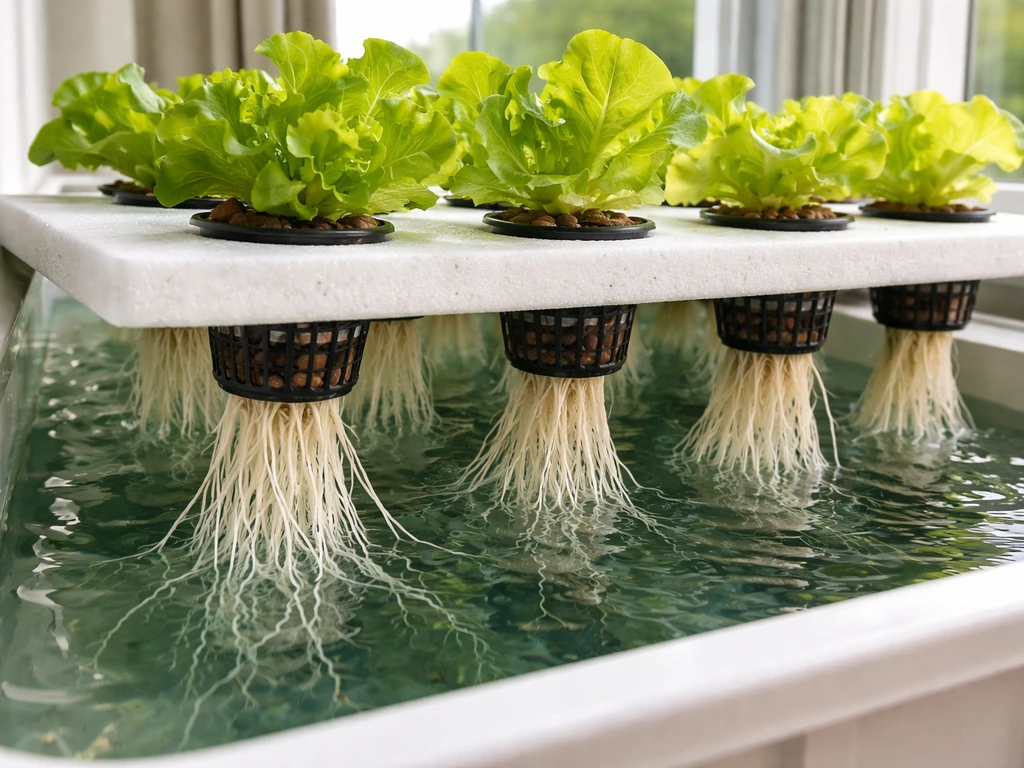
If you want to go soilless, butter lettuce is genuinely one of the best crops for a small home hydroponic setup. Lettuce grows quickly in water-based systems, and you can fit several heads into a small Kratky or NFT-style system on a countertop. For hydroponic butter lettuce, aim for a water temperature around 65 to 68°F, an EC (electrical conductivity) of 1.2 to 1.8, and a pH between 6.0 and 7.0. Those three numbers are what you check regularly. pH drift outside that range blocks nutrient uptake and causes problems that look like deficiencies even when your nutrient solution is correct. If you're new to hydroponics, a simple Kratky setup (a lidded container with the roots suspended in nutrient solution) requires almost no equipment and works surprisingly well for lettuce.
Light and temperature: the two things that make or break indoor lettuce
Temperature
Temperature is the single biggest variable indoors. Butter lettuce forms its best heads when daytime temperatures stay around 65 to 70°F and nights drop to roughly 50 to 60°F. If your home stays consistently around 68°F day and night, you're in good shape. Anything above 75 to 80°F regularly and the plant will start bolting, meaning it sends up a flower stalk and the leaves turn bitter fast. Most homes are warmer than ideal, which is exactly why choosing a bolt-resistant variety like buttercrunch gives you a meaningful buffer.
A cool spot in your home makes a real difference: a north-facing window ledge in winter, a basement with supplemental light, or a cool bedroom corner all work better than a warm south-facing kitchen in summer. If your indoor temperatures are consistently above 72 to 75°F, focus on planting in cooler months or find the coolest room in your home.
Light
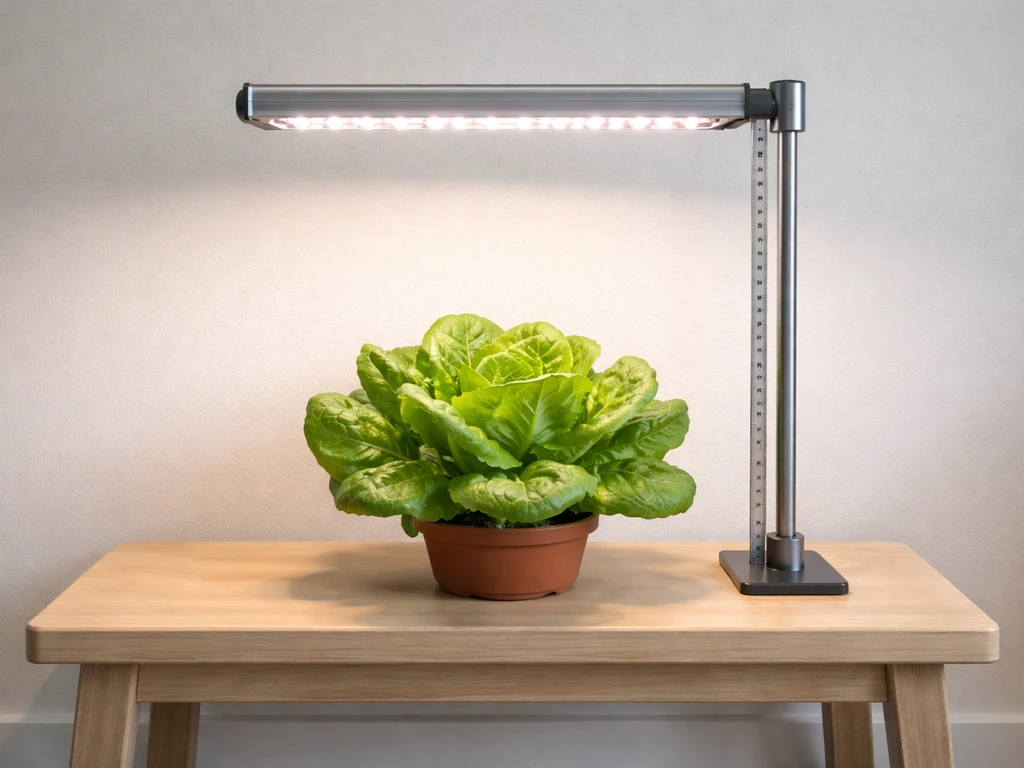
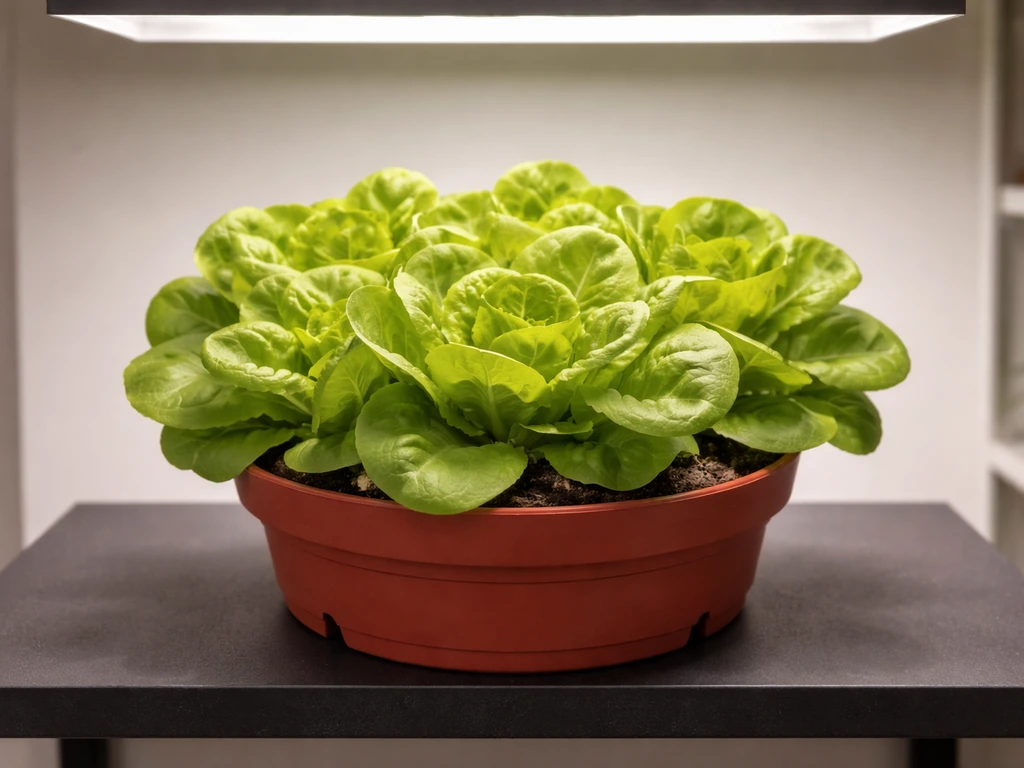
Butter lettuce needs moderate light, not intense sun. The target is roughly 200 to 300 µmol/m²/s of PPFD (photosynthetic photon flux density), delivered for about 12 to 14 hours per day. In practical terms: a bright south- or west-facing window in summer might just barely do it, but in most homes a window alone isn't enough, especially in fall and winter. Leggy, stretched plants reaching toward the light are the tell-tale sign you need more.
A basic LED grow light placed 6 to 12 inches above the plants (check your specific light's recommended distance) set to run 12 to 14 hours daily is the most reliable setup. A simple plug-in timer costs a few dollars and removes the guesswork. If you're relying on a window, supplement with even a cheap grow bulb during darker months. The closer you can get to that 12 to 14 hour photoperiod at adequate intensity, the faster and healthier your heads will form.
Planting, spacing, and succession timing
Starting seeds
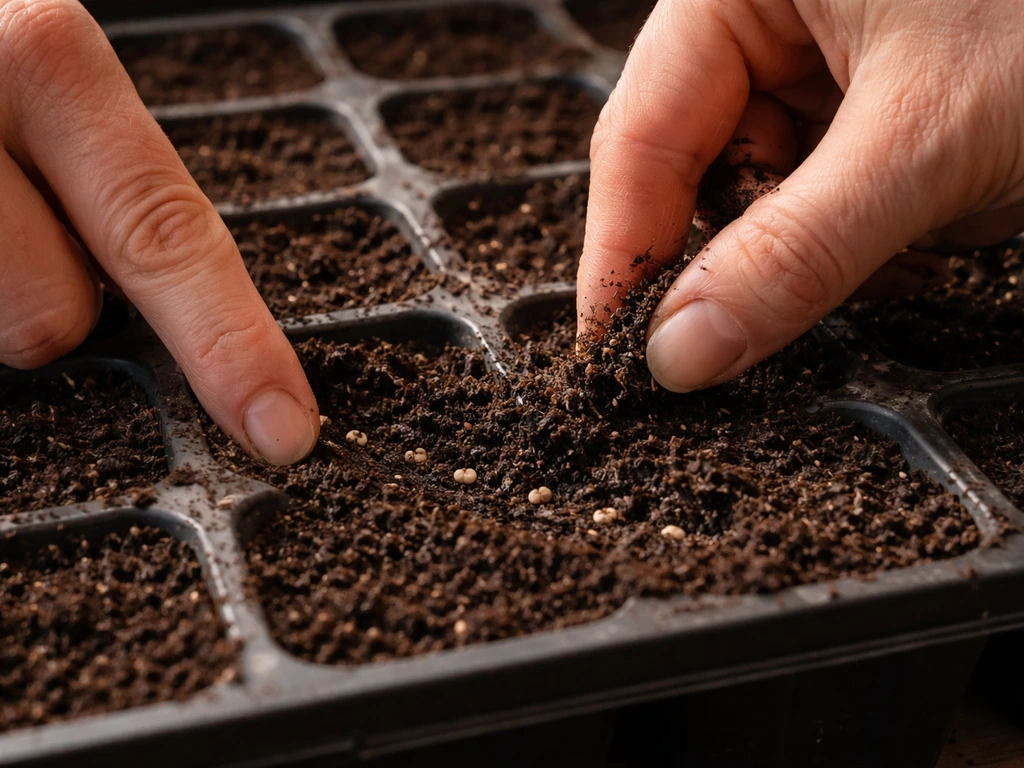
Sow seeds about 1/4 inch deep in your moistened potting mix. At room temperature (around 70 to 75°F), you should see germination in 7 to 10 days. Don't bury them deeper, lettuce seeds need light to germinate well and planting too deep slows or prevents emergence. After sowing, keep the surface consistently moist. A loose covering of plastic wrap over the container helps retain moisture until the seedlings emerge, then remove it immediately so they get air and light.
Thinning and spacing
Once seedlings are about an inch tall, thin them to at least 6 inches apart for butterhead types. I know it feels wasteful to pull out seedlings, but crowding is one of the most common reasons indoor butter lettuce fails to form proper heads. Each plant needs that space to develop the loose, rounded head shape butterheads are known for. If you want to skip thinning waste, sow seeds in individual cells or small pots and transplant once they have two true leaves.
Succession planting for continuous harvest
The smartest thing you can do for ongoing fresh lettuce is succession planting. Start a new small batch of seeds every two to three weeks. Since butter lettuce takes roughly 60 to 65 days from seed to harvest, staggering plantings means you'll have heads ready at different times rather than a glut and then nothing. Even two or three pots started two weeks apart keeps a consistent supply going. Just keep your room temperature under 80°F to avoid bolt risk, and the succession cycle can continue indefinitely.
Watering, feeding, and humidity
Watering
Butter lettuce likes consistently moist (not soggy) soil. Indoors, that usually means checking every one to two days and watering when the top inch of soil feels dry. Bottom watering, where you set the pot in a tray of water and let the soil absorb from below, works particularly well for lettuce because it keeps the crown dry and reduces rot risk. For the best texture at harvest, water consistently in the few days leading up to picking. Well-watered lettuce is noticeably crisper than stressed, underwatered lettuce.
Feeding
If you're using a quality potting mix, it likely has enough nutrients to carry lettuce through most of its growth. For a 60 to 70 day crop, you can often skip fertilizing entirely if your mix is fresh. If growth looks slow or leaves are pale and small, apply a balanced liquid fertilizer (something like a 10-10-10 or a fish emulsion) at half the recommended strength every two to three weeks. Over-fertilizing with high nitrogen can push leafy growth but compromise flavor, so less is more here.
Humidity and airflow
Most homes run at 40 to 60% relative humidity, which is fine for lettuce. The real issue is stagnant air: poor airflow contributes to tipburn (brown, crispy leaf edges on inner leaves) and can encourage fungal problems. A small fan running on low for a few hours a day near your plants makes a genuine difference. It doesn't need to be much, just enough to keep air moving across the leaves. This is especially important if you're growing in a closet or enclosed shelf setup.
When things go wrong: common indoor problems and quick fixes
Leggy, stretched plants
If your seedlings are tall, spindly, and leaning toward a light source, they're not getting enough light. Move them closer to your grow light or increase the photoperiod to 14 hours. If you're relying on a window, add supplemental lighting. Leggy seedlings can be planted slightly deeper when transplanting to compensate, but fixing the light source is the real solution.
Bolting (plant shoots up a flower stalk)
Once a butter lettuce plant bolts, the leaves turn bitter quickly and the head stops forming properly. Bolting is triggered by heat and long day lengths. Indoors, heat is usually the culprit. If your plants bolt, move them to a cooler spot, reduce the light period slightly, and for your next round, choose buttercrunch or another bolt-resistant variety. If you're in a warm season and your home is consistently above 75°F, this is genuinely a hard battle. Consider waiting for a cooler season or using a basement setup.
Bitter leaves
Bitterness in butter lettuce is almost always caused by heat stress or the plant starting to bolt. It can also happen if the plant is underwatered for an extended period. If your leaves taste bitter, check temperatures first. Harvest earlier, before the plant matures fully, to catch leaves before bitterness sets in. Buttercrunch is notably resistant to this problem, which is another reason it earns the top recommendation for indoor growing.
Tipburn (brown leaf edges)
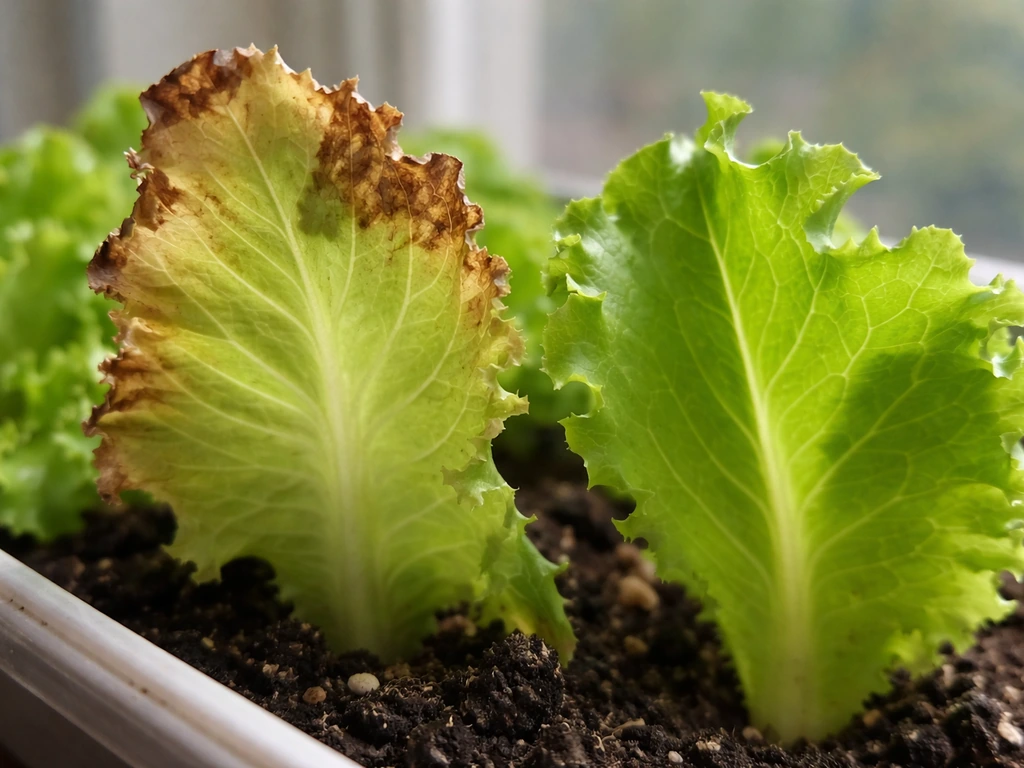
Tipburn shows up as brown, papery edges on inner leaves and is common in indoor lettuce. It's caused by calcium transport issues related to transpiration: inner leaves don't transpire as actively as outer ones, so calcium doesn't reach them as efficiently. The fix is improving airflow with a small fan and avoiding very high humidity at night. It won't ruin the whole plant, but badly tipped leaves are less appealing to eat. Outer leaves are usually fine.
Heads not forming
If your plants are producing lots of individual leaves but not forming a recognizable head, the most common causes are too little light, too much heat, or overcrowding. Check spacing (6 inches minimum between plants), increase light duration, and cool down the room if possible. Butterhead varieties form looser heads than crisphead types anyway, so don't expect a tight iceberg-style ball. A loose rosette of tender leaves that cups slightly in the center counts as a successful head for butter lettuce.
Pests
Indoor butter lettuce is relatively low-risk for pests, but aphids and fungus gnats are the two you're most likely to encounter. Aphids cluster under leaves and on new growth. A strong spray of water knocks most off, and insecticidal soap handles persistent infestations. Fungus gnats live in the soil and are more a nuisance than a plant killer, but their larvae can damage roots if populations get large. Letting the top inch of soil dry out between waterings is the best prevention, since the adults need moist soil surface to lay eggs.
Your harvest window and what to do next
Butter lettuce is ready to harvest around 60 to 65 days from seed, though you can start harvesting outer leaves much earlier, at around 30 to 40 days, for a cut-and-come-again approach. For a full head harvest, cut the whole plant at the base. For ongoing production, remove outer leaves and let the center keep growing. Water consistently in the days before harvesting for the crispest texture.
Once you've got one successful grow under your belt, the logical next step is scaling up your succession schedule or experimenting with container configurations. If you want to explore growing butter lettuce specifically in different container types or move into a dedicated pot setup, the techniques for soil choice, drainage, and spacing all apply directly. If you want a deeper walkthrough, this guide to how to grow butter lettuce in a pot goes step by step through setup, planting, and care. The indoor fundamentals you've built here, good light, cool temperatures, consistent moisture, and bolt-resistant variety selection, are the same foundation for any container butter lettuce grow.
FAQ
My butter lettuce seedlings look tall and stretched. Is it always a light problem, or could something else be wrong?
If your plants are getting leggy even under a grow light, the problem is often light intensity or distance, not just timer length. Raise the timer to 14 hours only after you confirm the fixture is close enough (commonly 6 to 12 inches) and that the seedlings are centered under it. Also avoid letting the thermostat swing warm, since warmth accelerates stretch and bolting.
If I grow butter lettuce near a window, should I do anything to prevent uneven growth?
For window growing, rotate the pot every day or two so both sides receive similar light. Without rotation, one side stays greener while the other stretches and heads may stay loose because growth keeps favoring the brighter side.
Does container depth matter for indoor butter lettuce, or can I use any pot size?
Yes. In very small or deep containers, moisture behavior changes quickly, and lettuce can rot even if you water “on schedule.” Use at least one drainage hole and consider a slightly wider, shallower tray setup so the top inch dries predictably. If water pools in the tray, empty it promptly.
My lettuce seeds didn’t germinate. What are the most common indoor causes and how do I fix them next time?
If seeds fail to sprout, check three things first: seed depth, surface moisture, and temperature. Keep them no deeper than about 1/4 inch, keep the top layer consistently damp during germination, and aim for roughly 70 to 75°F. If the soil dries during the germination window, many seeds never emerge.
When should I transplant butter lettuce indoors, and are there mistakes that cause poor head formation?
Skip transplanting if you can sow in small cells, but if you do transplant, handle roots gently and keep the crown at the soil surface. Transplanted lettuce often benefits from a short “cool and bright” recovery period for 2 to 3 days, then return to your normal routine to reduce stress.
What actually helps with tipburn on indoor butter lettuce, and what should I avoid doing?
If you see tipburn, the fix is usually airflow plus consistent watering, not extra fertilizer. Use a small fan for gentle circulation and avoid letting humidity spike at night. Also water evenly so the plant does not experience cycles of dry then wet, since calcium transport issues worsen when conditions fluctuate.
How do I know whether I’m watering too much or too little indoors?
Letting the top inch of the mix dry out between waterings is a good rule, but don’t treat it as “dry for days.” In smaller pots or hot indoor spots, “top inch dry” might happen faster, so check more often. If leaves droop and feel limp, you likely waited too long.
My plants bolted. What should I do immediately, and what should I change for the next planting?
Bolting is triggered by heat and long day conditions, so shorten the photoperiod slightly and move plants to the coolest room or closest cool spot you have. For the next succession batch, choose varieties labeled heat tolerant or slow to bolt, and start earlier in cooler seasons so the crop matures before sustained warmth arrives.
For hydroponic or countertop lettuce, how often should I check pH and EC, and what does it mean if symptoms appear?
Use EC and pH targets as a system check, not a one-time measurement. If pH drifts outside about 6.0 to 7.0, nutrient uptake can fail quickly and symptoms can mimic deficiencies. Also keep water temp in the recommended range (about mid-to-high 60s°F) to prevent stress.
Can I harvest butter lettuce multiple times instead of one full cut, and what technique gives the best texture?
Yes. If you want a continuous harvest, remove outer leaves rather than cutting the whole plant early in the cycle, and only cut the base when the center stops producing tender growth. For best texture, keep moisture steady for the few days before harvest so leaves stay crisp.
Should I fertilize butter lettuce indoors, and how can I tell if I’m overdoing it?
Overfeeding can reduce flavor even if plants look healthy. If using potting mix, you can often skip fertilizer for most of the 60 to 70 day crop. If you fertilize, use diluted balanced fertilizer and apply on a schedule, every 2 to 3 weeks, rather than “more often when growth slows.”